







NP Research
We’ve known for a long time that Unarmed Civilian Protection works because of the testimonies of communities and field teams around the world. In addition, the published evidence for Unarmed Civilian Protection as a viable and effective approach is strong, and growing stronger. The below provide an overview of research on Unarmed Civilian Protection practices across a range of contexts.
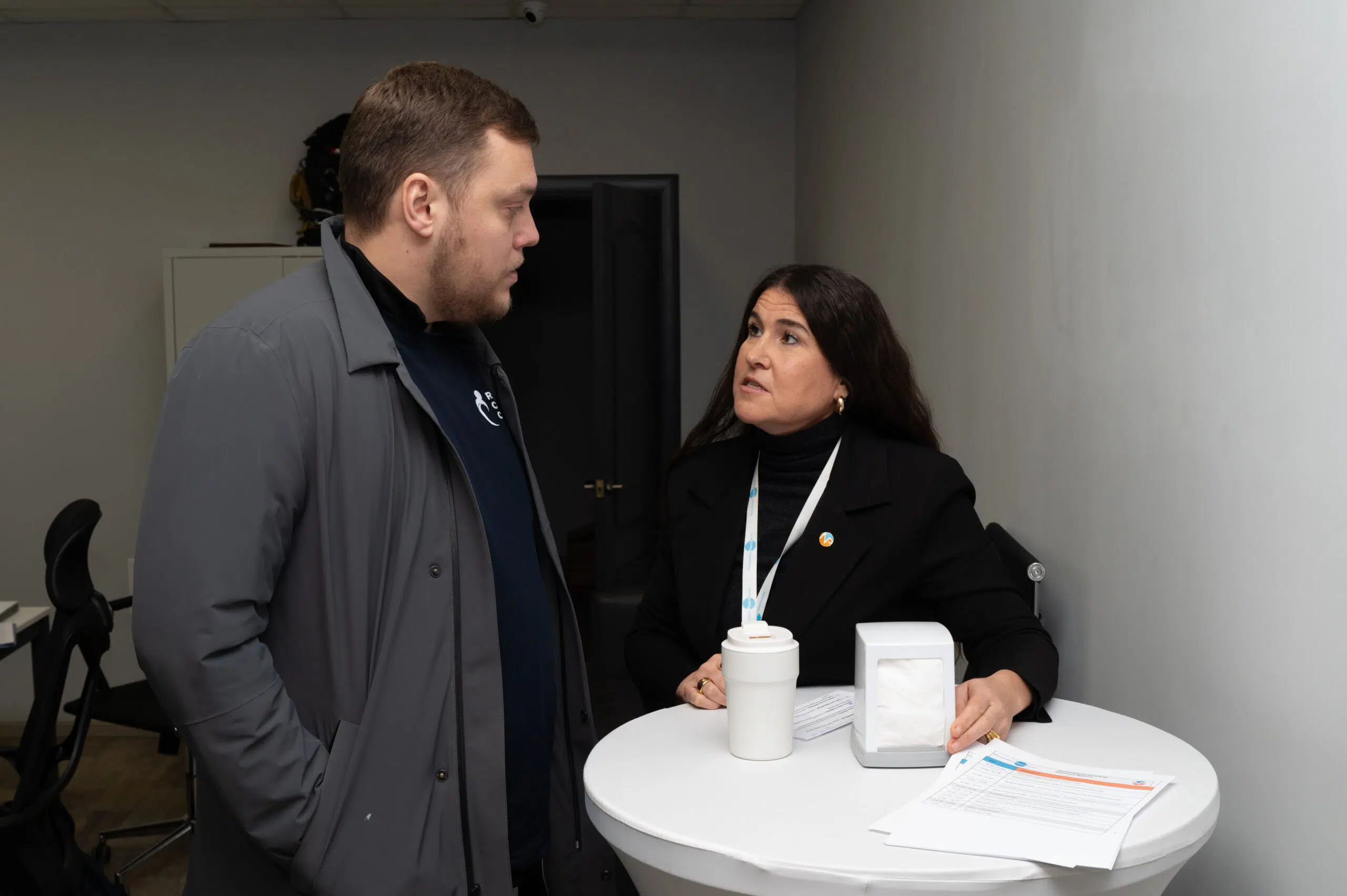
UCP Research Highlights
- Ridden, Louise. “Nonviolent Encounters: Unarmed Civilian Protection through Bodies, Spaces, and Times.” Edinburgh University Press, 2026
- Julian, Rachel. Transforming Protection: The Implications of Unarmed Civilian Protection. Bristol University Press, 2025.
- Romen, Sheila. “Chapter 10: UN Peacekeeping and INGO Collaboration: Unarmed Civilian Protection Trainings Conducted in Darfur, Sudan.” Silencing the Guns in Africa. Sun Press, 2025.
- Ridden, Louise. “Nonviolent Knowledge(s) and Unarmed Civilian Protection.” Journal of International Peacekeeping. 27, 1, 63-84 (2023).
- Gray, Felicity. “’A different kind of weapon’?: Nonviolent action and the protection of civilians in violent conflict.” The Australian National University, Canberra, 2023
- Gray, Felicity. “Relational R2P? Civilian-Led Prevention and Protection against Atrocity Crimes.” Global Responsibility to Protect (published online ahead of print 2022).
- Gray, Felicity. “Chapter 11: ‘A Different Kind of Weapon’: Ethical Dilemmas and Nonviolent Civilian Protection.” Wicked Problems: The Ethics of Action for Peace, Rights, and Justice, Oxford University Press, New York, 2022.
- Easthom, Tiffany. “Community Resiliency, Conflict, and COVID-19.” Peace Review 33, no.2 (2021): 263-269
- Oakley, Derek. “What Is the Relationship between the Situated Learning of Unarmed Civilian Protection Workers and Gendered Power Dynamics?” Lancaster University, Lancaster, 2020, p. 236.
- Julian, Rachel, “The Transformative Impact of Unarmed Civilian Protection,” Global Society 34(1): 99-111, 2020.
- Pax Christi International, A Policymaker’s Tool for Effective, Nonviolent Strategies for Sustainable Peace,” October 2021.
- Harley Henigson, “Community Engagement in UN Peacekeeping Operations: A People-Centered Approach to Protecting Civilians,” International Peace Institute, November 2020.
- McCarthy, Eli S., ed. A Just Peace Ethic Primer: Building Sustainable Peace and Breaking Cycles of Violence. Washington, DC: Georgetown University Press, 2020.
- Rachel Julian and Russell Gasser (2019) ‘Soldiers, Civilians and Peacekeeping – Evidence and False Assumptions’, International Peacekeeping 26(1): 22-54.
- Wallace, M.S. Security without Weapons: Rethinking Violence, Nonviolent Action, and Civilian Protection (Interventions). New York: Routledge, 2017.
- Furnari, Ellen. Wielding Nonviolence in the Midst of Violence: Case Studies of Good Practices in UCP. Norderstedt: Books on Demand, 2016
- “Unarmed Civilian Protection: The Methodology and Its Relevance for Norwegian Church-Based Organizations and Their Partners” by the Norwegian Ecumenical Peace Platform – October 2016
- Furnari, Ellen, Huibert Oldenhuis, and Rachel Julian. “Securing space for local peacebuilding: the role of international and national civilian peacekeepers.” Peacebuilding 3, no. 3 (2015): 297-313.
- Julian, Rachel, and Christine Schweitzer. “The Origins and Development of Unarmed Civilian Peacekeeping.” Peace Review 27, no. 1 (2014): 1-8.
- Rossi, Alessandro. “The Glass Ceiling for UCP in Inter-Governmental Organizations.” Peace Review 27, no. 1 (2014): 9-17.
- Eguren, Luis Enrique. “The Notion of Space in International Accompaniment.” Peace Review 27, no. 1 (2014): 18-24.Eguren, Luis Enrique. “The Notion of Space in International Accompaniment.” Peace Review 27, no. 1 (2014): 18-24.
- Furnari, Ellen. “Relationships Are Critical for Peacekeeping.” Peace Review 27, no.1 (2014): 25-30
- Easthom, Tiffany. “The South Sudan Weapons Free Zone.” Peace Review 27, no.1 (2014): 31-36
- Wallis, Tim. “Saving Lives, Saving Souls.” Peace Review 27, no. 1 (2014): 37-42
- Engelbrecht, Georgi and Vidushi Kaushik. “Community-Based Protection Mechanisms.” Peace Review 27, no. 1 (2014): 43-51
- Gehrmann, Richard. Matt Grant and Samantha Rose. “Australian Unarmed Peacekeepers on Bougainville, 1997–2003.” Peace Review 27, no. 1 (2014): 52-60
- Venturi, Bernardo. “Mainstreaming Unarmed Civilian Peacekeeping.” Peace Review 27, no. 1 (2014): 61-66.
- Beckman, Kara, and Solberg, Kenneth B. “Measuring the Impact of Unarmed Civilian Peacekeeping: A Pilot Study” (2013).
- Carrière, Rolf, Rachel Julian, Christine Schweitzer, and Tim Wallis. Civilian peacekeeping: a barely tapped resource. Edited by Christine Schweitzer. Belm-Vehrte: Sozio-Publ., 2010.
- Schweitzer, Christine. “Nonviolent Peaceforce Feasibility Study,” Feasibility Study, Hamburg/St. Paul, 2001.
- Sjöberg, A., Michalko, J. and Davies, G. (2026) Gender norms and protection: navigating agency, risk and backlash. HPG working paper. London: ODI Global
- Jennifer M. Welsh, Emily Paddon Rhoads and Juan Masullo (2025) ‘Risky Business: Organizational Challenges in International Support for Civilian Self-Protection‘, Perspectives on Politics.
- Veronique Barbelet and Leigh Mayhew (2025) ‘Early warning and early response to violence for civilian safety and security‘, ODI Global.
- Felicity Gray (2022) ‘Protection as connection: feminist relational theory and protecting civilians from violence in South Sudan’, Journal of Global Ethics 18(1): 152-170.
- Jana Krause, Erin Kamler (2022) ‘Ceasefires and Civilian Protection Monitoring in Myanmar’, Global Studies Quarterly 2(1).
- Margaux Pinaud (2021) ‘Home-Grown Peace: Civil Society Roles in Ceasefire Monitoring’, International Peacekeeping 28(3): 470-495.
- Congo Research Group (2020), Building Relationships, Building Peace: The Role of Civilians and Civil Society in Preventing Mass Atrocities in the Democratic Republic of the Congo, Washington D.C.: United State Holocaust Memorial Museum.
- Peris Jones and Wangui Kimari (2019) ‘Security beyond the men: Women and their everyday security apparatus in Mathare, Nairobi’, Urban Studies 56(9): 1835-1849.
- Joseph Bock et al. (2019) Halting Hate: How to Use the Interruption Model to Counter Hate-Motivated Violence, American Arbitration Association.
- Jana Krause (2018) Resilient Communities: Non-Violence and Civilian Agency in Communal War, Cambridge: Cambridge University Press.
- Nerve Macaspac (2019) ‘Insurgent Peace: Community-Led Peacebuilding of Indigenous Peoples in Sagada, Philippines’, Geopolitics 24(4): 839-877.
- Oliver Kaplan (2017) Resisting War: How Communities Protect Themselves, Cambridge: Cambridge University Press.
- Veronique Dudouet (2017) Powering to Peace: Integrated Civil Resistance and Peacebuilding Strategies, International Center on Nonviolent Conflict, vol. 1.
- Landon Hancock (2016) ‘Agency and peacebuilding: The promise of local zones of peace’, Peacebuilding, 5(3), 255–269.
- Jeffrey A. Butts (et al.) (2015) ‘Cure violence: A public health model to reduce gun violence’, Annual Review of Public Health (36): 39–53.
- Georgi Engelbrecht and Vidushi Kaushik (2015) ‘Community-based protection mechanisms’, Peace Review 27(1), 43–51.
- Sara Koopman (2014) ‘Making space for peace: International protective accompaniment in Colombia’, in F. McConnell, N. Megoran, & P. Williams (eds.), Geographies of peace: New approaches to boundaries, diplomacy and conflict resolution, London/New York: IB Tauris. 109–130.
Unarmed Civilian protection
Knowledge Database
User-friendly way of finding the latest research on unarmed civilian protection, community self-protection and related topics.
¿Quieres recibir historias de paz en tu bandeja de entrada?
Descubre las últimas novedades, los próximos eventos y las nuevas oportunidades para actuar.