



Éléments constitutifs de la paix à Malakal
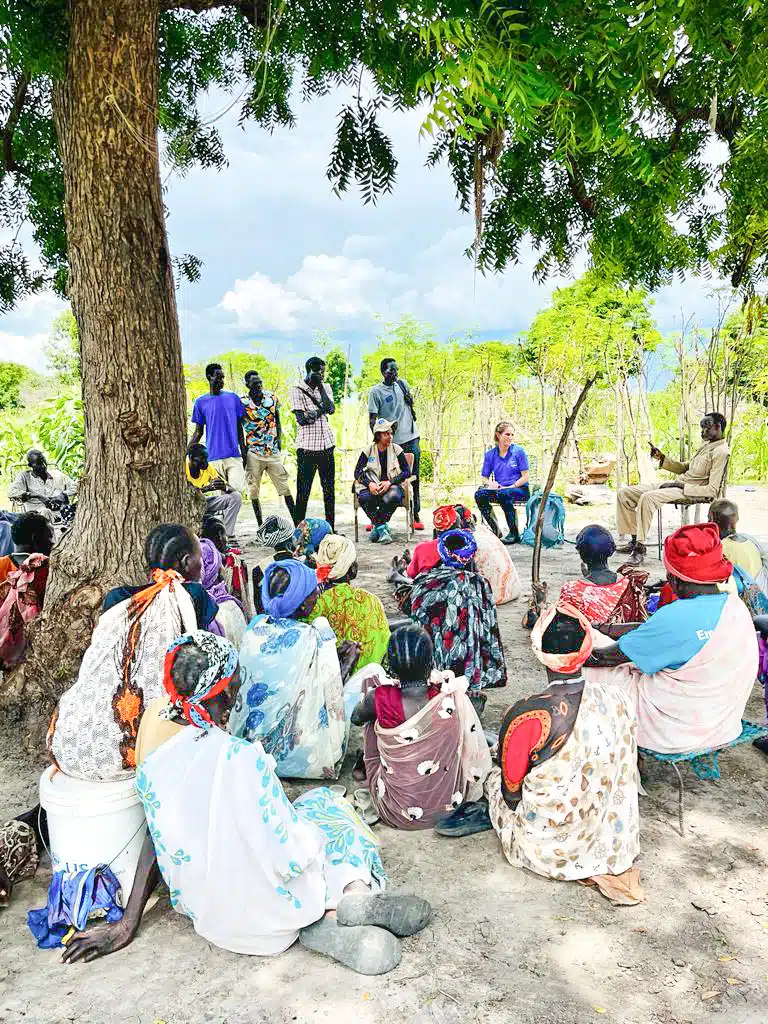
Now that NP’s initiative with Solidarités International in Malakal and the Upper Nile has been running for a few months, we are taking a look at some of the approaches our teams have been using to build communal resilience and encourage nonviolent conflict resolution in areas most vulnerable to floods and conflict.
Looking Ahead in Malakal
Across different villages, women, farmers, and youth are leading impactful initiatives to uplift their communities. These combined efforts have led to proactive strategies for addressing a wide range of issues, from domestic violence to food security, and even disaster preparation.
Women-Led Groups Take Action
Women in multiple villages, such as Abwong and Pariak have organized Women Civic Action Groups. The women are looking forward to working as agents of change in their community together with startup support from NP and SI. As members, these women offer protective accompaniment and take part in many activities around peacebuilding. The groups are also striving to decrease incidents of domestic violence.

New Farming Extensionists Grow Food Crops & Communal Safety
To tackle the issue of food scarcity and safety concerns, Farming Extensionists have been assigned. Farming Extensionists are local community members who have undergone specialized training by SI and NP. Now, they will begin teaching others about farming and how to enhance communal safety.

Collectively, they’ll work to boost agricultural productivity, enhance food security, and ensure their community’s well-being. The latest training discussed Protection Mainstreaming, which taught more advanced skills on civilian protection, violence reduction, and conflict prevention. Recently, community members planted seeds distributed by SI, including maize, sorghum, pumpkin and okra.

Youth Come Together for Early Warning/Early Response
on Climate & Conflict Disasters
Additionally, NP has provided Unarmed Civilian Protection trainings to youth who are leading their local Early Warning/Early Response group in Nyongkuach, Baliet. Next, the teams will work with the youth to put together a contingency plan for preventing and responding to climate and conflict-related disasters in their community.

How it Started: Identifying Communal Strengths and Areas of Support
Initially, establishing trust and close relationships among community members was the top priority. These relationships allowed civilians to grow comfortable voicing their needs to our teams. Many shared concerns over the increase in food scarcity and lack of food sources. Others expressed the danger community members face when accessing food due to the floods and conflict. Through these conversations, the focus areas became clear—civilians needed safer and more secure access to resources like food.
Soon after, NP and SI began hosting “community protection meetings” as safe spaces for community representatives to discuss safety and security concerns they face. It wasn’t long before regular community meetings progressed into community-led advisory boards that continue to meet on a monthly basis.
Without these initial building blocks, the current work with women, farmers, and youth wouldn’t be possible.


* * *
Ces activités font partie de notre projet avec Solidarités International (SI) visant à soutenir la résilience communautaire et la gestion non violente des conflits dans les zones touchées par les conflits et les inondations dans les États du Haut-Nil et de Jonglei, au Soudan du Sud, et qui est financé par l'Union européenne et des donateurs comme vous.
Envie de recevoir des histoires de paix dans votre boîte mail ?
Découvrez les dernières actualités, les événements à venir et les nouvelles opportunités d'agir.