




She Lost Almost Everything, and Still Chose to Serve Her Community
In Juba’s camp for internally displaced people (IDP) lives Martha, 50. She has spent more than a decade rebuilding a life she never expected to have to endure.
Par Mahmoud Shabeeb, conseiller en médias internationaux, Nonviolent Peaceforce.
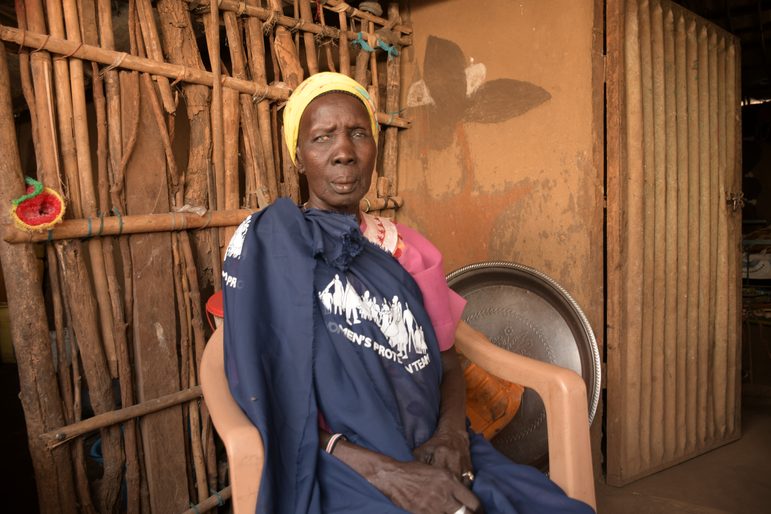
Martha lived most of her life in her hometown of Nasir, in the northeast of South Sudan. She lived there with her husband, their five children, and a herd of cattle that, along with their farm, gave the family everything it needed. “Life was good,” she says simply. “But in late 2013, I fell ill, so I had to travel to Juba for treatment.” However, while Martha was still recovering, yearning to return home to her life, civil war broke out across South Sudan.
She never made it back home.
Displaced by Civil War
When violence erupted in Juba on 15 December 2013, Martha was staying with her brother in a neighbourhood where people were being killed. She fled with her family to the nearby UN compound at Tongping, where thousands of others were also taking shelter.
In July 2014, Martha and her sister were relocated and registered at what was then known as the Juba Protection of Civilians (PoC) site, one of several such sites that the United Nations Mission in South Sudan (UNMISS) established across the country to shelter people in imminent danger. The camp has since been formally redesignated as an IDP camp, a site for internally displaced people, under the sovereign authority of the Government of South Sudan, though most residents, Martha included, still refer to it as the PoC Camp.
She has lived there ever since.
The losses that followed are difficult to comprehend, and Martha finds it hard to even utter those losses out loud. Four of Martha’s five children died during displacement.
“Only my youngest son survived; he now lives in Ethiopia with his uncle,” says Martha. Her husband has since remarried and settled in Ethiopia as well. Martha’s brother joined the rebellion, and eventually they lost contact with him. Today, she shares a shelter with her sister and six of her sister’s children.
“When you sit in our shelter here with my sister, you continue discussing a lot of issues,” she says of how the days pass. The two of them once ran a small retail business, buying vegetables, dried peas, okra, and onions to resell in the market, but rising prices and a collapsing economy eventually made that impossible. Now, she says, they survive on the generosity of relatives and neighbours, and on faith.
Protecting Her Community
Martha names two problems above all others: hunger, since there is no land in the camp to cultivate, and the absence of any health facility. “If you go a day without food, you will get sick,” she says. “And when you get sick, there is no hospital. You will die.”
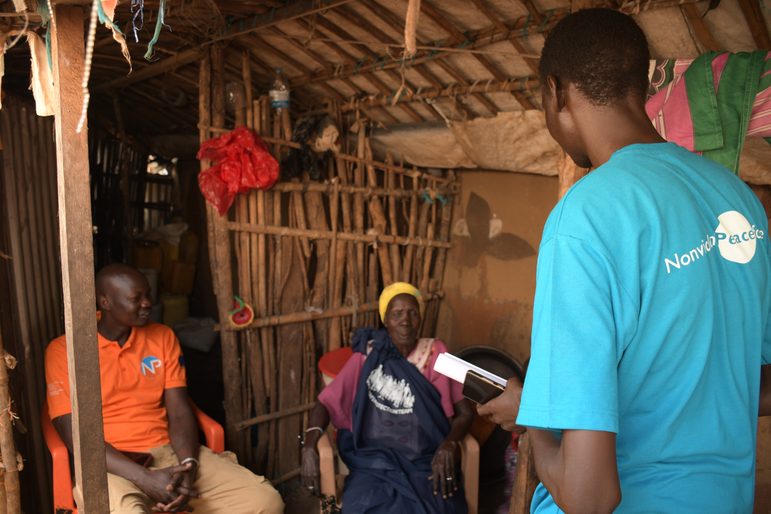
Despite this, Martha has spent years as a volunteer with Nonviolent Peaceforce’s (NP) women protection team in Zone 1 of the camp. She describes conditions when she first arrived as marked by open conflict, women fighting, sometimes violently, over access to water points, and young men stabbing one another with knives inside the camp itself. Yet, through sustained engagement from NP’s women’s and youth protection teams, engaging with members of their community zone by zone across the camp, she says that violence has declined significantly, even as scarcity and occasional theft during aid distributions persist.
“NP is only a vehicle,” Martha insists, turning credit back toward her own community. “We help each other, we protect each other, and we learn from each other as well.”
Hope for the Future
What keeps Martha doing this work, even while carrying her own grief, is watching that change take hold in others. She has seen women who once fought at the water points, and young men who once carried knives, change course entirely. “That is what motivates us to continue,” she says, “even though we have so many problems of our own.”
Amid all the hardships, Martha points to two things that give her hope: The first is her faith, a belief that no condition in life is permanent, and that whatever hardship the present holds will eventually soften. The second is her trust in the sustained partnership between the international community and the Government of South Sudan.
“If the world doesn’t look away, and good people do their part to support and contribute to the community and to the government of South Sudan,” she says, “the time will come that we will achieve peace.”
“Inshallah,” Martha says. “Peace will come one day.”
Envie de recevoir des histoires de paix dans votre boîte mail ?
Découvrez les dernières actualités, les événements à venir et les nouvelles opportunités d'agir.