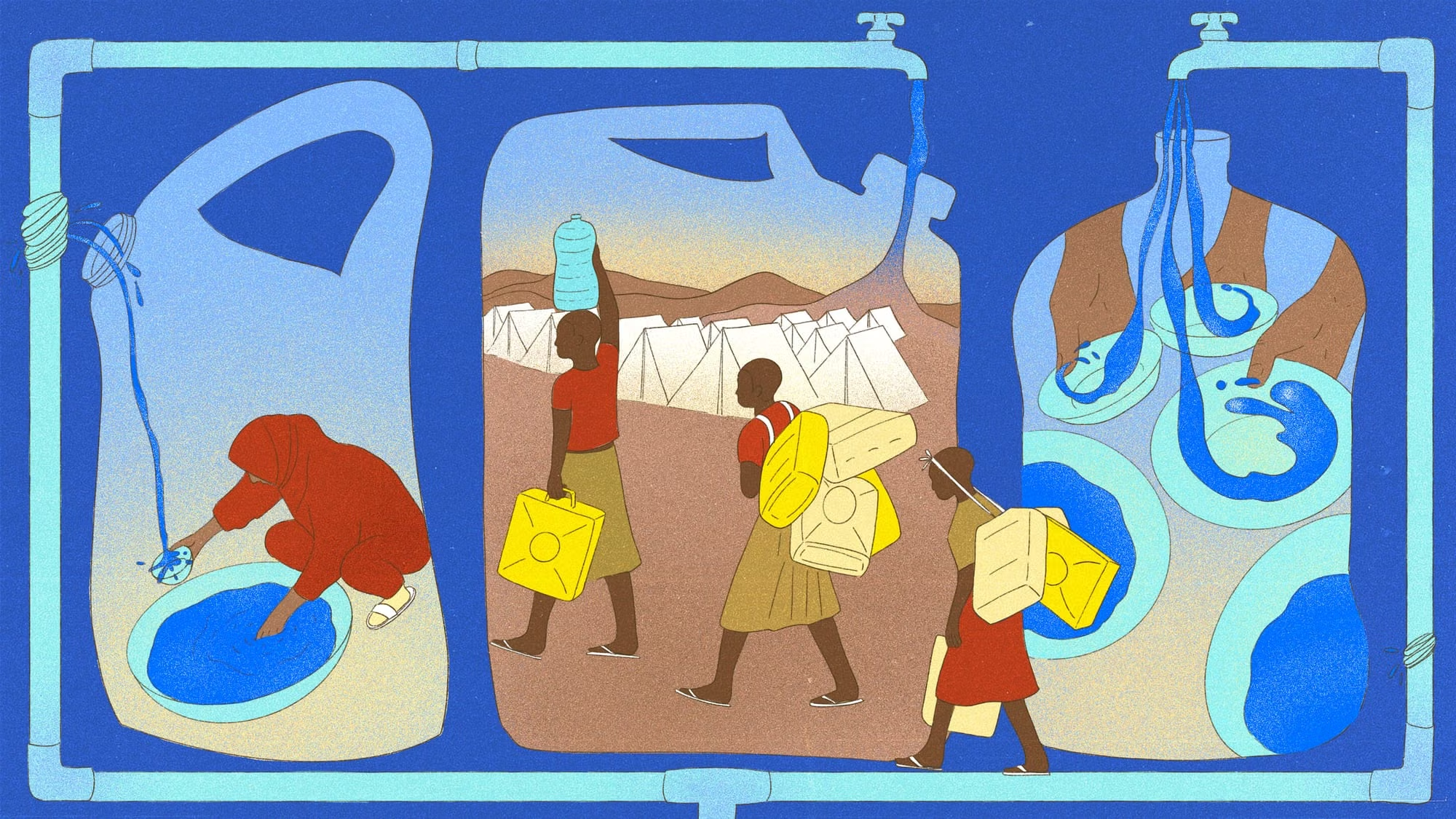
Traditional gender roles mean the burden of fetching water used for drinking, cooking and cleaning largely falls on women and girls.
The Fuller Project spoke to four women in Gaza, Algeria, South Sudan and Nepal, who were forced to flee their homes because of conflict or natural disasters and who now live in displacement camps, about their daily struggle to collect water.
SOUTH SUDAN
Deborah Nyakuy Chan, a child protection officer for non-profit Nonviolent Peaceforce at the Bentiu camp where she lives, faces cholera and flooding
“We live in fear. Cholera has been living with us since last year. Both flooding and water shortages have contributed to the spread of disease. We need to regularly clean our latrines, utensils and hands with clean water and soap to protect ourselves. But that’s difficult to do because of the water shortages.
I’ve been living in the Bentiu camp since 2013. Before being displaced, I was a midwife with the health ministry at Bentiu’s main state hospital, but I lost my job there. I was then forced to seek shelter at the camp because of the conflict.
Many people have also been displaced due to flooding in the region and the camp’s population has increased as a result. I help run a child-friendly space in the camp to protect children from drowning in the flood waters.
Children are at greatest risk of cholera infections because they bathe in the dirty flood waters. Many don't know about cholera prevention measures. We need more mobile health teams to move from block to block in the camp to help raise awareness about how to prevent cholera.
Currently, we’re facing serious water shortages. It’s very difficult to fetch safe water for the family because water is only pumped from the taps for less than an hour a day. Sometimes we sleep without being able to cook food and bathe because of the water shortages.
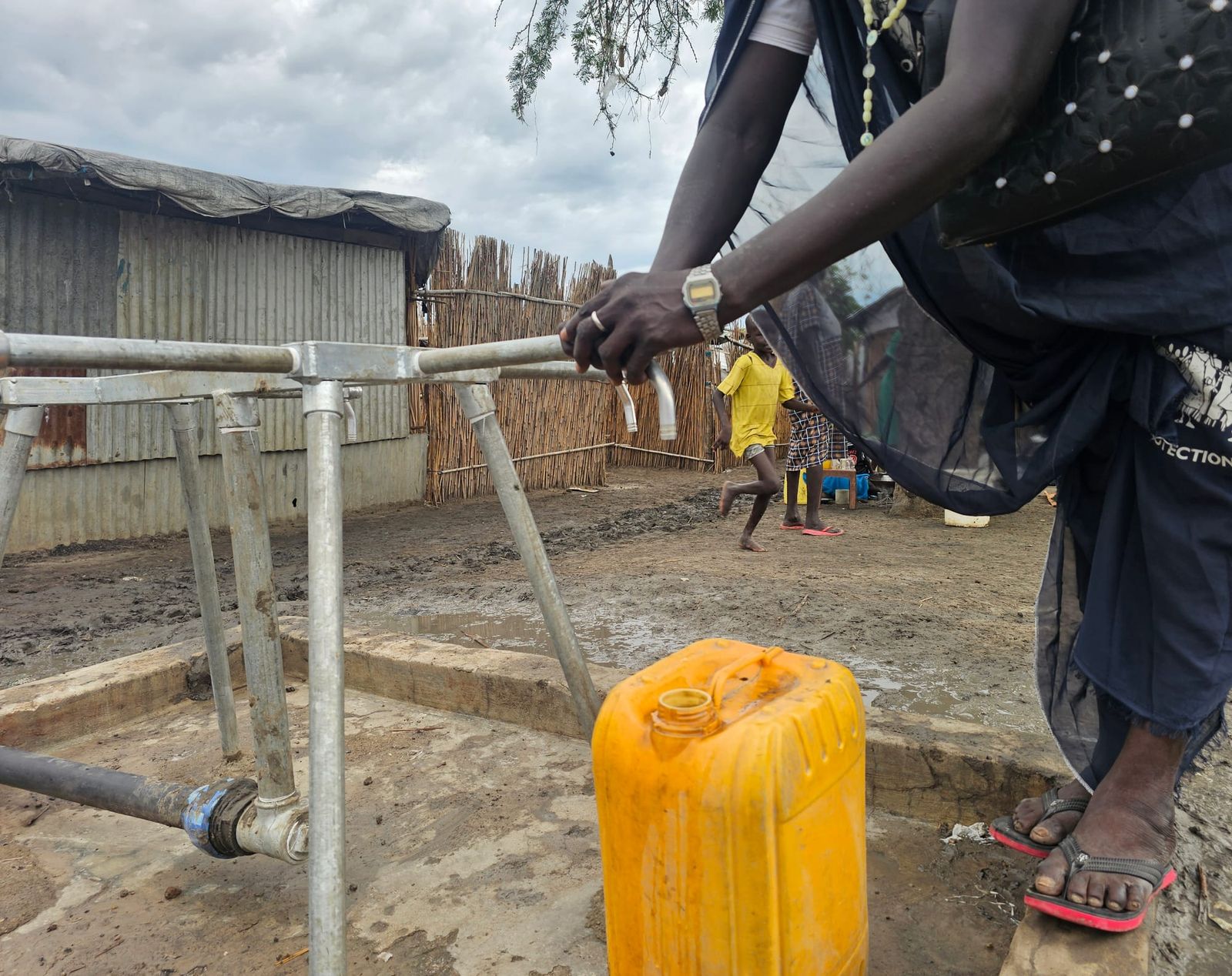
Bentiu camp resident Deborah Nyakuy Chan fills up her jerry can at the water pump, South Sudan, September 2026. Photograph: Chondok Stephen Magei
Funding constraints have seen international aid agencies pull out from water, sanitation and hygiene projects, adding to the shortages. Before each family was entitled to four liters of water filled in a jerry can. Now families can get only two jerry cans from the tanks. Some families miss out and don’t get any water in a day. When this happens, sometimes we’re forced to use dirty flood water.
Cases of sexual assault and harassment against women have been reported at water points. There was one recorded case of rape at a water point in 2024. The government should employ permanent judges to handle sexual assault cases. It's an issue that isn't taken seriously."
As told to Chondok Stephen Magei, a South Sudanese radio station manager and journalist, living in Bentiu camp.
Sie können Zivilisten schützen, die in gewalttätigen Konflikten leben oder vor ihnen fliehen. Ihr Beitrag wird die Reaktion der Welt auf Konflikte verändern.