




Semaine de la protection des civils 2026
Now in its ninth edition, Semaine de protection des civils (PoC) brings together governments, UN bodies, NGOs, and communities affected by conflict to share tools, strategies, and insights to better protect civilians. This year’s guiding question, “How to Ensure Protection of Civilians amid Reforms and Constraints?” aims to ensure the protection of civilians remains a core priority guiding how the UN and the international community adapt to their changing environment.
En tant qu'organisation fondée sur Protection civile non armée (UCP), Nonviolent Peaceforce is proud to participate in PoC Week 2026 to advocate for méthodes non violentes menées par des civils qui préviennent la violence, protègent les communautés et promeuvent une paix durable. Nous partagerons des témoignages, des enseignements tirés du terrain et des recommandations politiques qui démontrent ce qui est possible lorsque les civils sont considérés comme acteurs de leur propre protection.
Découvrez nos événements à venir, participez à la conversation et soutenez-nous pour réclamer une responsabilisation renouvelée, une mise en œuvre rigoureuse des mandats de protection et une approche plus juste et humaine des conflits.
Voir ici pour le Déclaration des ONG de 2026 en amont du débat public sur la protection des civils
Semaine POC : Événements NP en partenariat
All events take place on Wednesday, 20 May 2026
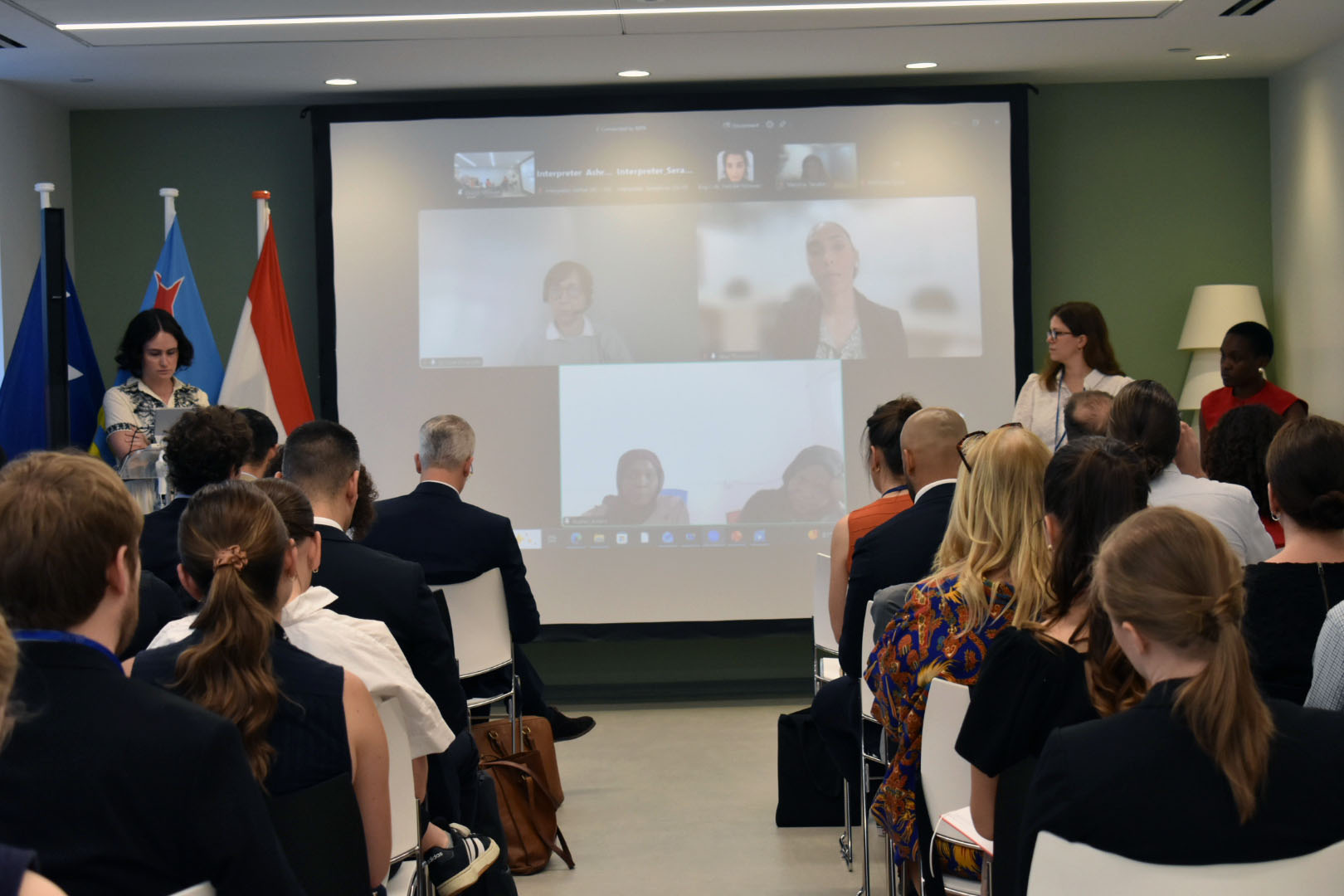
Centering civilian agency and community-led protection in an era of institutional constraints and austerity
As UN institutional capacity contracts through budget cuts, mission drawdowns, and reduced donor engagement, the civilians most at risk are bearing the heaviest consequences. This event centers the people and grassroots strategies that sustain civilian protection even as international actors step back. Through firsthand testimonies, case study discussions, and a short panel, it asks what Member States, UN agencies, and humanitarian actors can do to meaningfully recognize and resource locally led protection.
- Concept note ➜]
- Watch now
- Read remarks from Alawiya Abdalla Haron, Women Protection Team member from Sudan in English, or remarks in Arabic
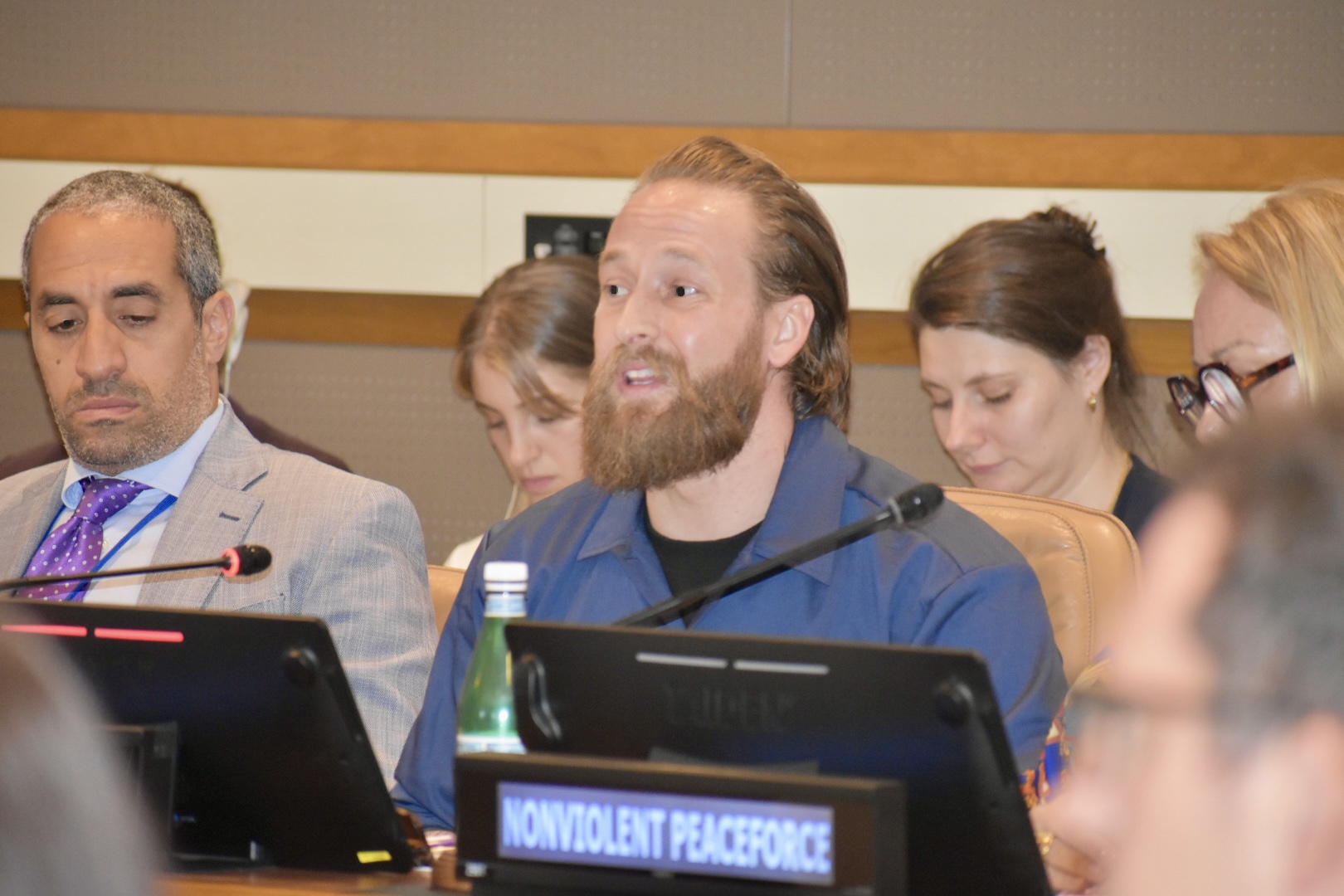
Protecting the protectors – Centering the protection of humanitarian personnel through the reset
What does it mean to “localise” protection work ethically, ensuring that local frontline responders are supported rather than exposed to undue risk. This discussion examines current norms, highlights challenges and considers practical ways to equip and empower those on the ground, make sure they stay safe too.
- Concept note ➜]
- Watch now
- More on LinkedIn, Bluesky, Threads
- Read remarks from Joachim Kleinmann, Head of Ukraine Programming, Nonviolent Peaceforce

PoC week through the arts: Artists from conflict on protection, pressure and survival
At a moment when tightening restrictions and shrinking budgets are pushing conflict-affected voices further from the rooms where decisions are made, this evening event brings together poetry, short film, music, and painting to create a space where firsthand accounts can be heard and centered through art. Drawing on the UN’s longstanding recognition of art as a tool for peace, the event shows that there is still room, even under constraint, for the stories of the people the international protection system exists to serve.
Lectures recommandées
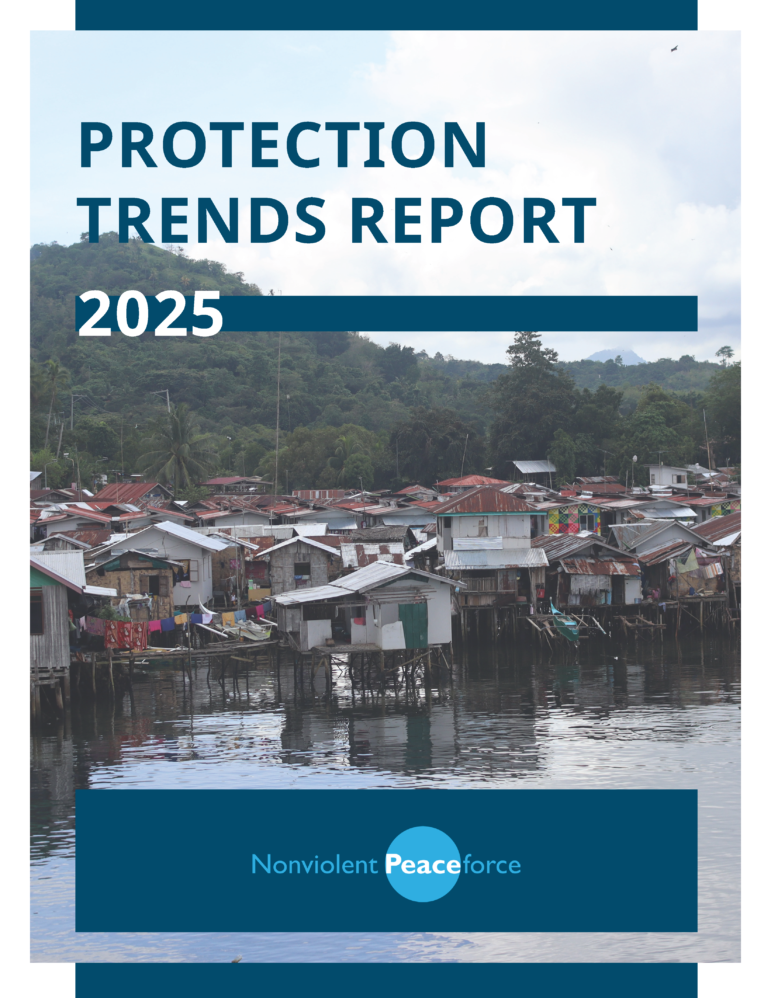
Rapport sur les tendances en matière de protection 2025
New report documents how contemporary conflicts are increasingly fought in civilian spaces, exposing communities to sustained violence, dangerous and cyclical displacement, widespread hunger, climate-related insecurity, conflict-related sexual violence, misinformation, and shrinking humanitarian access. Drawing on frontline reporting and close engagement with affected communities, the report highlights both the erosion of formal protection systems and the growing sense of abandonment felt by civilians. At the same time, it underscores that, even under extreme constraint, civilians continue to act with agency to protect themselves and one another — reinforcing the urgent need for preventive, civilian-led, and nonviolent protection approaches grounded in long-term presence and trust.

Protéger ceux qui restent : repenser le devoir de diligence
Chez NP, un cadre holistique de devoir de diligence intègre des mesures de sécurité physiques, techniques, psychosociales et opérationnelles dans la conception et la mise en œuvre de nos activités. L'approche de NP en matière de devoir de diligence s'est forgée principalement grâce à l'expérience acquise dans des contextes de conflits de haute intensité, comme en Ukraine. Nous constatons toutefois que les principes qui sous-tendent cette approche sont transposables à divers environnements opérationnels. Notre dernier rapport d'information examine comment nous adaptons le dispositif de devoir de diligence à différents contextes de conflit, de l'Ukraine à la RDC, en passant par l'Irak, le Myanmar, le Soudan du Sud, le Soudan, la Syrie et les États-Unis.

Protection psychosociale dans les crises humanitaires
La sécurité physique et la santé mentale des personnes victimes de violence sont intimement liées. Les conflits et la violence engendrent une détresse psychologique importante en raison des menaces directes qu'ils font peser sur la sécurité et les droits humains. De nombreux cas de traumatismes non pris en charge alimentent les cycles de violence ou réduisent la capacité d'engagement civique et d'autoprotection. Pour être durables, efficaces et éthiques, les mesures de protection doivent intégrer la prise en compte de ces problèmes de santé mentale.

Les préjudices numériques et leur impact sur la cohésion sociale : exemples de Ninive, en Irak
In Iraq, social media has become a primary source of information and a key space where fear, frustration, and collective memory are expressed. While digital platforms can facilitate communication, they have also enabled the rapid spread of misinformation, hate speech, and polarising narratives. These dynamics have reinforced harmful stereotypes, fueled tensions between communities, and weakened trust in authorities, further weakening social cohesion in areas still recovering from Islamic State (IS) violence. The following case study highlights digital challenges and recommendations for civil society to consider.

La guerre par drones en Irak : considérations relatives à l'impact sur les civils et le conflit dans son contexte
This paper takes Iraq as its focus, highlighting how fragmented authority and overlapping security arrangements and alliances interact with drone use to create distinct risks to civilians and shape possibilities for conflict mitigation and management. Iraq is not just another theatre of drone warfare, it is a structurally distinct proxy conflict space where fragmentation, hybrid actors, competing alliances, and infrastructural fragility reshape how civilians are impacted.

Repenser la protection : pourquoi les partenariats opérationnels UA-ONU doivent intensifier les stratégies non armées
ACCORD | Sept 30, 2025
As debates around the African Union (AU)-United Nations (UN) partnership intensify ahead of the upcoming session of the AU Peace and Security Council (PSC) and UN Security Council (UNSC) annual consultation, much of the focus of this partnership has become narrowly technical, centring largely on the implementation of UNSC Resolution 2719 on financing AU-led peace support operations. Financing modalities, accountability frameworks, and case-specific missions such as the African Union Support and Stabilisation Mission in Somalia (AUSSOM) or mediation efforts in the Democratic Republic of the Congo (DRC) and Sudan dominate much of the agenda. While these issues are important, this perspective risks obscuring the deeper rationale for the partnership: to deliver stronger peace and security responses, especially for the civilians most affected by conflict.

Les civils peuvent-ils combler le manque de forces de maintien de la paix dans l'est de la RDC ?
Institute for Security Studies | May 12, 2026
If formally recognised, unarmed civilian protection and community-based early warning can offer a path to sustaining stability and security amid troop withdrawals. Civilians caught up in the eastern Democratic Republic of the Congo (DRC) conflict are developing mechanisms to protect eux-mêmes – alors même que les attaques contre des civils sont soulèvement, et l'empreinte de la Mission de l'Organisation des Nations Unies pour la stabilisation en RDC (MONUSCO) se réduit.
Envie de recevoir des histoires de paix dans votre boîte mail ?
Découvrez les dernières actualités, les événements à venir et les nouvelles opportunités d'agir.