
What Darfur’s Peace and Reconciliation Committees Reveal About Africa’s Conflict-Prevention Architecture
Press Clip Source: ACCORD
Article By: Lesley Connolly, Regional Policy and Advocacy Manager at Nonviolent Peaceforce and Chris Ogbonna, Head of Program at Nonviolent Peaceforce in Sudan
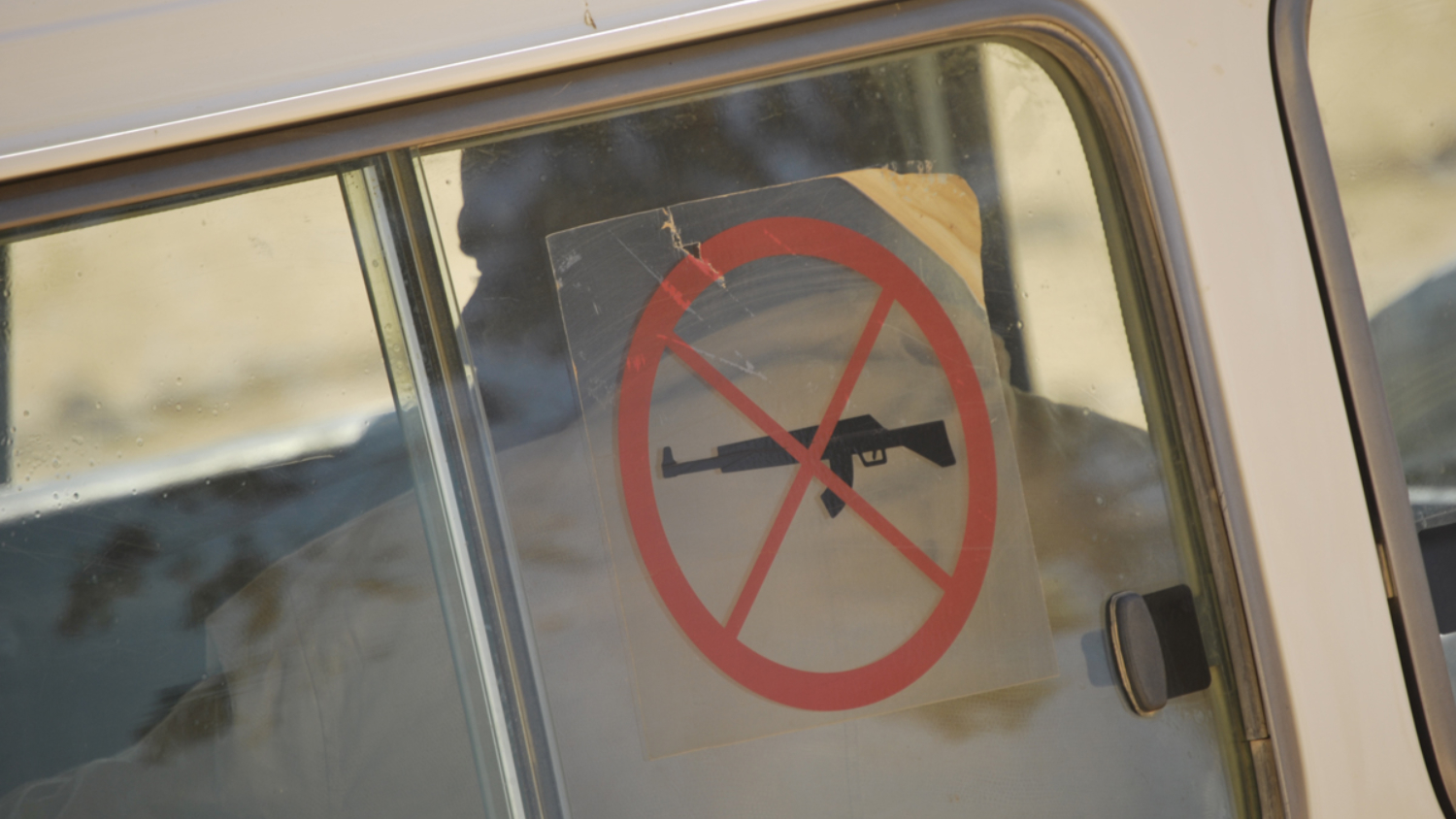
Grassroots mechanisms like PRCs are a working part of the continent’s peace and security architecture, that has not yet been fully recognised
Sudan’s war has now run for three and a half years. The African Union’s (AU) Panel of the Wise has struggled to make headway in Sudan, where engagement has so far centred more on communiqués and high-level dialogues in Addis Ababa than on the on-the-ground fact-finding for which the model was built. This mechanism is not limited to the AU. Under the Pan-African Network of the Wise (PanWise), nearly every Regional Economic Community now has its own version of the same idea: SADC’s Panel of Elders, ECOWAS’s Council of the Wise, the ECCAS Council of the Wise, the COMESA Committee of Elders, the Eastern Africa Standby Force’s Panel of Elders and IGAD’s Council of Eminent Persons.
Meanwhile, in North Darfur, a version of that same model operates daily, and almost entirely unrecognised: Peace and Reconciliation Committees (PRCs) – unarmed, civilian-led panels of elders, sheikhs, umdas, shartais and religious leaders whose authority rests on relationships. PRCs are doing, case by case, what their continental counterparts were established to do, but several levels down, with far less transport, communication or protection, and amid greater insecurity.
This article argues that grassroots mechanisms like PRCs are not a footnote to the continent’s peace and security architecture. They are a working part of it that has not yet been fully recognised. As the AU works to enhance its role in achieving better peace and protection outcomes on the continent, it is important to explore how to bridge the gap between continental institutions and community-led mechanisms.
PRCs are panels of elders, sheikhs, umdas and shartais – figures who have mediated disputes in North Darfur for generations, drawing on standing built over years of relationships and civilian-to-civilian trust
‘Panel of Elders’: the role of the PRCs in North Darfur
PRCs are panels of elders, sheikhs, umdas and shartais – figures who have mediated disputes in North Darfur for generations, drawing on standing built over years of relationships and civilian-to-civilian trust. What that standing can achieve, and what it costs, looks different case by case: in reaching a settlement, in making a settlement hold, in fact-finding under direct threat and in sheer persistence.
Settlement is the most direct example of the work of a PRC. In Tawila, a PRC resolved a case involving the theft of 100 sheep, in which the affected families were ‘very angry and wanted to recover their property by force’. The committee convened both sides, negotiated compensation, and closed the matter before it escalated. This is an example of mediation conducted by people with no authority to compel either party, only the standing to be trusted by both.
A second case shows how fragile those settlements can be even when they hold. When two boys were abducted and held for a ransom of seventy camels, committee members held roughly eight rounds of mediation, negotiated a hostage exchange and eventually secured the boys’ release – a resolution that remains not fully closed years later.
A more severe case came from Bali Sarif, where a cattle dispute had already drawn the PRC to the area when a farmer was killed in his field. Before the committee could reach the victim’s community, news spread, and ‘more than 300 motorcycles and over 50 Land Cruiser vehicles’ gathered to retaliate; a second killing occurred while the committee was still travelling. PRC members walked into the mobilised crowd and negotiated space to investigate before anyone acted, confirming their findings through an impartial representative – a fact-finding mission, under direct threat, using similar methods to those a Panel of the Wise field mission would use. The difference is in the level of engagement, not the method. It is also, in substance, a protective presence: unarmed civilians positioning themselves between an armed crowd and a further killing, relying on standing rather than force to create space for de-escalation.
A dispute Tawila’s PRC resolves over stolen sheep, or a killing it prevents from becoming a wider tribal war, rarely becomes an AU Peace and Security Council (PSC) agenda item
Some disputes take sheer persistence. A fourth case involved 52 separate mediation meetings – self-funded by the mediators – to reconcile two senior traditional leaders, a Shartai and an Omda, whose dispute had escalated into a court case that participants feared would damage confidence in customary justice altogether. That is not a quick intervention; it is the same patient, relationship-intensive work that regional panels of elders engage in over months of shuttle diplomacy, compressed into a single locality and carried out by unpaid volunteers.
Rarely does any of this reach Track One. A dispute Tawila’s PRC resolves over stolen sheep, or a killing it prevents from becoming a wider tribal war, rarely becomes an AU Peace and Security Council (PSC) agenda item. Silence at Track One is often read as absence of activity. However, in places with functioning Track Three mechanisms, it is frequently the opposite: evidence that the grassroots panel of elders has already done the work.
The missing middle, not just the missing link: Lederach’s pyramid, and why the middle matters as much as the ends
The three-track vocabulary draws on Lederach’s Building Peace: Sustainable Reconciliation in Divided Societies (1997), which sorts conflict actors into three tiers: a small elite at the top with little room to compromise; a large grassroots base at the bottom, closest to the conflict but least able to change it; and a middle range of actors – trusted by both, but part of neither – that Lederach argues is usually decisive.

Africa’s panels of the wise sit at the top of that pyramid. Darfur’s PRCs sit at the bottom. The clean argument links the two directly and calls the gap closed. Lederach’s pyramid suggests otherwise: the middle is the more decisive connector, with the room to manoeuvre that top elites lack and the standing that grassroots leaders alone cannot translate upward. This is a tier for policy work, cohesion and dialogue, sitting below the AU and IGAD, and above the PRCs. But policy does not stop violence or a blood feud; that falls to the PRCs beneath it.
This gap is not unique to Sudan. IGAD’s Conflict Early Warning and Response Mechanism (CEWARN) is meant to link local indicators to the continental architecture. In practice, the same disconnect is seen. CEWARN and the AU’s Continental Early Warning System (CEWS) are built for structured data, not the walk-in, verbally-verified information that a PRC produces the morning after an incident, but neither has an established channel through a functioning middle actor.
None of this makes the Track One to Track Three comparison meaningless. Continental bodies would still gain ground-truth information on Darfur if it could reach them, and PRCs would still gain from an architecture that treats the wise-person model as its most valuable tool. But if the goal is infrastructure that holds, the question is not whether Addis Ababa and Tawila are connected, but whether the tier in between exists, is resourced and is doing the connecting work its own mandate describes.
Moving forward
The AU has an opportunity to connect with local institutions already doing the work. Three things would make a concrete difference:
- Continental and regional early warning systems need clear channels for community-generated information. Although the CEWS was designed to aggregate data and advise the PSC, its links to local information networks, including PRCs and early warning early response (EWER) committees, remain limited. Even simple formal pathways could improve warning accuracy and response speed.
- Community protection actors need to be treated as partners in prevention efforts, and not beneficiaries of the outcomes. PRCs, Community Protection Teams and EWER committees are already preventing and de-escalating conflicts in areas that formal security and justice actors in much of Darfur are not able to reach.
- Funding for conflict prevention must reach the community level. Peace operations are costly, and the AU cannot fund them alone. The same applies to upstream prevention efforts. When a local committee lacks the resources to reach a dispute before it escalates, that is a problem of financing as much as policy.
Making peace after violence has erupted is costly and painful. The elders negotiating a livestock dispute before it becomes a blood feud, the PRC members walking unarmed into a mobilised crowd – these are the actors already doing the work that Africa’s peace and security architecture is meant to strengthen. The question is whether the continent will do the work to build the connection.
Lesley Connolly is the Regional Policy and Advocacy Manager at Nonviolent Peaceforce. Chris Ogbonna is the Head of Program at Nonviolent Peaceforce in Sudan.