
Shifting the culture for women and girl’s safety in Ba’aj
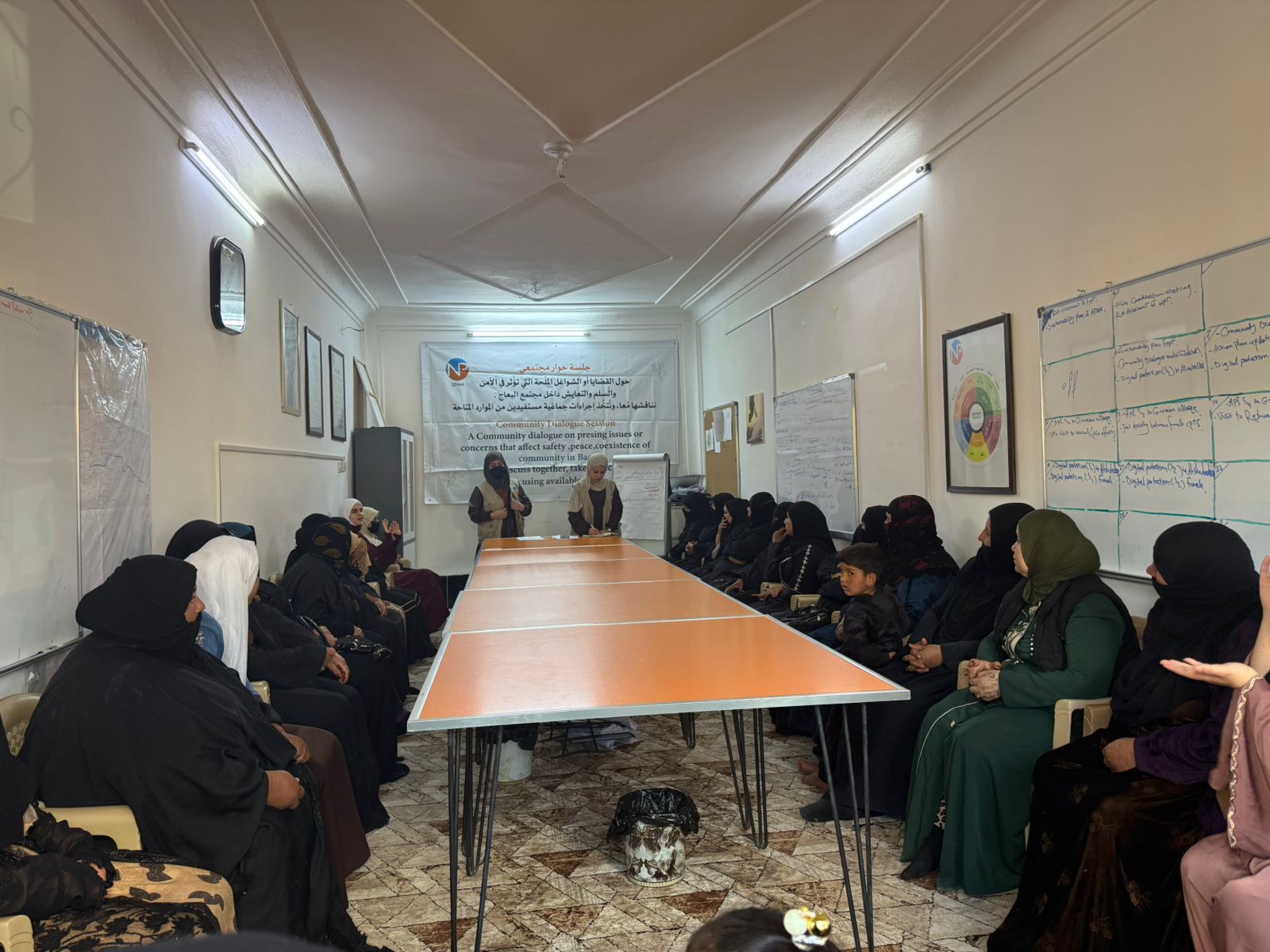
In Ba’aj district of Ninewa Governorate, social norms and traditions continue to shape and restrict women’s roles in public life. Women are rarely able to participate in decision-making in their communities or engage with local leaders. Even where there are government departments meant to support and represent women, their voices are rarely heard or trusted.
One example is the Women’s Empowerment Office - a department of the Mayor’s Office in Ba’aj. Engagement between the Office and women is rare, and historically, the office has not been a space women feel able to approach.
As a result, cases of harassment and abuse of girls and women, were rarely reported, as the community lacked accessible and trusted pathways to raise concerns.
Additionally, access to the court system comes with many barriers. Seeking justice for cases of harassment or abuse requires travel to the distant Mosul or Tel Afar, which creates logistical, financial, and social constraints that prevents women from reporting. On top of these physical challenges to accessing the courts, women in Ba’aj are provided with little information about how the courts work, such as how to file complaints or what paperwork is required. When women did file a court case they were often discouraged when their complaints were buried or ignored by the system.
This gap in access to formal structures of support was particularly evident among younger girls in schools. Girls regularly experience violence, including online extortion. And they also had no clear and safe pathway to engage local authorities to seek support or end the violence.
Women Peace Teams Create Pathways to Peace
In response, the local Women Peace Team (WPT) decided to leverage their training in Unarmed Civilian Protection (UCP) to create pathways for safer and more inclusive access to the local government and court system. Through sustained presence, relationship-building, and direct engagement, the WPT bridged the gap between women and the Mayor’s Office.
The WPT started by meeting with the Mayor and asking directly for the Mayor to strengthen the accessibility of the Women’s Empowerment Office (WEO), highlighting its limited functionality and the absence of effective governmental support for women. Discussions between WPTs and the Mayor’s Office focused on key protection concerns affecting women, including preventing online extortion, harassment, domestic violence, and broader constraints shaping women’s mobility, participation, and engagement in public life at the district level. These discussions resulted in a clear set of agreed priorities and an action plan.
Next, the WPTs, in coordination with the Women’s Empowerment Office, hosted awareness sessions in girls’ schools, including a session on online extortion in a girls’ high school.
“Without this session, we would not have known about the risks of blackmail or the important role of the Women’s Empowerment Office in supporting and protecting women.” —Female High School Student, Ba’aj
Yet, something that made a notable impact, was when the Women’s Empowerment Office found a way to directly interact with women in the community. After listening to the needs of the women, the WPT was able to amplify their input to the Office. Now, through a private WhatsApp group, WPT members can exchange messages with the WEO and coordinate protection-related concerns. Since the WPT has been working with the WEO, women and girls of Ba’aj have begun accessing its services for the very first time.
Due to the WPTs actions, cases of harassment and abuse that previously went unreported, are now being raised with the Women’s Empowerment Office. The communication pathway has even led to the Office finding new ways to support women in preparing the documentation required for legal cases, as well as ensuring complaints are submitted in line with legal requirements and can be formally processed by courts in Mosul. Additionally, the office is coordinating with relevant authorities, including the National Security Service (NSS), to follow up on cases enabling women to pursue cases more safely and responsively.
“This work and this cooperation will support women’s presence and facilitate their participation, and the joint work will play a major role in supporting women who have needs.” — WPT Member, Ba’aj
"We are happy to get to know the WPTs. We were not aware of the existence of women’s volunteer teams, and our joint work will be supportive for women, especially in enabling them to visit the Mayor’s Office to present women’s needs in the community.” —Women’s Empowerment Office Representative, Ba’aj
A safer Ba'aj for women and girls
The Mayor’s positive response to community-led advocacy by the WPTs reflects a shift in how local authorities are responding to women’s needs. Through relationship-building and constantly showing up for women of Ba’aj, the WPT has bridged the safety needs of women with local authorities. They’ve cultivated spaces where women and girls feel comfortable and safe reaching out for support.
The WPTs' active engagement has contributed to strengthening trust with both community members and local authorities. In time, we could see them becoming the go-to resource for women to turn to for assistance in finding everything from legal support to socio-economic services.
Women are beginning to raise concerns and seek support in ways that have previously not been possible, while younger girls are becoming more aware of these pathways and gaining their confidence in using them. These changes are the foundation of a cultural shift in both how women and girls engage in their communities, and how they express their needs. It’s skills like these that are the backbone of a safer and more peaceful Ba’aj.