
Staff Spotlight: Yuliia Tymchyk, Partnerships Support & Resource Coordinator in Ukraine
In recognition of World Humanitarian Day on August 19, we’re doing a special Staff Spotlight! This year, we sat down for a Q & A with Yuliia Tymchyk, our Partnerships Support & Resource Coordinator for our country programme in Ukraine. On October 3rd, Yuliia will be celebrating 4 years with Nonviolent Peaceforce.
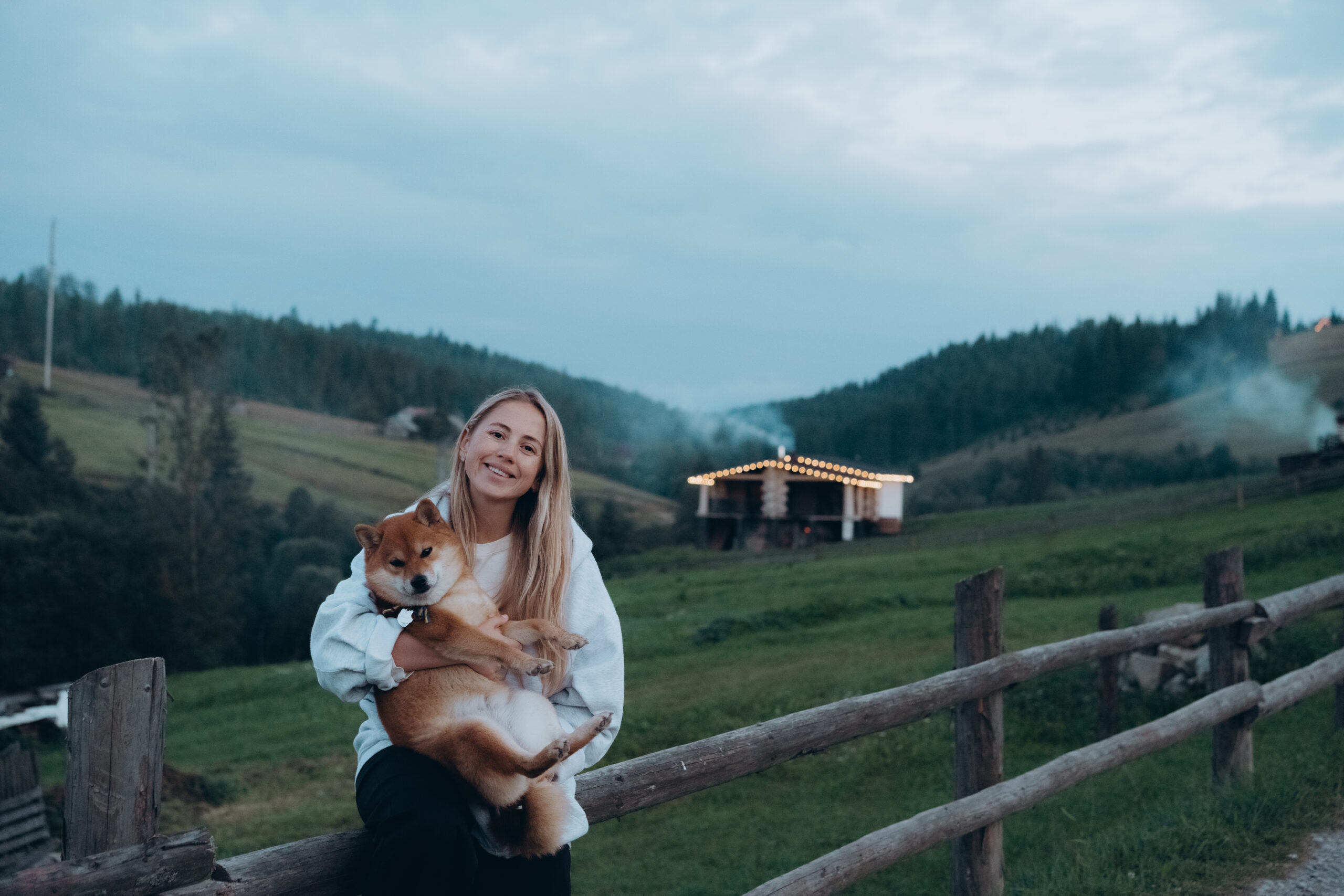
“Over the past three years [in the Partnerships Support & Resource Coordinator role], she's helped lead on one of the strongest parts of our programming through her leadership, and care, and commitment, she embodies the professionalism, humility, technical expertise, and commitment that we want NP to be known for.” - Joachim Kleinmann, Head of Programmes, NP Ukraine
Note: Minor edits made for length, clarity, and flow
For you, what does it mean to be a humanitarian?
That's actually a good question, because I was trying to think if I know how to not be a humanitarian. Looking back, I started my career straight from university. Even in high school, I led a summer project where I did awareness raising regarding how to protect yourself against HIV/AIDS.
I started in the sector early. I was 21 when I began working on supporting asylum seekers and refugees from other countries in Odesa. Back then, I never ever thought that Ukrainians and Ukraine overall would be in the same situation, finding ourselves refugees in other countries, and that the war would come to our country. At that time, I was working as a social worker with families from different countries, including Afghanistan, Syria, and different African countries.
The thought that war could be so close to Ukraine, or that we would exchange roles, never crossed my mind. Even though conflict started in 2014, it never felt like the war would be so close. For me to be a humanitarian, it's something that I was raised with. My mom started her career in the police, and then she switched to the NGO sector. So, I was raised with leaflets and flyers on the services that was provided from my mom's organization, it's always been a part of my life.
Sometimes when I look into the humanitarian sector across Ukraine, there’s a bit of frustration that I'm meeting inside of myself, because previously it was only people who resonated with humanitarian work that were coming into the sector (partly because it’s difficult to describe to your friends and other people around you what you do and the impact of your work). Then, when the war started in 2022, the need for the humanitarian sector greatly expanded.
For me, being a humanitarian looks like thinking about people first, and then figuring out how to make the magic happen. I'm always reflecting with my team, for example, around how the work that we’re planning will impact the person receiving the support. Will they feel more equipped or not?
--> Related: Anastasiya Marchuk, Head of Programmes, NP Ukraine on Local Humanitarian Responses
What does the role of partnerships coordinator actually entail?
Within NP Ukraine, the role of a Partnerships Support & Resource Coordinator involves providing support to local organizations, like, really local ones; hyper local ones who are living and working in their own hromadas [municipalities or communities] but lack resources to safely or sustainably do their work.
Not all of them are willing to be a huge NGO, and that's beautiful. They don't need to be a huge NGO to receive international aid for their projects or initiatives.
From my perspective, that's our task. Sometimes there are orgs that end up being ineligible to receive direct funding. When this happens, we try to find a way to get to know the organization and give them support so they do not have interruption in the work that they’re doing on the frontlines or in their own communities.
So mainly to connect NP’s resources to those who are genuinely willing to do the work. We avoid partners that, say, deliver aid to small communities, merely for the sake of marking it off their checklist.
What does a typical day look like in your role?
A typical day involves a lot of meetings and a lot of calls and communication with different partners. The portfolio of NP Ukraine, it's quite big. We do have a lot of meetings to try to align our field teams and my team together and get us all on the same page. We provide technical support to our partners and also our protection teams.
As the Partnerships Support & Resource Coordinator, I stress that NP is not a donor organization. We look to work with and cultivate relationships with community partners that are built on our commitment to responsible partnerships. This means that there is a lot of NP in their life, both in terms of technical support, but also in the protection side of the project. So we're not just doing OSM (On-the-Spot Monitoring) for the partners, we go to them, supporting with trainings, for example.
We always try to add additional value to our partners' work. I like to think of it as “capacity sharing”, because I wouldn’t say that we're developing the capacity of Ukrainian organizations, as they are already very well developed.
But through giving examples of how we’re doing our work and approaching civilian protection, we share the capacity that we do have inside our team, and we ask the same from our partners—because often, our partners are more experts in some topics than we are.
Instead of being focused on strengthening our team’s or partner’s capacity, we are more centered on sharing our expertise between both of us. This might look like making sure that our partners can access the good practices that we have in place and choose if they want to use something from our practices. There’s a lot of close communication and implementation together with our partners, because we’re actually implementing projects together with them.
How many local partners do you work with?
First of all, we're working only with the local organization, so there are no INGOs in our portfolio. As of right now, we have signed 22 projects, and more to come. Depending on the region, it can be from three to seven projects in one region. And it's also worth to mention that NP is one of the organizations who is not measuring only by financial support, because we have over 63 partners, under our duty of care, where we provide them with the package of duty of care, that include different components. The amount of these projects vary, ranging from 50,000 USD up to half a million, one million, depending on the partner and the scope of the work they are doing.
In cases where we do not give funds directly to the partner, that doesn't mean that we are not providing them with a duty of care. In comparison to other organizations in Ukraine, for example, that mostly only work with those partners and provide few additional benefits to them only if they're covering them with the sub-granting.
What keeps you motivated in this landscape? It's not easy working in the humanitarian industry, so what keeps you going to do the work?
When I started in this field in 2011, the first year was a really difficult one because my heart was heavy working with the families of refugees, asylum seekers, and there were a lot of children. Seeing the difficult circumstances they faced, how they were living, where they were living, often there was not enough food or toys or basic needs for those families.
At some point, I was given advice from my colleague, who said something along the lines of: Instead of trying to understand how we can support people through one-off immediate support, we should really be focusing on trying to change lives in a way where they, can continue supporting themselves.
I often go back to those words to reflect on rather I'm embodying this in my work.
I also believe that all people, any person, needs the other person. Humans need other humans. And I think that’s something that’s supported me in my life, because definitely there are a lot of frustrations that we come across in our work, there are a lot of difficult circumstances.
But when I read or hear stories of my partners, who are working on the frontline non-stop without any sick leaves or proper weekends, I acknowledge that I play a role in supporting them. I remind myself, if I can support them with their work that I'm doing from here, having weekends, having like a bit safer circumstances, (because guided UAV bombs are not coming to Odesa yet), my contribution is also really valuable.
It's also a bit of knowing how that's working and having the courage to speak for those who do not always understand that they could [speak for others or are] allowed to give the needed information to important people. Lots of our local partners, they think, due to UN structures, they’re not allowed to speak up. And we're like, ‘yes, you can and at NP will support you.’
Changing the systems, also gives me a lot of the motivation. Sometimes you think like, it’s impossible to change it. What could possibly push this mountain? And when you finally see progress that things are actually changing and someone is listening, that also gives a bit of motivation.
Any new initiatives or projects that you're particularly excited about?
At their workshop, they asked the children that participated to do something that would support in disseminating the digital security information to their peers. And they showed us a beautiful cartoon that was created by the children. So the children actually drew scenarios and one of the children, his mother supported him in creating this cartoon with great pictures that illustrated what he learned.
I was really excited when we saw this small impact of the project that we are supporting. It showed the ripple effect of what can happen when you present info in an engaging way that piques children’s interests. Suddenly, they want to share this information to other children, to their peers, to model themselves, and how to behave on the internet.
I'm also really excited because it's been one of the really heartbreaking aspects of the conflict for me personally. There is kind of evolving situation in which Russian forces, they are recruiting children online. For example, they might offer to pay them money in exchange for the positions of Ukrainian infrastructure, or they might say that we access to your personal data and your photos, and we will show it to all of your relatives. For example, if it's a teenage girl and she has some private pictures, they might threaten to share the photos publicly if she does not support them in the thing that they are asking her to coordinate on behalf of the job of Russian militaries.
When children participate in these arrangements, many times, they end up being held captive because they actually followed through with what they were manipulated into doing, and people died or property was damaged as a result. These children are then being held captive. Fortunately, we have partners that are working with them.
That’s why the digital security piece is so important and awareness around how to protect yourself under the circumstances we are currently facing.
One small cartoon or one small job [as a humanitarian], it can be connected to children keeping themselves safe and avoiding truly difficult circumstances in which they could end up in jail and or their lives forever changed.
--> Related: Iraq, digital safety and online extortion
Anything else you'd like to mention about what it's like to work as a humanitarian?
Mental health and psychosocial support is especially important for humanitarian workers. In our sector, we don’t necessarily always work with the happiest of people, but with people that have faced really difficult life circumstances that can lead to feelings of depression.
And one of the things that’s really supporting me, but also as a Ukrainian, is having in our office is having mental health support from pets. Our Ukrainian office is super pet-friendly— so whenever a member of the team is feeling down, we can always find a dog in the office to cuddle. Whether they know it or not, our pets are doing their own humanitarian job!
Testimonial from A Colleague
Yuliia's colleague, Joachim Kleinmann, shared further praise:
"Yuliia’s commitment shows up in every interaction, every day. She works tirelessly to ensure our partners not only have the resources and support they need, but are empowered to work independently and lead their own response. Much of this work happens quietly, behind the scenes and without the spotlight it deserves. She is truly one of the unsung heroes of our mission. The impact of her work may not always be immediately visible, but it is felt in the strength, confidence and independence of the partners we work alongside. Seeing the care, consistency and determination she brings to this every day is genuinely inspiring. It is this kind of quiet, sustained commitment that creates the meaningful and lasting change we hope to see in humanitarian action."