
Protection through the Arts
During this year’s Protection of Civilians (PoC) Week, Nonviolent Peaceforce organized a special event to spotlight the voices of civilians affected by conflict through art.
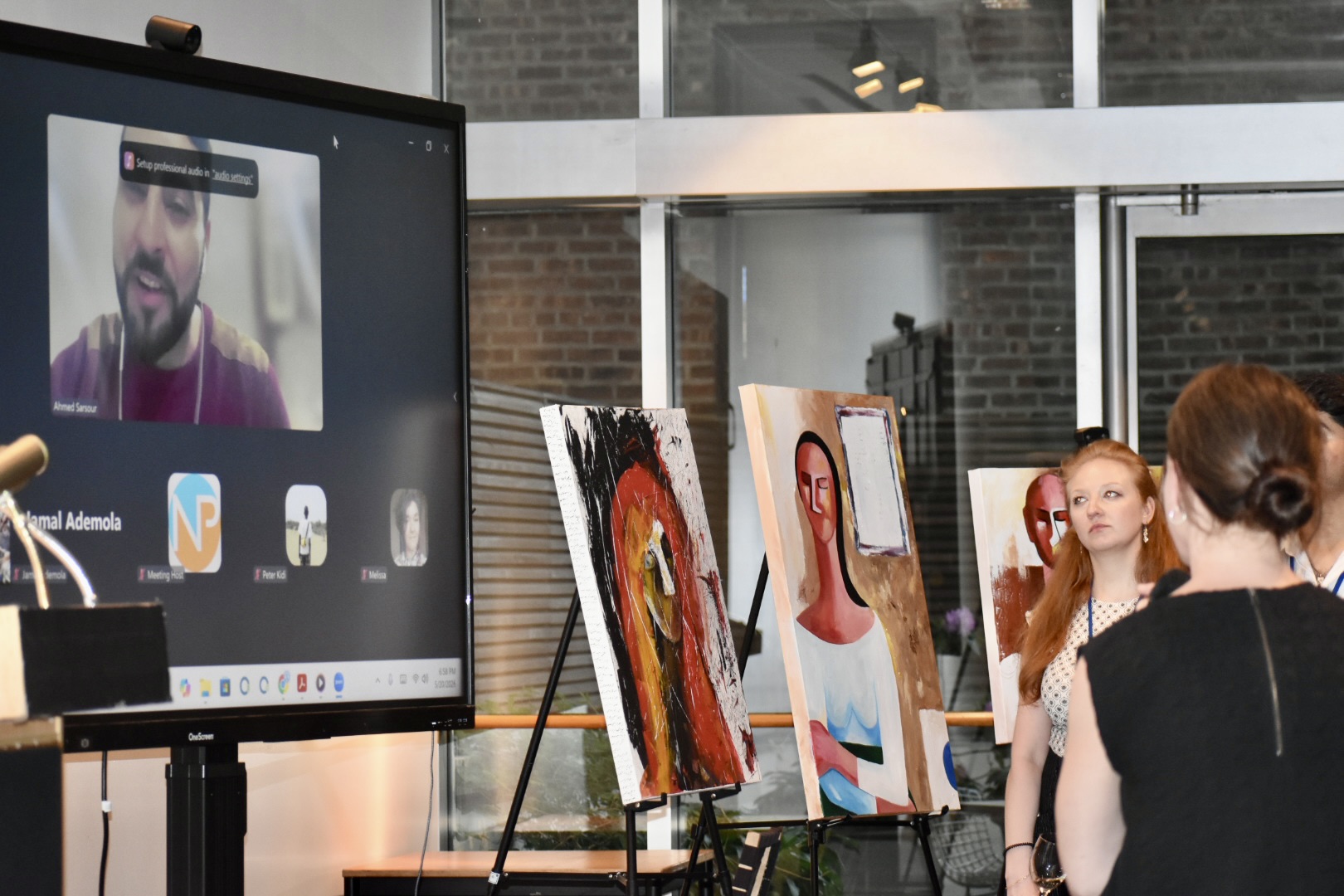
The evening explored civilian protection and respect for international human law through image, sound, narrative, and presence. Attendees reflected on original works shared by artists living in, or displaced by conflict in the form of poetry, short film, music, and painting.
Why did we invite artists to a humanitarian event?
For civilians who bear the brunt of rising violence, and also for the policymakers and advocates who find themselves increasingly trapped in polished language and carefully hedged statements that fail to capture the full weight of the suffering taking place, it is a challenging time. Meanwhile, tightening restrictions on travel and access have made it harder than ever for voices from conflict-affected settings to be physically present in New York — precisely where decisions affecting their lives are being made.
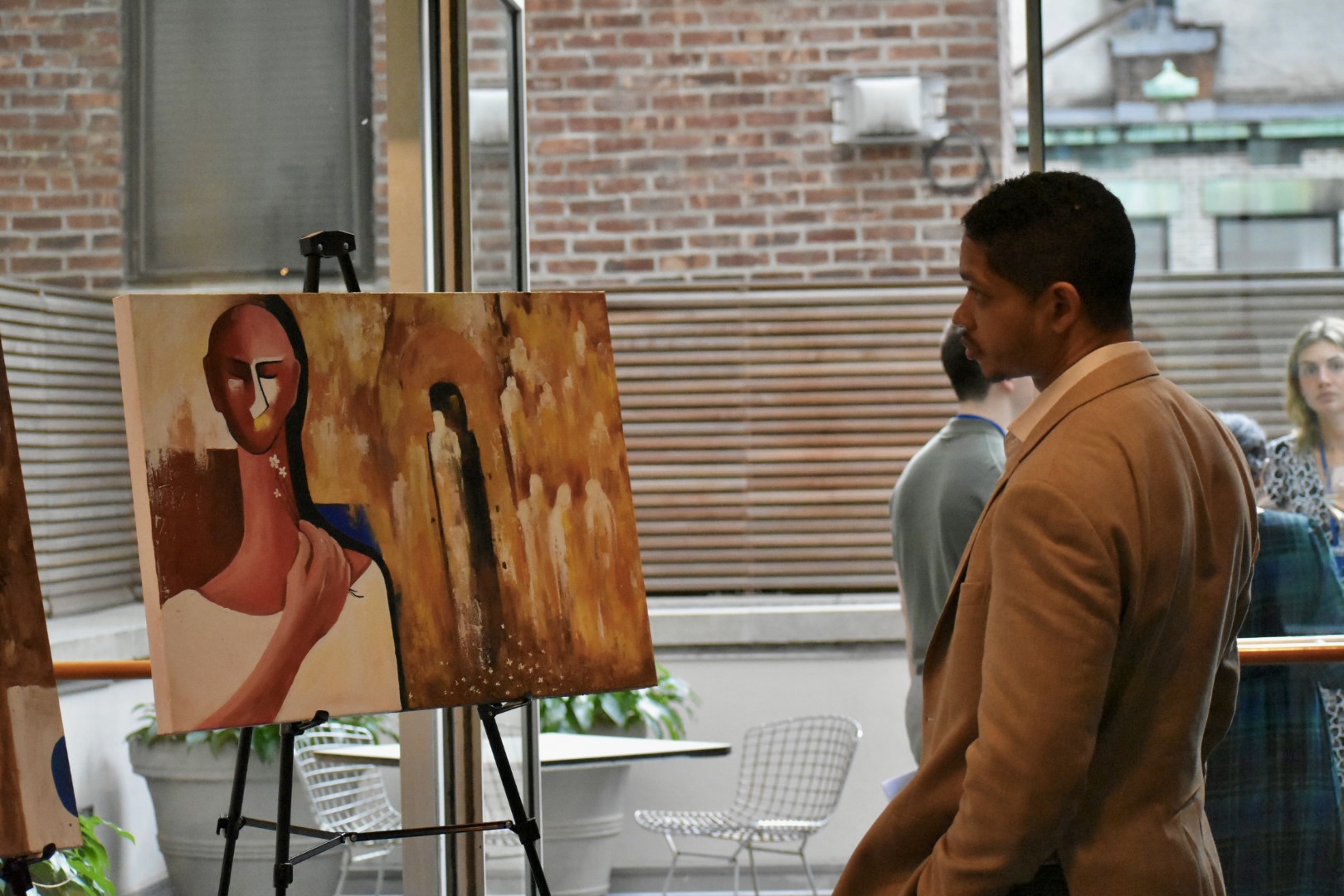
“PoC Week Through the Arts” was conceived as a response to both of these realities. First, it sought to cut through the jadedness by curating a space where firsthand accounts of conflict-affected people can be heard, seen, and centred, as the systems meant to protect them contract.
Second, it addressed the core aspect of constraints and barriers of this year's PoC Week question “How to Ensure Protection of Civilians amid Reforms and Constraints?” by showing that protection fails when it loses sight of the people it is meant to protect. The event was another way of ensuring we keep civilians, along with their stories and realities, front and center.
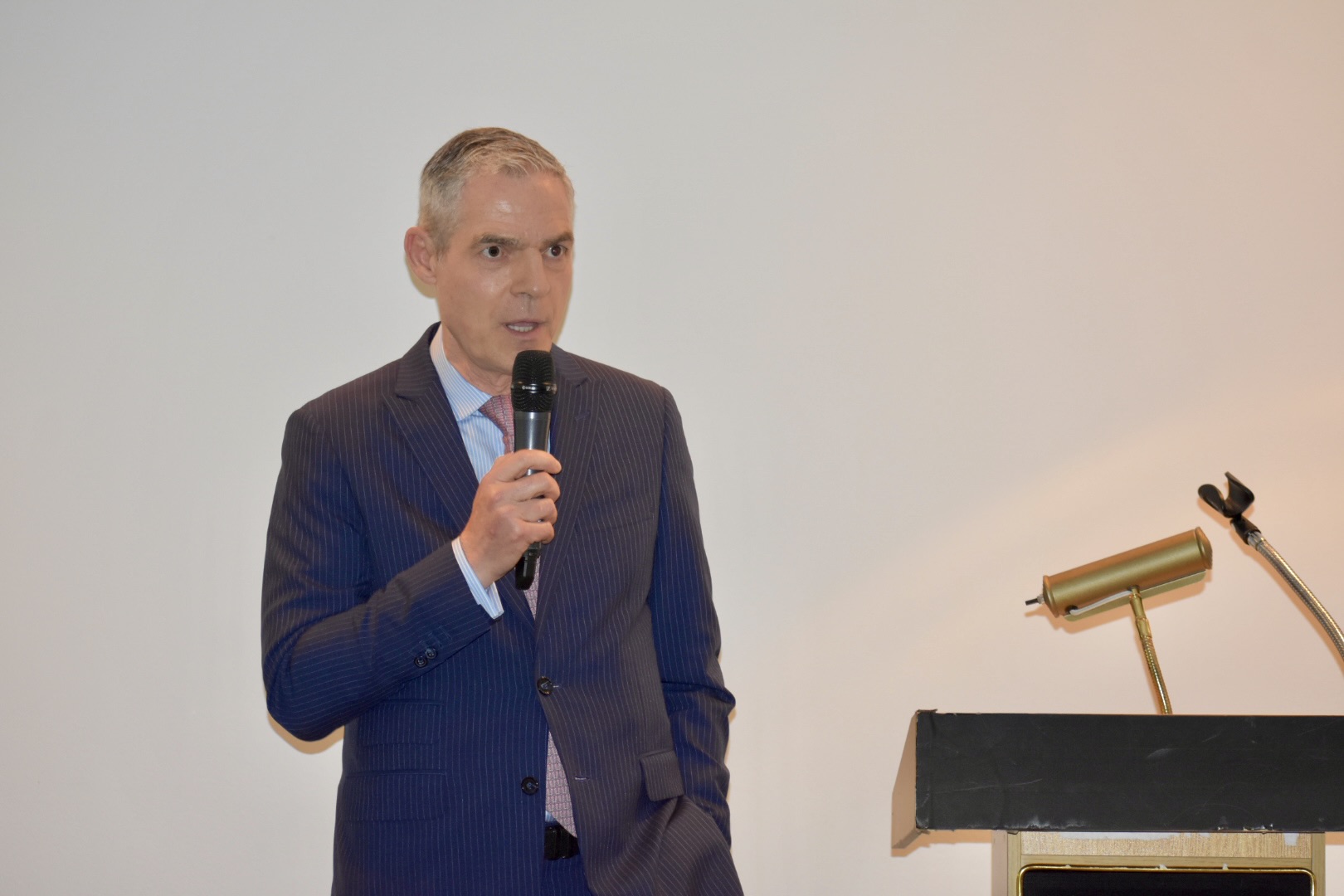
“There is the action of civil society and associations who are trying to protect civilians, trying to educate people, trying to organize recovery. And there are the artists who are rebuilding humanity... I want to thank and congratulate all those who give their lives to art, in order to give meaning to our lives and to help us in overcoming the trials we are facing.” -H.E. Ambassador Jérôme Bonnafont, Permanent Representative of France to the United Nations
Featured Artists
Bringing together poetry, short film, music, and painting in a walking exhibition format, we invited participants to engage with the protection of civilians and respect for international humanitarian law through image, sound, narrative, and presence. The works featured artists living and working in, or displaced by, conflict. Pieces were performed and shared both from US-based artists, and those living on the frontline of violent conflict.
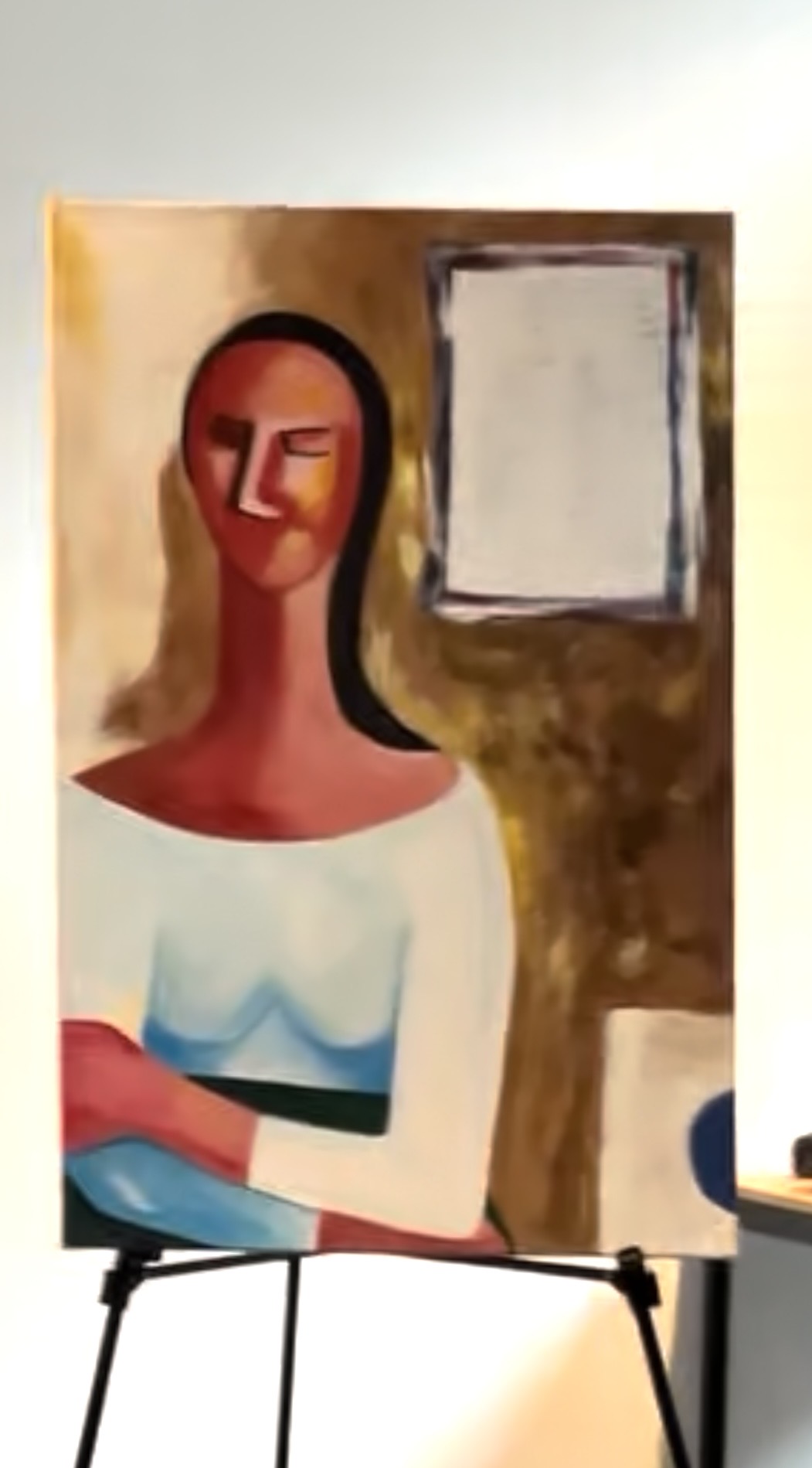
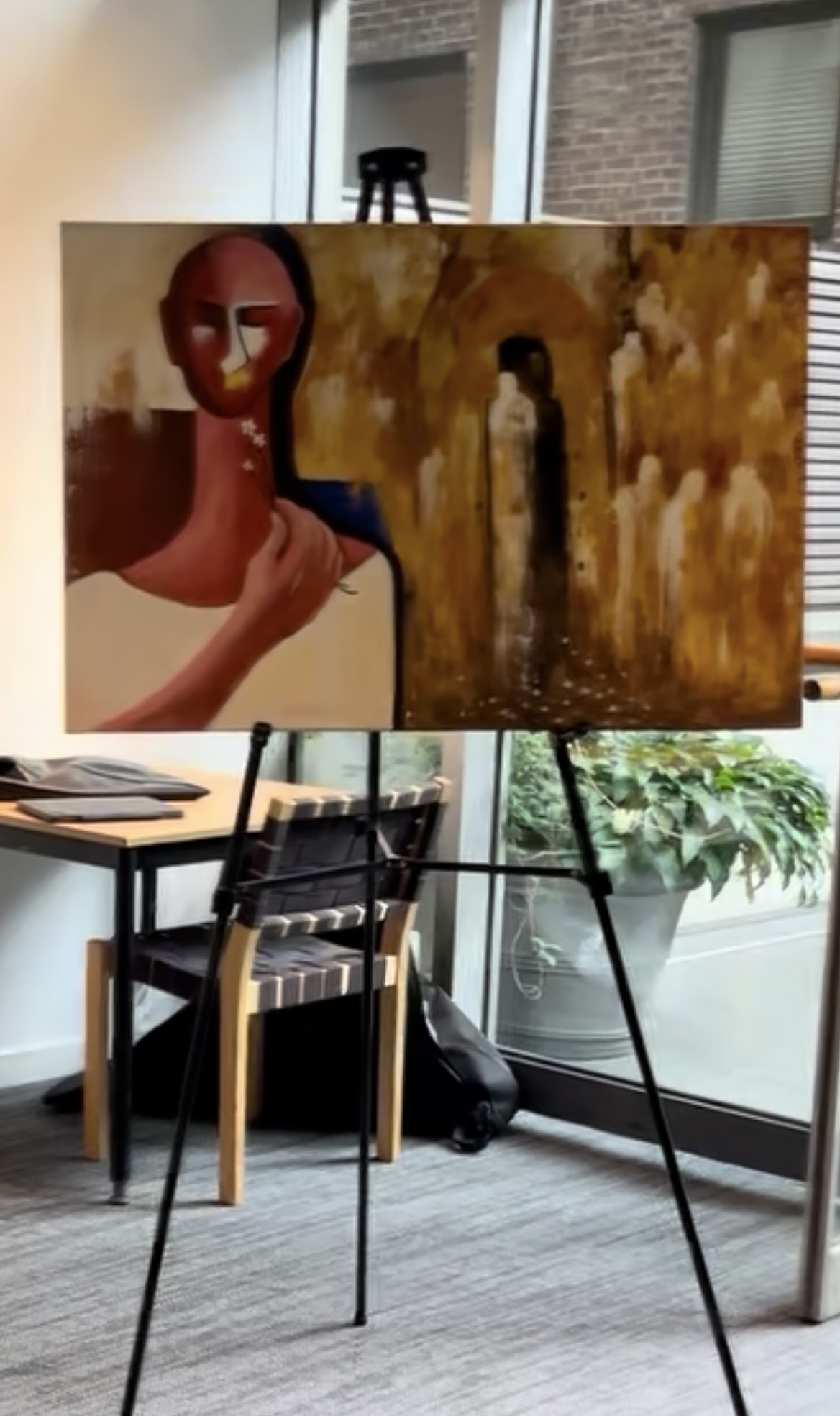
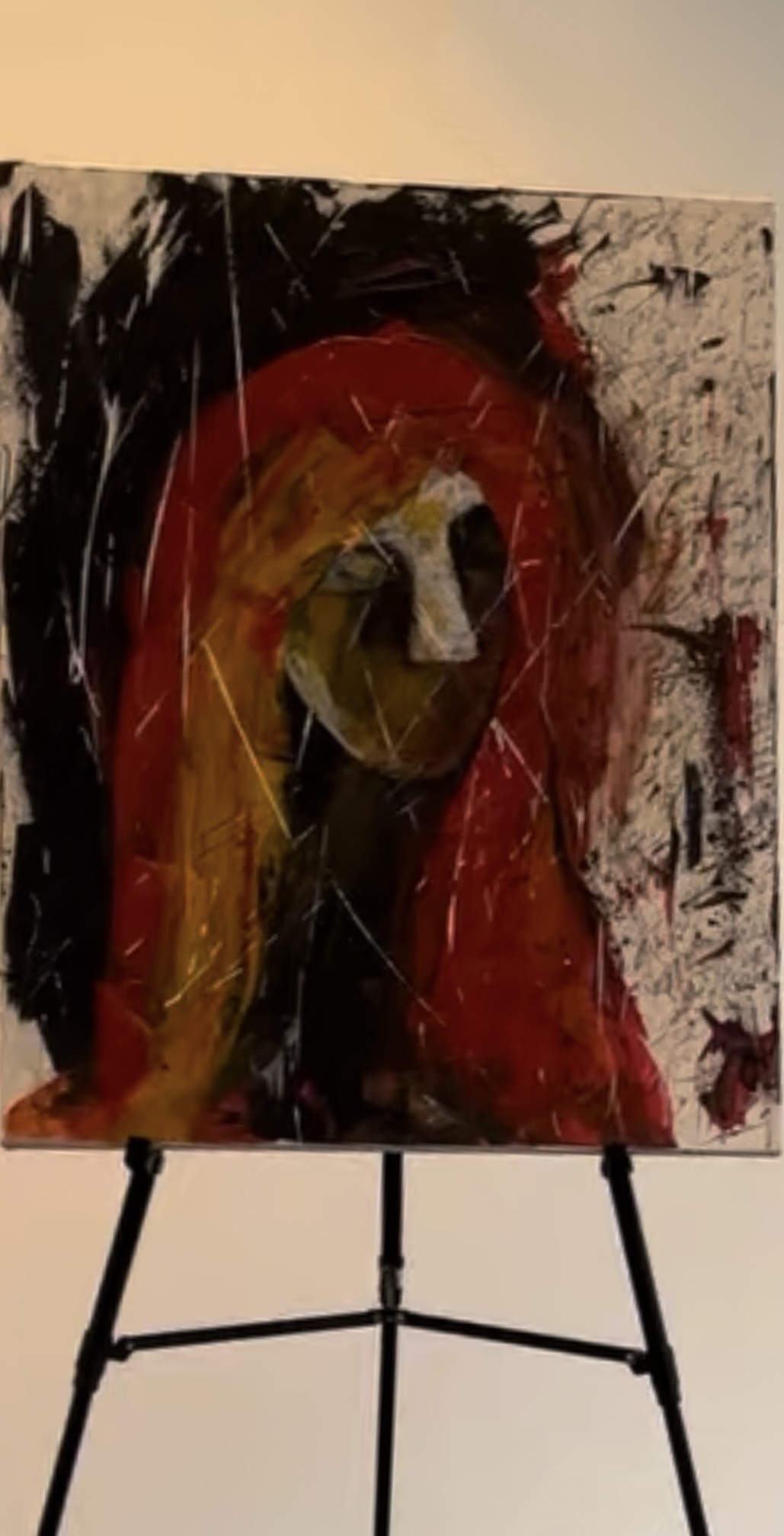
Jahan Ara Rafi, Painter
Jahan Ara Rafi is a gifted visual artist from Afghanistan, that advocates for the rights of Afghan women and girls.
Her work asks why women are made to feel the weight of gender difference when trying to find their place in society, and what it means to carry that weight across generations. In a room mostly populated by policy professionals, her paintings also asked a crucial question in protection discussions: what does it mean to see a person as more than the context that produced them?
Rafi co-founded the Centre for Women Artists in Kabul and has spent her career painting women, their identities, their social roles, and the limitations imposed on them.
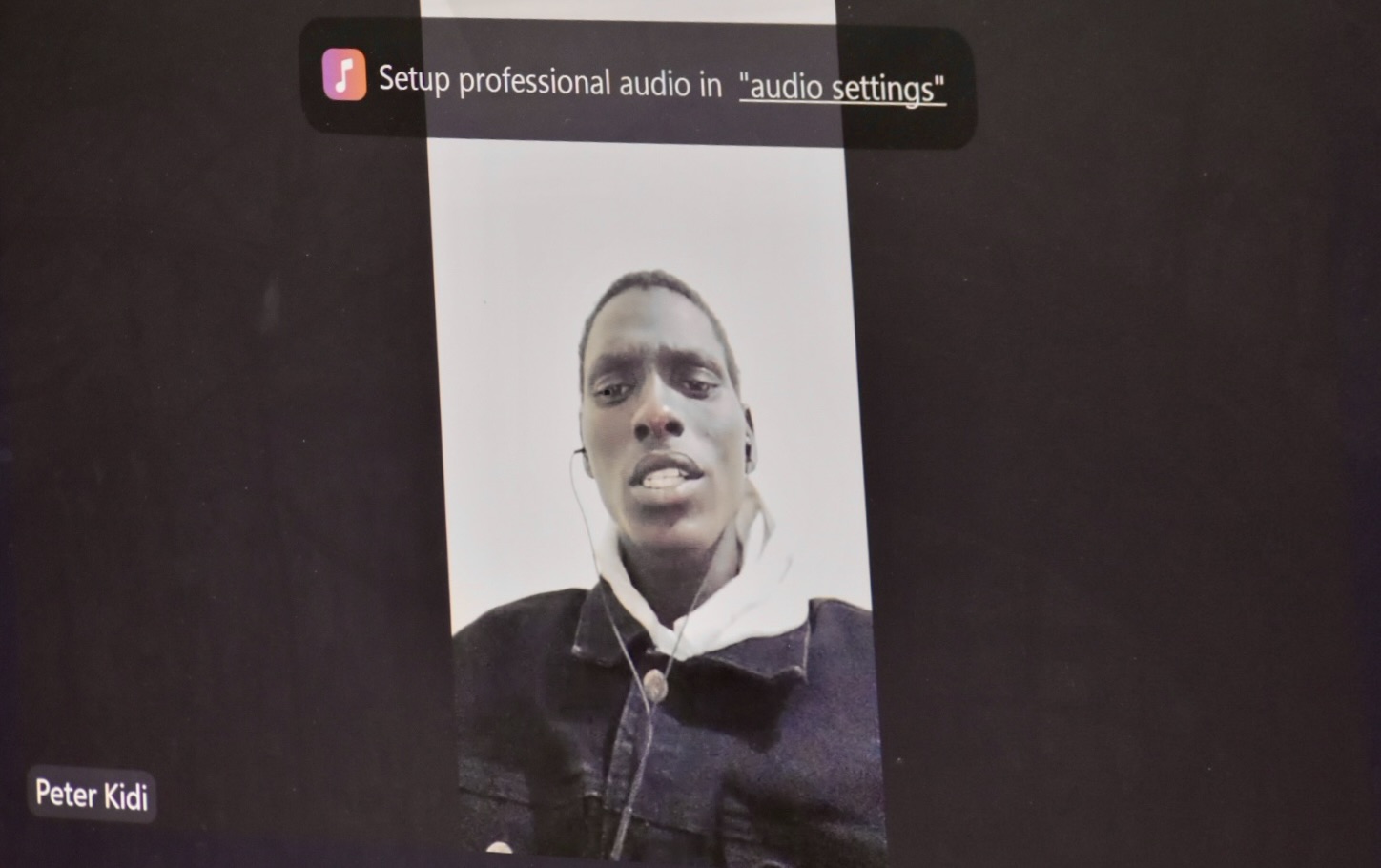
Peter Kidi, Poet & Refugee Activist
Peter Kidi is a poet and refugee activist. After his family fled conflict in South Sudan, Peter was born and raised in Kenya, at Kakuma refugee camp. Through poetry, he reflects on what it’s like for civilians to grow up in refugee camps, experience displacement, and be on the receiving end of humanitarian aid.
Peter’s work is raw, honest, and aims to give a voice to the voiceless. He has been featured and highlighted by many publications, including The New Humanitarian, Ground Truth Solutions, Refugees International, and UK’s London School of Economics.
His poem “Metrics” turns its gaze on the humanitarian system itself. Its subject is a man whose suffering has been translated into indicators (consumption scores, graduation pathways, self-reliance metrics) and who has learned to perform recovery in the language of his evaluators. The poem is a precise and devastating account of what happens when systems designed to help people become better at measuring improvement than at seeing people. Its final image “a number that learned how not to scream” named something that much of the week’s discussion circled without quite reaching.
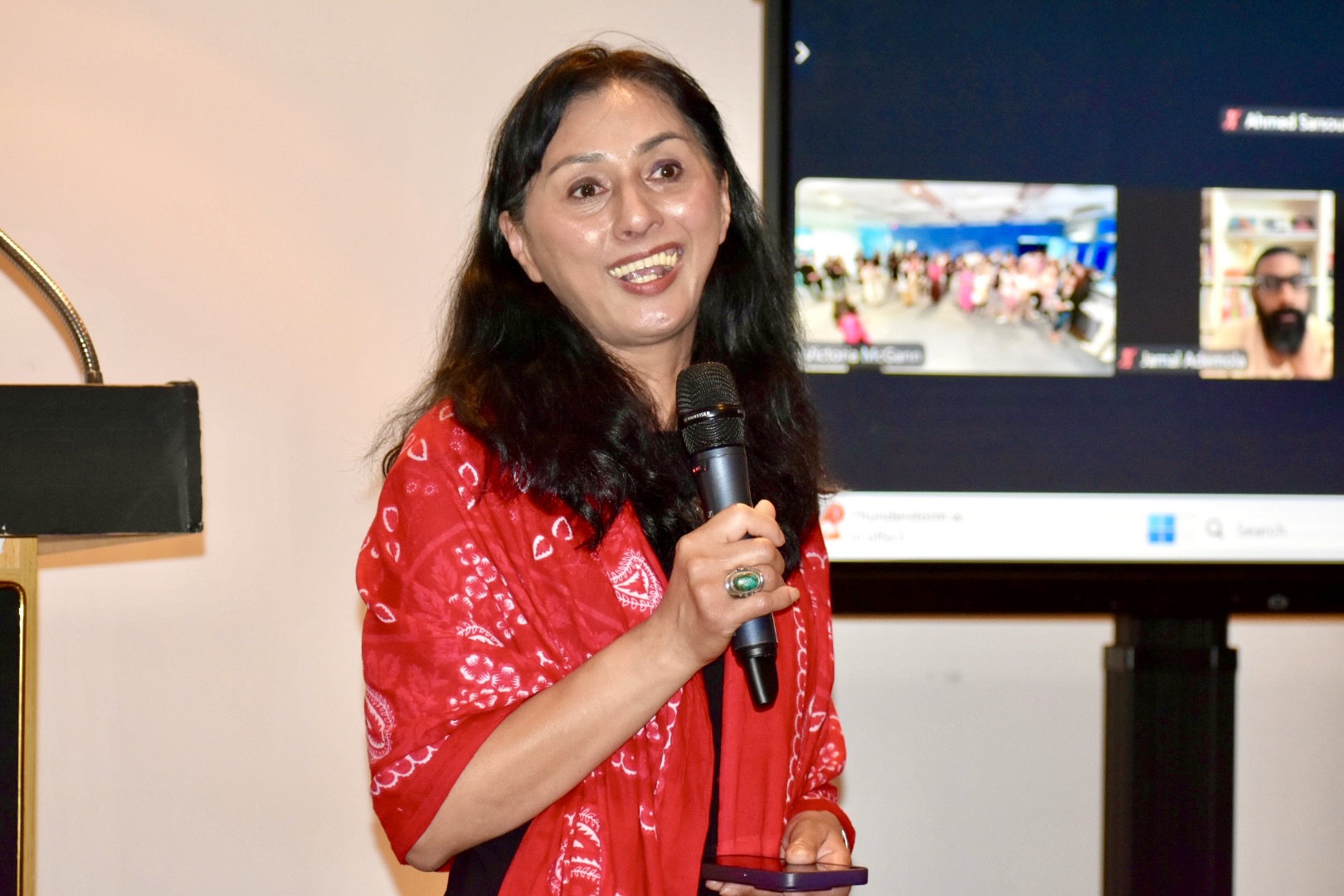
Ahmed Sarsour, Palestinian–Sudanese Poet & Activist
Ahmed Sarsour was born in Gaza, but lived in Sudan with his family for 21 years. When conflict began to escalate in April 2023, his family fled for their safety, and returned to their hometown in Deir Al Balah, located in the Gaza Strip.
What they didn’t realize was that they were escaping one war in Sudan for another in Gaza. Today, displacement and conflict shape his art, which includes poetry and film.
Ahmed is also the founder of Project Sarsour, a humanitarian campaign created to provide direct assistance and support to people affected by war and displacement.
Before reciting his piece, “Don’t Leave Us Behind!”, Ahmed vulnerably expressed, “poetry was and still is my escape, a way to survive and cope.”
This poem follows a narrator (himself) who erases himself only to find he cannot escape the world he left behind. The poem traces a journey through checkpoints, rubble, borders that turn people away, and a mother sitting beside an empty bed. It ends with a direct address to the audience: are you going to take a stand?
Bart Was Not Here, Multidisciplinary Artist
Bart Was Not Here is a pseudonym for a talented multidisciplinary artist from Burma.
During his presentation, Bart Was Not Here, presented a preview of his latest work— the compilation of a zine publication.
By creating the zine, Bart’s goal was to bring the artists that are still in Burma and the ones who have fled, together with galleries and curators. He’s cultivated an analog platform for artists to have discussions around topics like, the ethics of incentivizing art that depicts pain and suffering for the foreign gaze, as well as many more nuanced topics.
“In environments shaped by violence and instability, things like fiction, satire, surrealism, and world-building are not escapism, they become methods of psychological sovereignty. Because sometimes the imagination becomes the last territory that cannot be occupied by outside forces.” -Bart Was Not Here
The zine was developed in conversation with the MIT Global Humanities Project’s Relocating Agency amid Political Uncertainty and Exile; a project working with Burmese artists displaced by the 2021 military coup. The zine explored what it means for art to be a tool of self-preservation in the middle of violence, and what happens when that act is then politicised from the outside, when survival becomes symbolism before the person has had a chance to simply survive. The insight it carried for the room was that protecting people’s dignity in conflict means seeing them as more than the politics and the violence that got them there in the first place.
Jamal Ademola
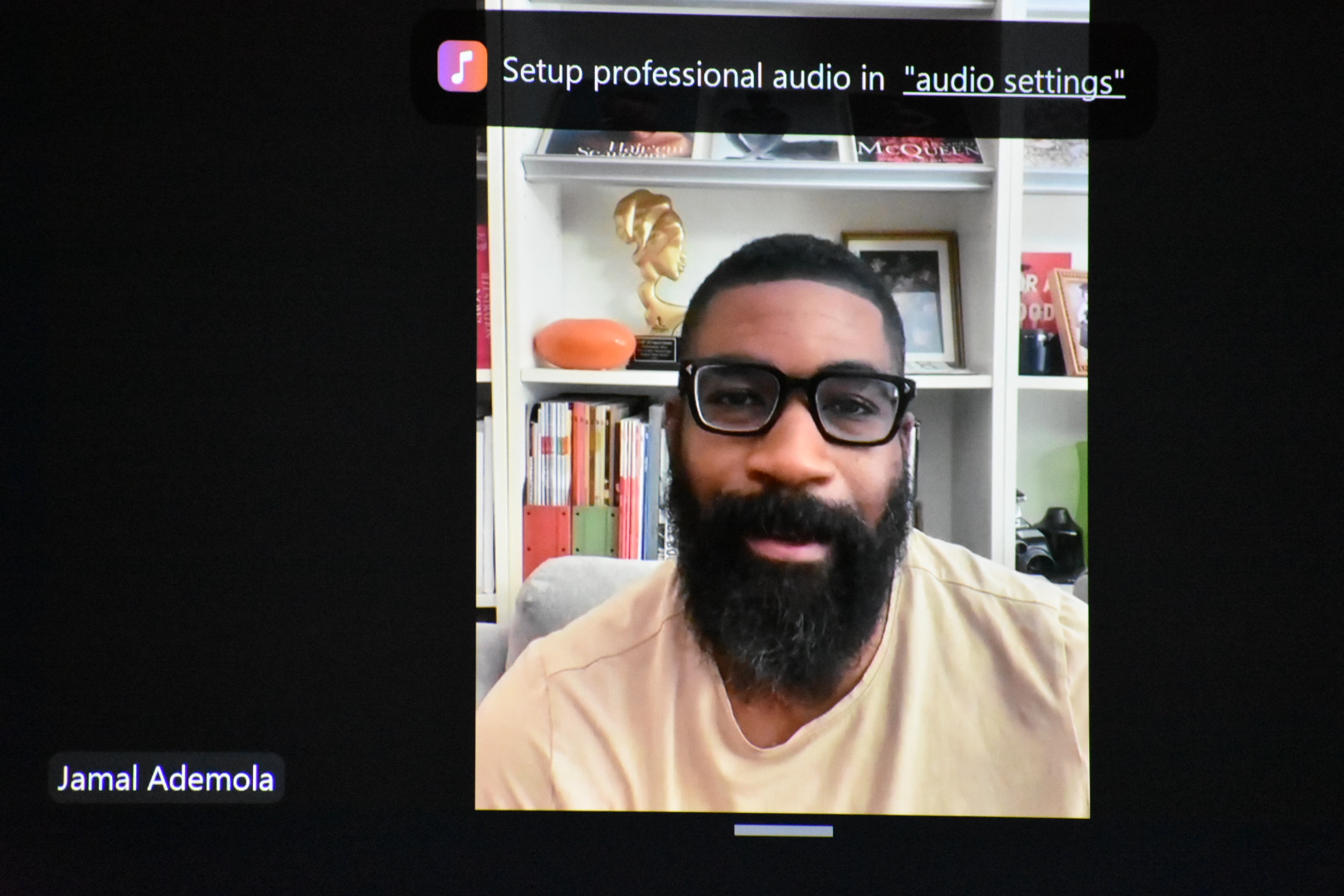
Jamal Ademola is a Nigerian-American director and filmmaker whose work combines cinema, advertising, and fine art. He uses storytelling, animation, documentary, and live action to create moving short-films.
The film that Jamal shares at the event is called Hope. The film follows a young poet thrust into an animated realm after doom-scrolling through social media, where she encounters a Black Crowned Crane. It asks the difficult question: how do we keep going when hope feels fragile? Ademola explains that this project is designed to remind viewers that “hope is not passive, it is something we choose, build, and protect together.”
The film was created in collaboration with poet Salome Agbaroji (who narrates the film), executive creative producer Nilou Safinya, Where the Buffalo Roam, and with support from the UN. It was also screened at UNGA (London) in 2025.
Crossing Borders Music
Founded in 2011, Crossing Borders Music is a multicultural organization that uses music to share the stories of those whose voices are suppressed because of race, ethnicity, disability, gender, sexual orientation, other identity, or related trauma. Their mission is to use music to promote the dignity of people from all cultures.
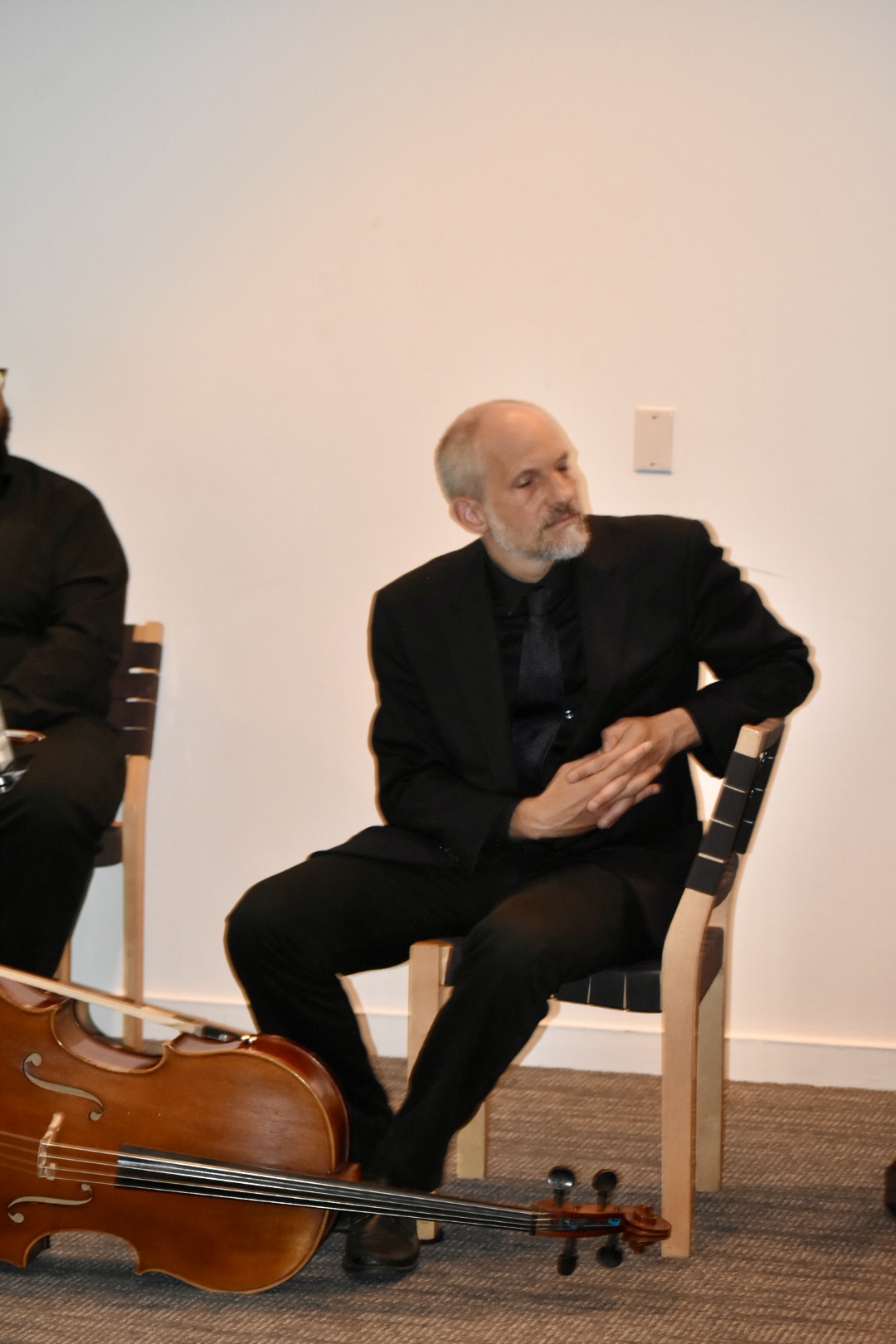
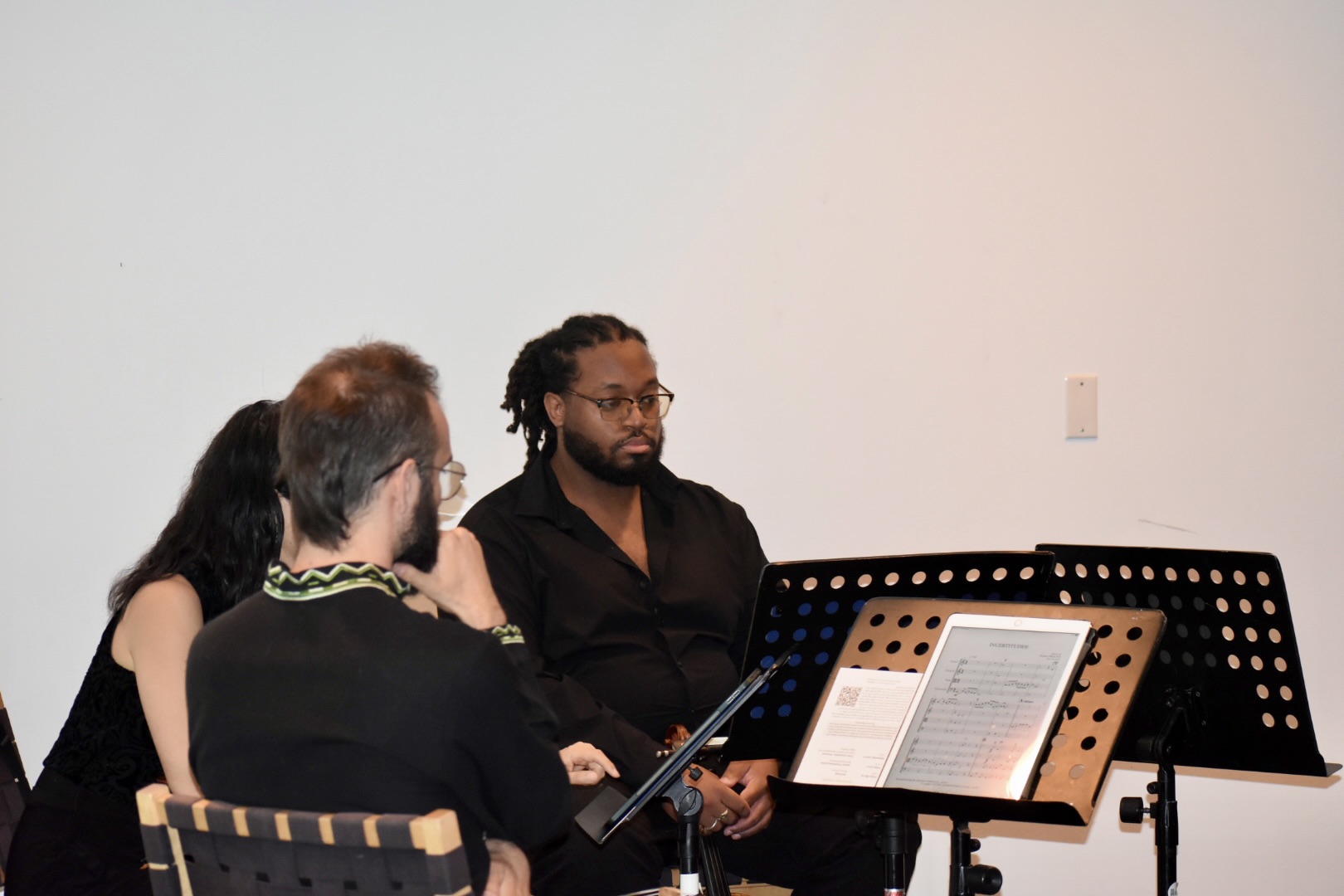
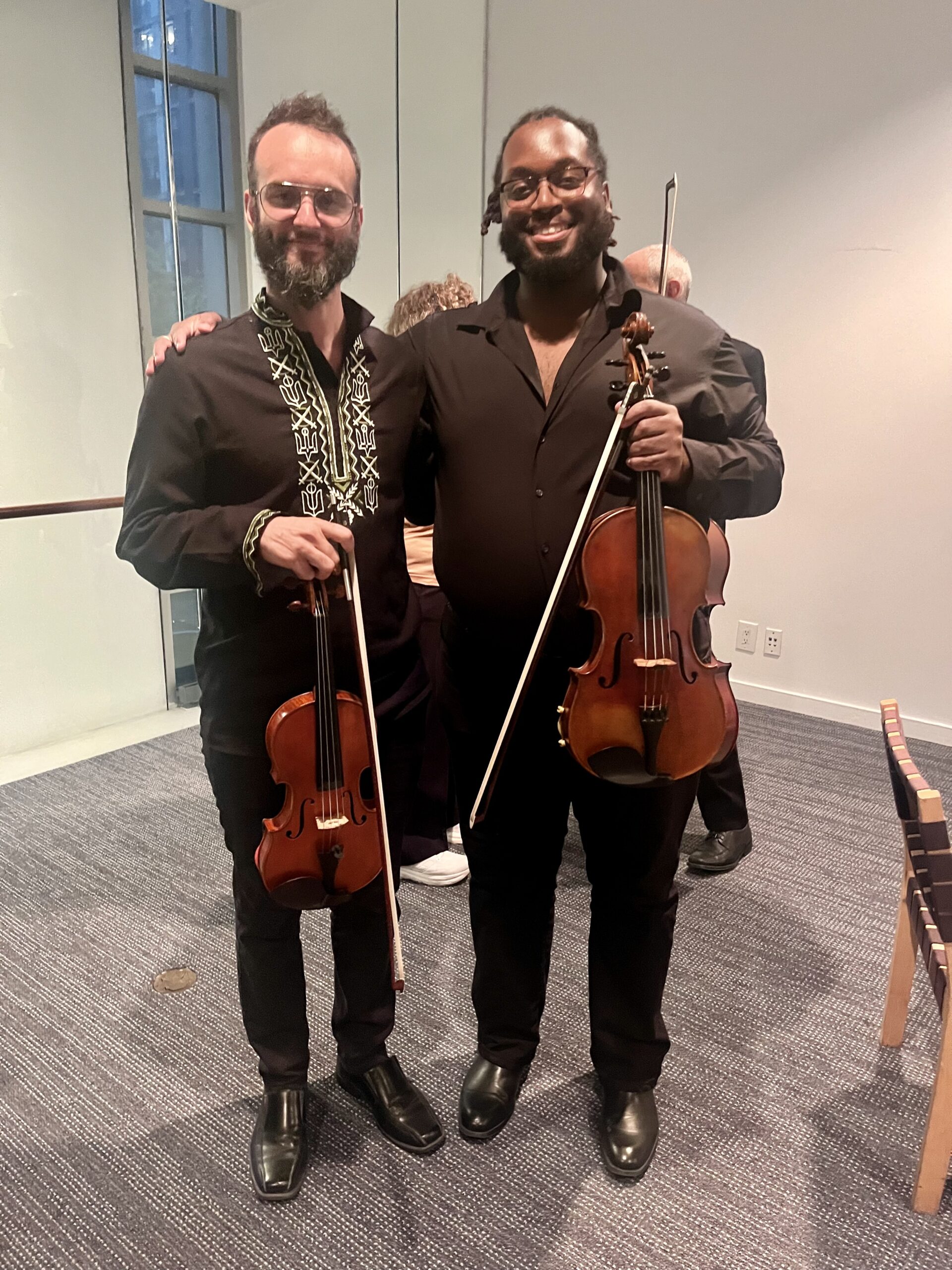
A cellist and three violinists were among the musicians that performed at NP’s art event. The string quartet’s first performance was "Incertitudes!" composed by Dickens Princivi. Dickens Princivil is a Haitian composer, commissioned by Crossing Borders Music following his kidnapping and eventual release by an armed group in Port-au-Prince. Princivil wrote this piece in dedication to all Haitians living in insecurity.

The second piece that the quartet performed was “Lao Rahal Soti” (“If My Voice Departs”) composed by Syrian musician, Samih Choukeir and arranged by Shireen Abu-Khader. Samih’s background has led him to develop empathy for displaced civilians and folks caught in conflict, for, he fled Syria in 2010. Samih also spent time in Kiev, Ukraine, where he attained his university degree.
Choukeir composes his music with great intention, often to raise awareness around causes, defend freedom of speech, and in solidarity with oppressed civilians around the world.

Insights from the Event
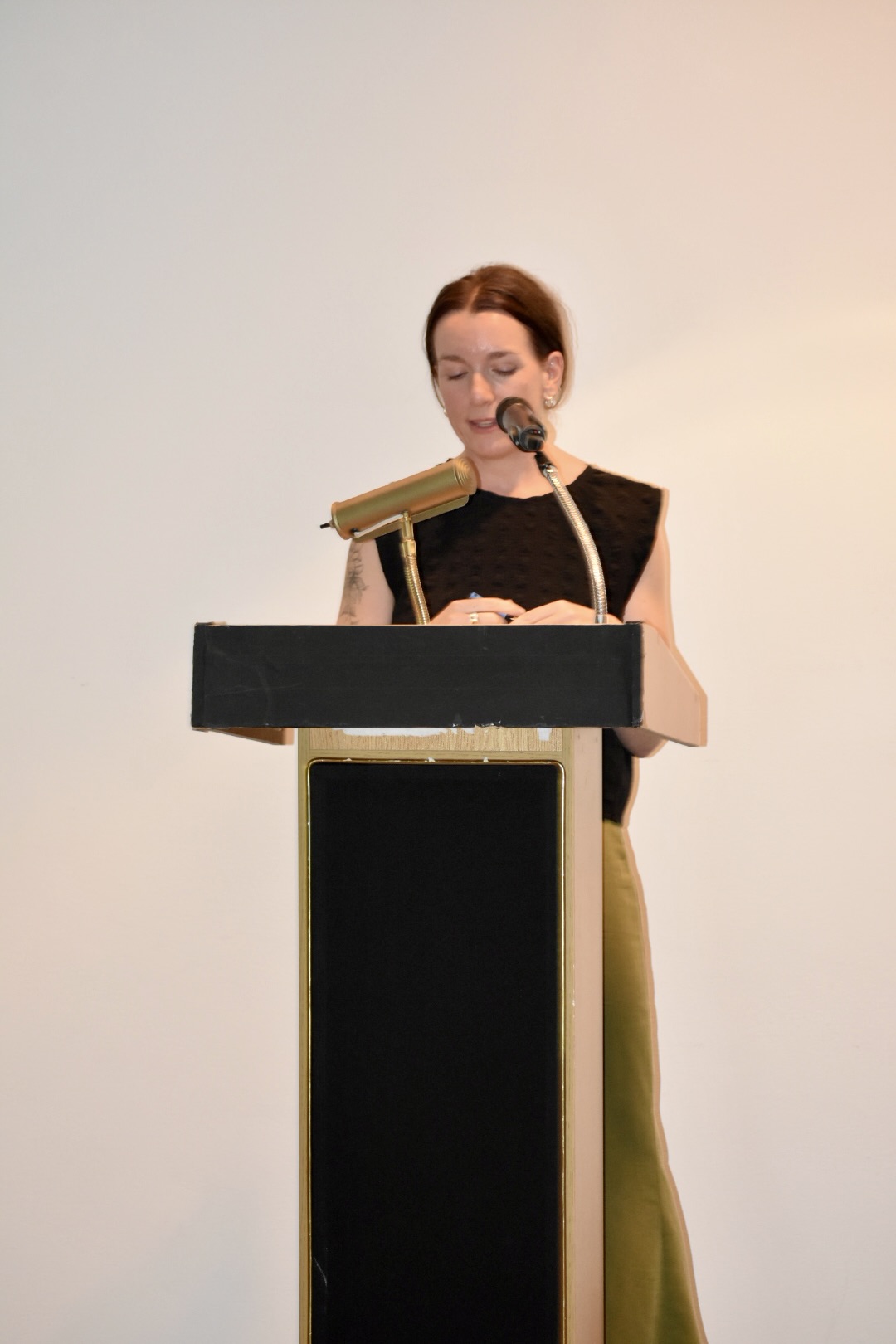
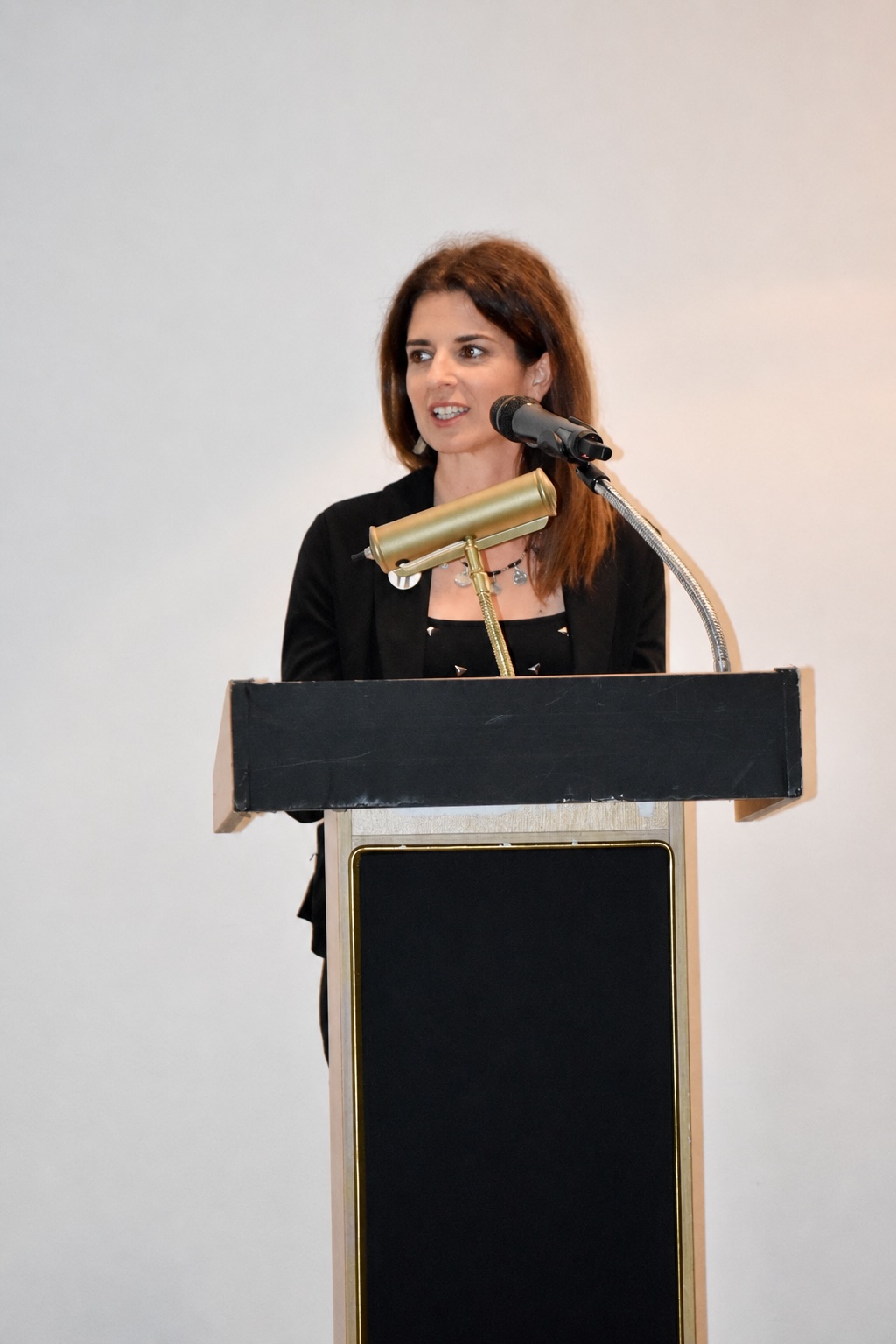
Before closing out the evening, Sophie Federspiel, curator for My Petite Gallery and co-sponsor for the event shared a message that resonated with all attendees, in which she stated, “Protection is not only about physical safety, it's also about protecting culture, memory, identity and humanity itself.”
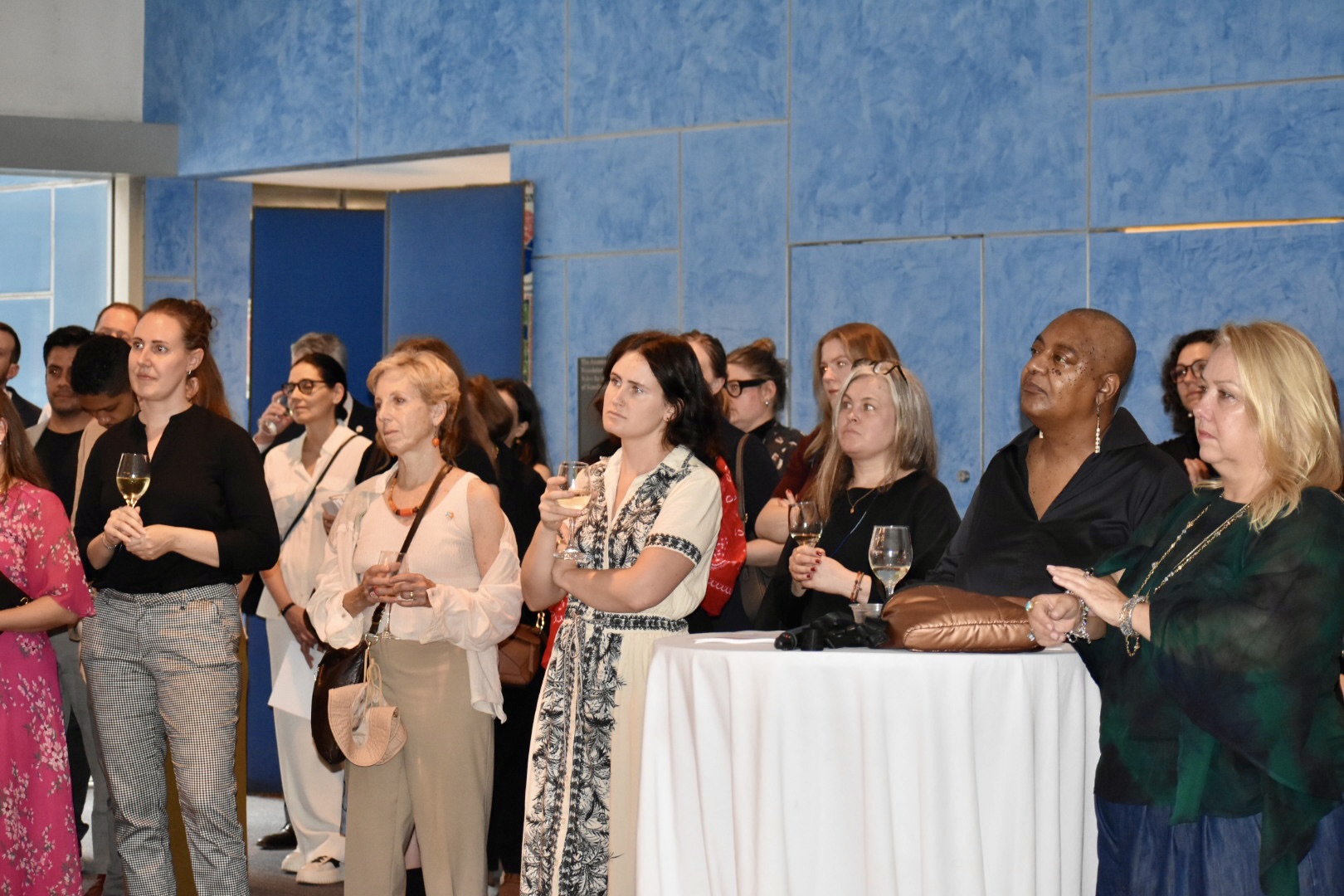
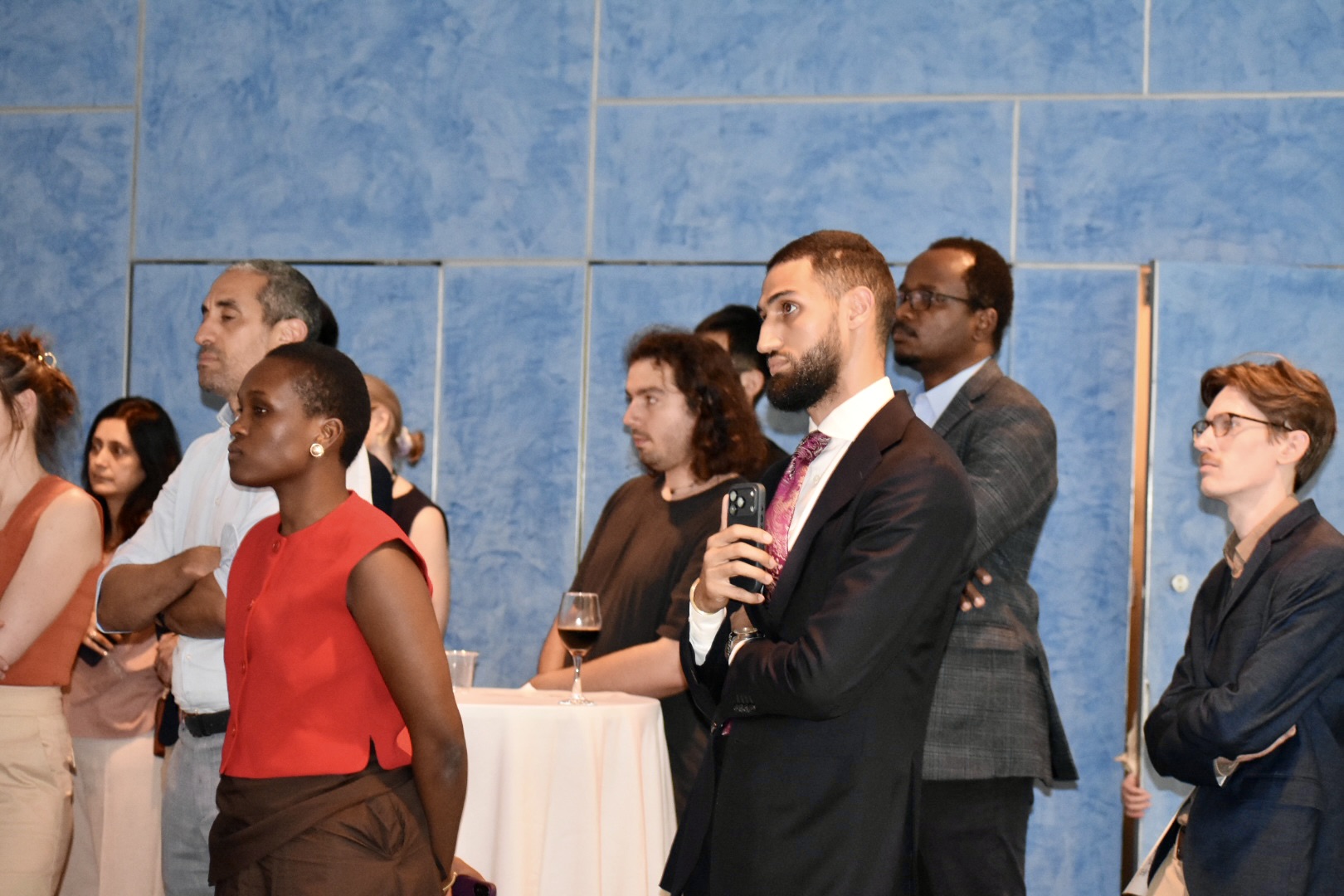
The lively night offered greater visibility for artists from and in conflict-affected settings by fostering cross-disciplinary conversations between humanitarian actors, diplomats, and artists.
“I truly appreciate all of your efforts and support in amplifying our voices and stories.” -Ahmed Sarsour, Poet & Activist, Project Sarsour
Additionally, it opened the door for much needed conversations around how artists and civil society voices can be more systematically integrated into broader PoC Week programming and civilian protection efforts.
“It was absolutely an honor to be a part of this event with such amazing artists... Our hearts, not just our minds, need to help guide our decisions and our work.” -Tom Clowes, Artistic Co-Director, Crossing Borders Music
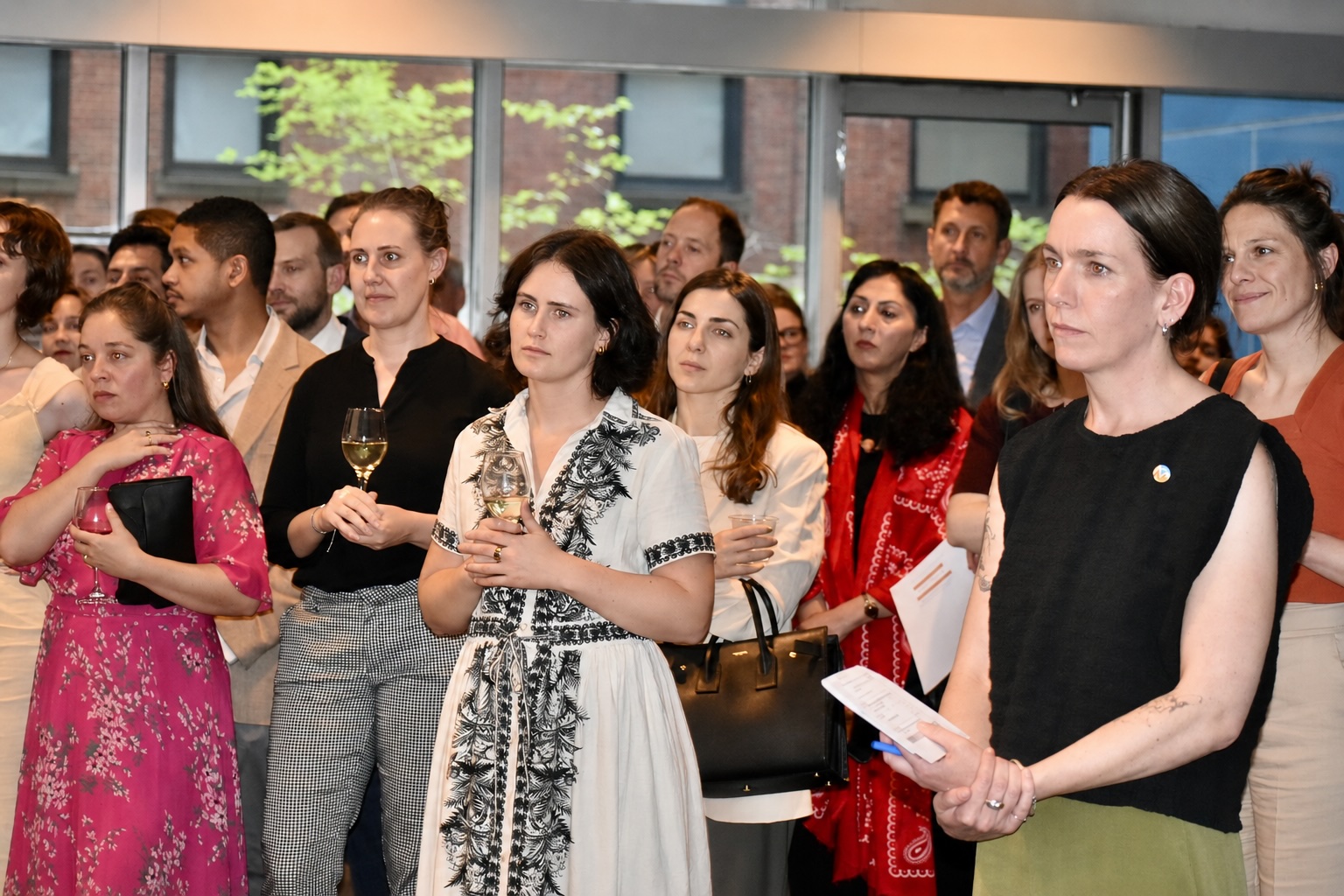
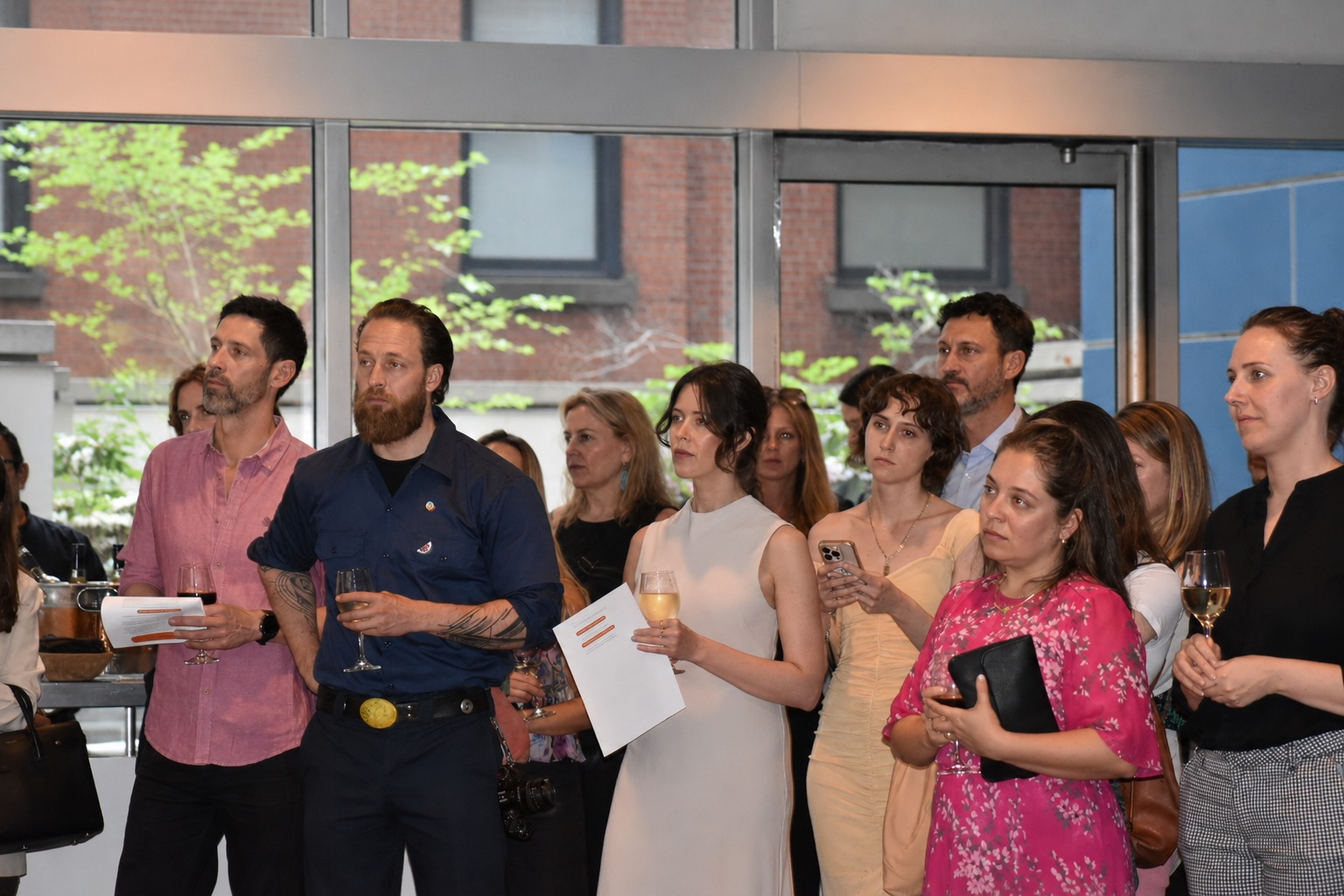
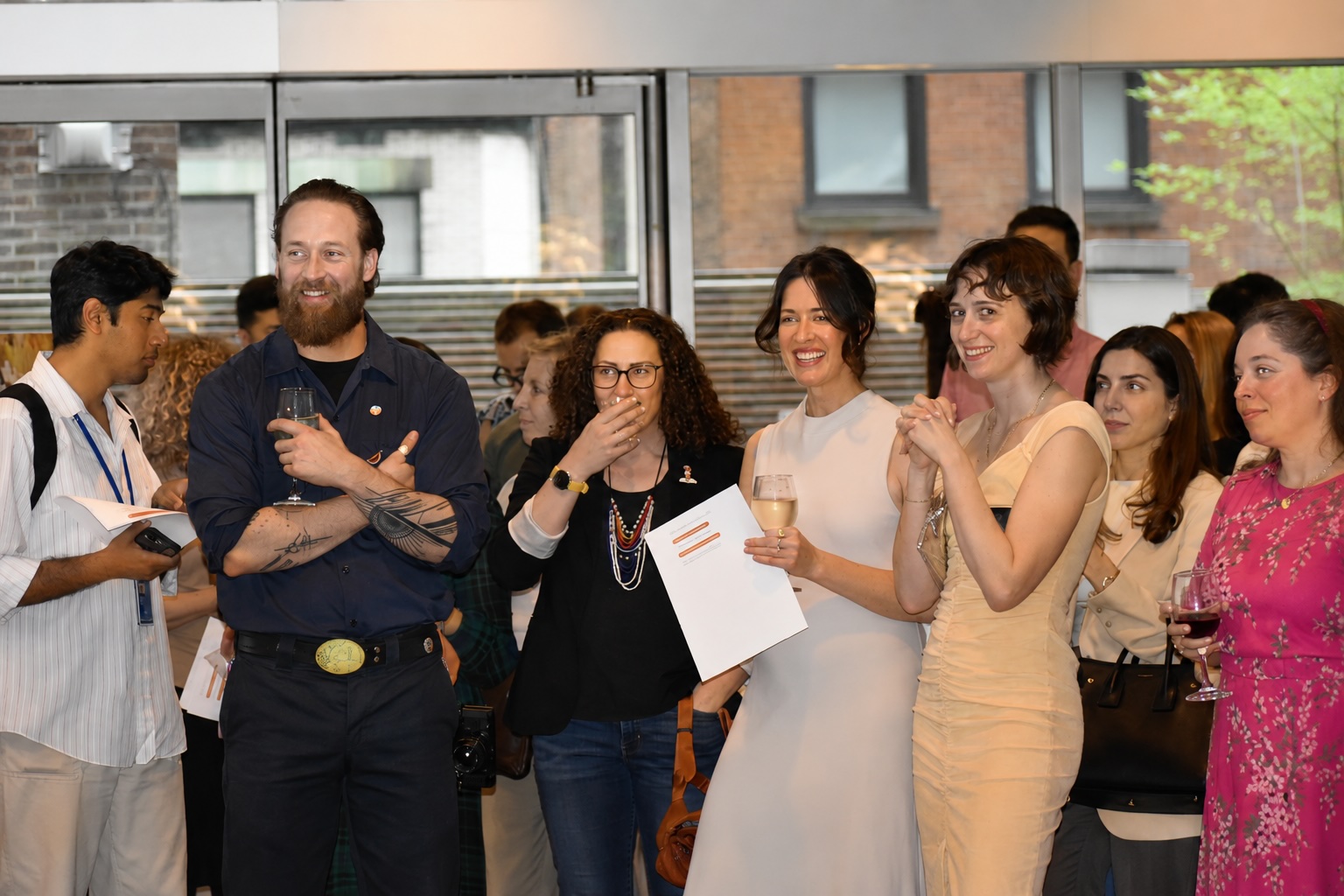
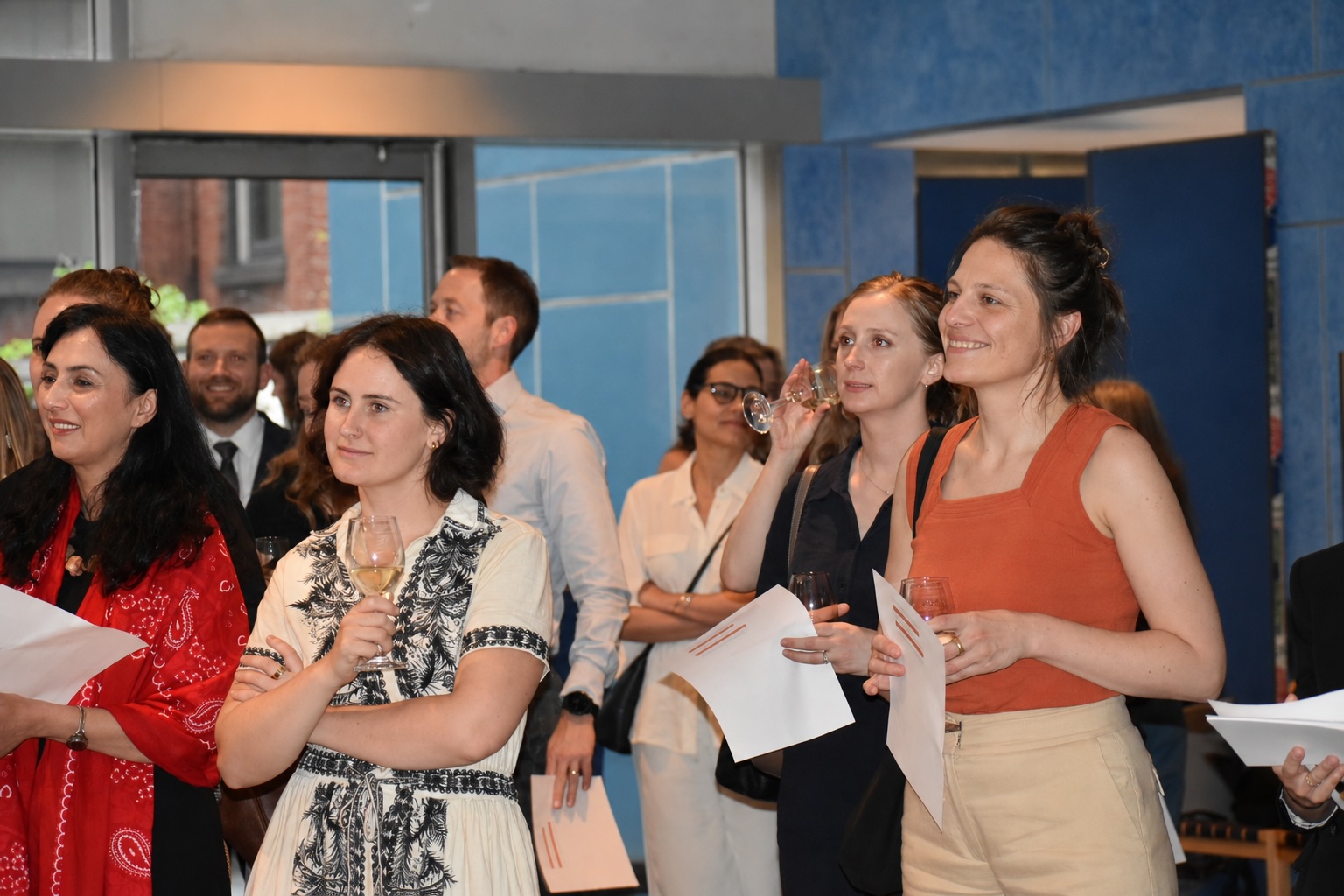
Gallery of Photos from the Event
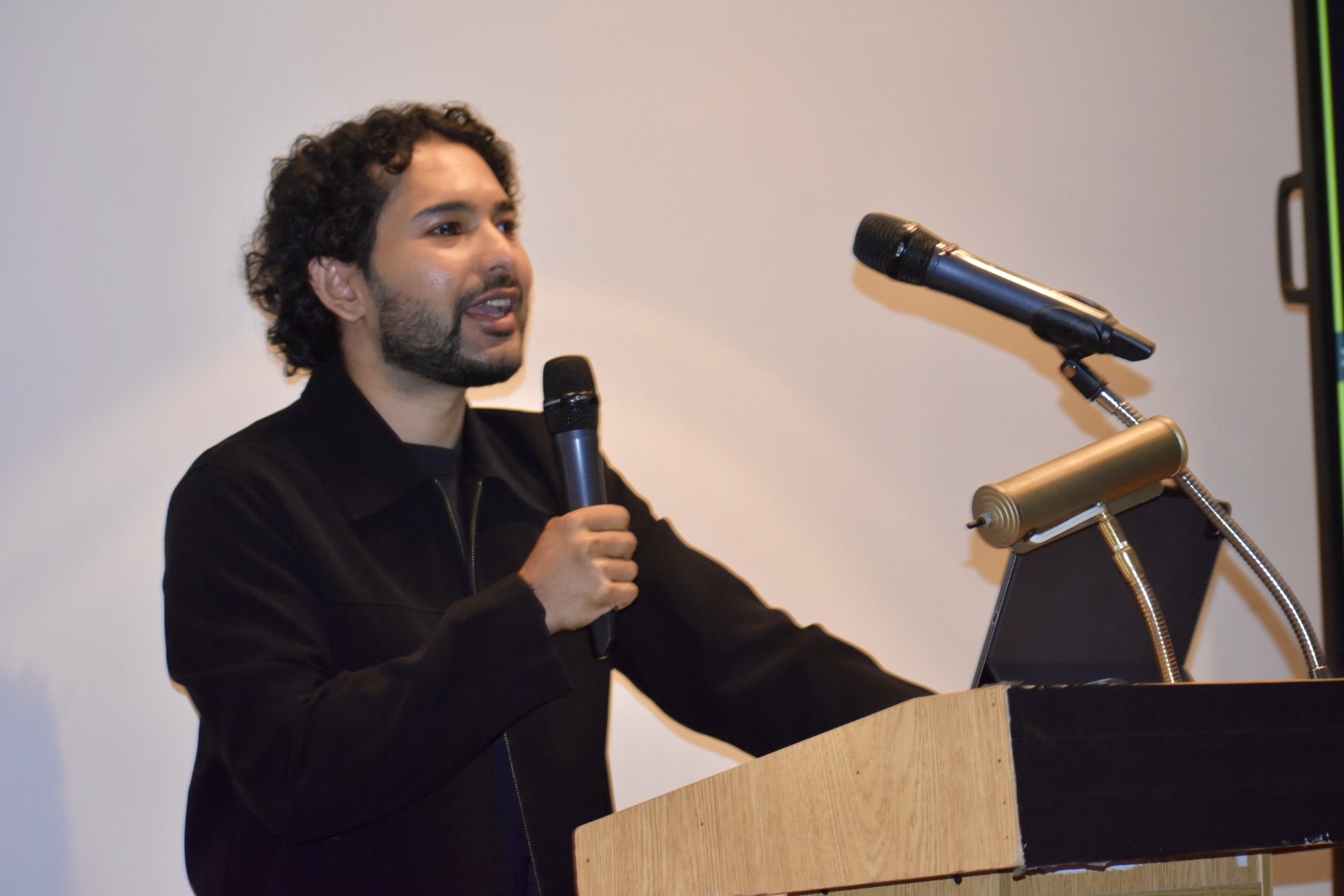
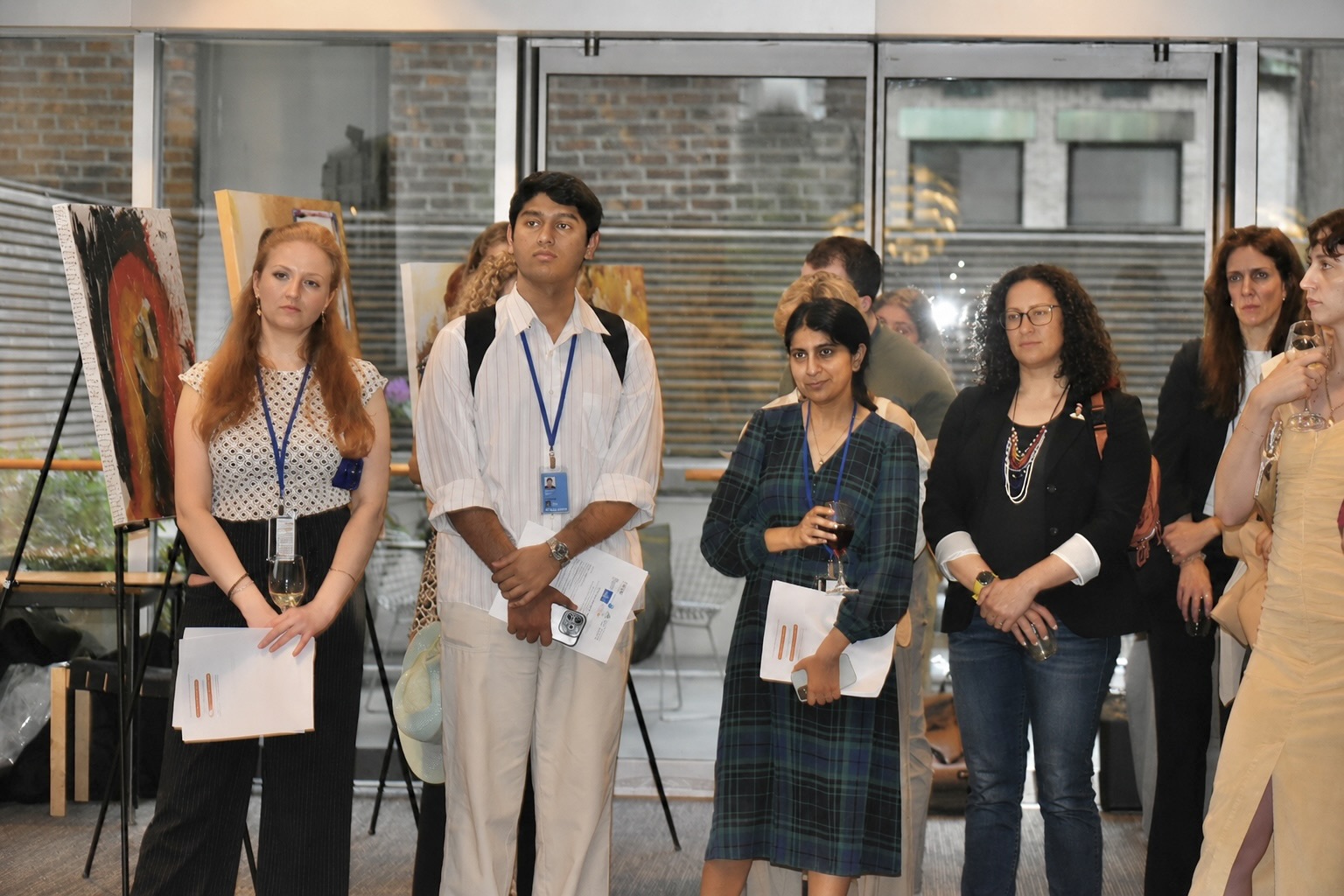
* * *
This event was made possible through the support of our co-hosts and co-sponsors, which included the Permanent Representation of France to the UN, the Permanent Observer mission of the African Union to the UN, Artists for Freedom Initiative, Crossing Borders Music, The Gaza Poets Society, MyPetiteGallery, New York African Film Festival, and University for Peace.