
Weaponising Winter: Largest Energy Attack Since Full-Scale Invasion Leaves Thousands Without Heat in Subfreezing Ukraine
Nonviolent Peaceforce (NP) calls for action as deliberate strikes on electricity and gas networks turn civilian homes into freezing traps, echoing starvation tactics as a method of war .
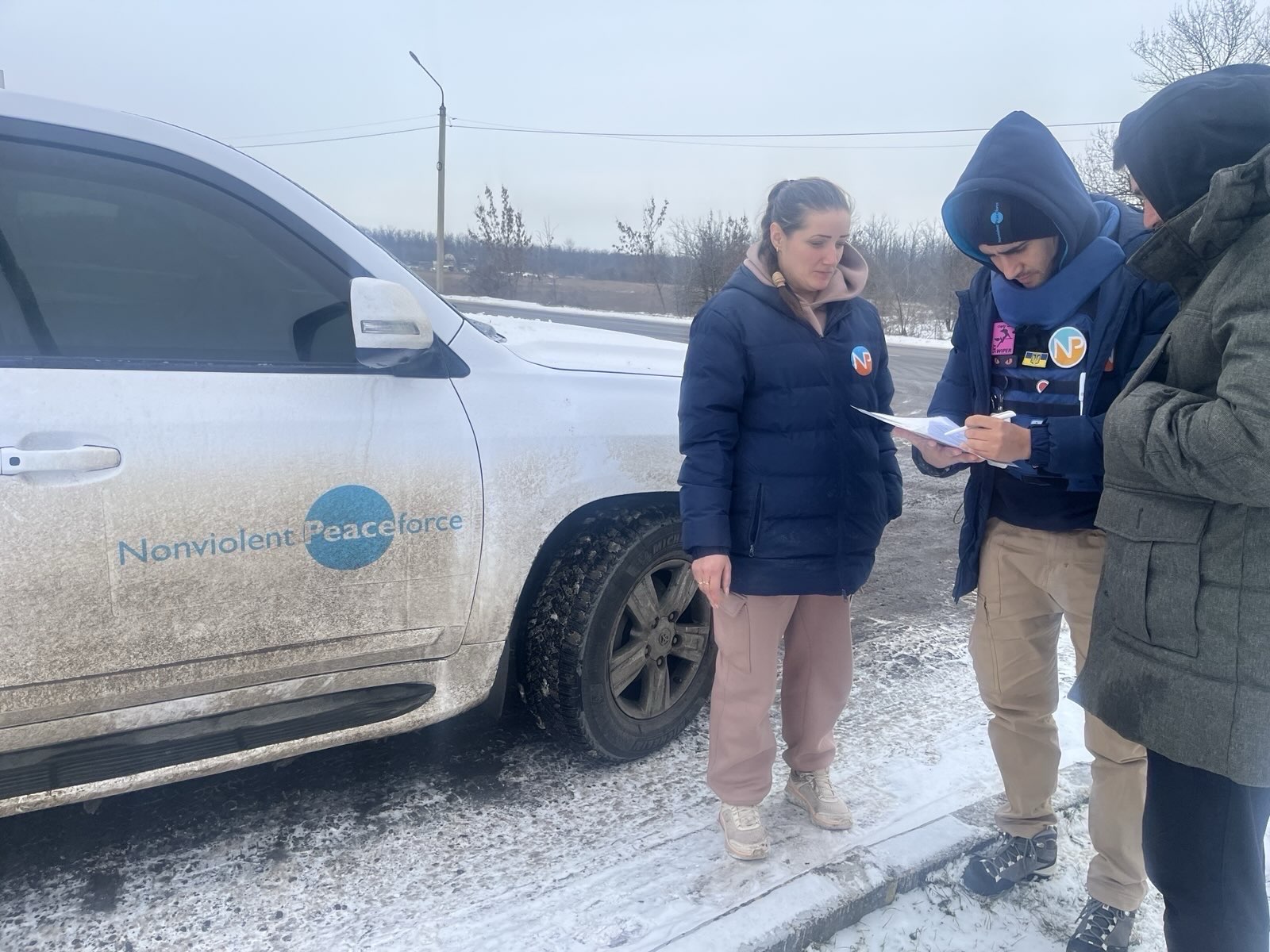
Odesa, Ukraine – 4, February 2026 – Civilians across Ukraine are bearing the consequences as Russia launches the largest hybrid attack on Ukraine's energy infrastructure yet, targeting electricity sources and gas lines across major cities amid winter’s coldest days.
Temperatures have plunged to -20 degrees C (-4 F) in Kyiv, with similarly brutal conditions across major cities including Kharkiv, Odesa, Dnipro, Mykolaiv, and Kherson, leaving tens of thousands of civilians at risk without heating, water or power in high-rise apartment blocks that have become concrete freezers.
Cold as a Weapon of War
The timing and pattern of these attacks reveal a calculated strategy to weaponise winter conditions. The United Nations and other international aid agencies, including NP, have repeatedly condemned such strikes, yet they persist with devastating effect.
The same way blocking food supplies deprives people of basic life needs, systematically attacking energy networks in -20 C temperatures turns cold itself into a lethal threat. Each successive strike weakens an already exhausted system, slows repairs, and multiplies civilian exposure. Energy infrastructure grows more vulnerable as replacement components dwindle and workers face mounting risks.
"We have seen starvation used as a weapon of war," said Anastasiya Marchuk, Nonviolent Peaceforce's Head of Mission in Ukraine. "What we are seeing now in Ukraine is the same tactic with cold—systematic attacks on energy and gas networks in sub-zero temperatures to break people by freezing them. When you cut electricity, you don't just turn off the lights, you also cut heating and water in thousands of high-rise apartments that instantly become freezing concrete boxes where older people and children cannot safely survive."
Deadly Ramifications
When power cuts hit, high-rise apartments cool rapidly. Families seal themselves into one room, piling on blankets and clothes and hunker down all night. Without electricity, there are no lifts, no hot water, no electric stoves, and no safe alternative sources of heat and power.
“Just in Kyiv, where I am this week, 1,170 apartment buildings are currently without heating following the strikes,” Marchuk stated. “As many know, modern urban housing depends entirely on electricity for heating, water pumps, and cooking. That means a single hit on a local power substation instantly severs all three lifelines for thousands of residents simultaneously. The math is clear: hundreds of thousands of Ukrainians, if not millions, currently have no access to essential lifelines.”
Gas infrastructure attacks have forced evacuations in areas where people rely on it for heating and cooking. Since the beginning of the full-scale invasion nearly four years ago, Russia has struck Ukraine's energy infrastructure more than 220 times, killing and injuring dozens of energy workers who must repair lines under fire and in sub-zero conditions, relying on much-needed and increasingly scarce parts.
"This is not collateral damage," added Marchuk. "This is a deliberate attempt to make civilian life impossible in the coldest weeks of winter."
The Most Vulnerable Pay the Highest Price
Elderly residents and people with disabilities face particularly acute danger. They become isolated as lifts fail and staircases turn to ice. Infants and young children suffer from hypothermia and respiratory illnesses. Displaced families overcrowd collective centres—gymnasiums and dormitories never designed for mass winter sheltering—that lose heat entirely when local substations fail.
Municipal "invincibility points"—spaces offering generators, power strips, hot drinks and brief shelter—have become lifelines. Supermarkets serve as informal phone charging stations where long queues form, because staying connected means access to air-raid alerts and evacuation routes.
A Pattern, Not an Accident
These strikes come during peak cold as Ukraine faces its harshest winter in 20 years.
"People are surviving with improvised tricks: heating bricks on open flames, cooking on candles, sleeping in all their clothes in one sealed room," Marchuk observed. "This is how Ukrainian families are trying to stay alive in 2026."
In Odesa, NP’s office is acting as an invincibility point, powered by one large generator. Staff, partners, and neighbours access hot showers—their first in days—coffee, dry clothing and device charging in a space offering both physical relief and psychological reprieve.
Urgent, Mounting Necessities
Nonviolent Peaceforce is calling on the international community to:
- Exert urgent diplomatic pressure on Russia to cease attacks on civilians and critical infrastructure, and to provide urgent repair capacity for urban substations;
- Recognise targeted energy infrastructure attacks in extreme winter conditions as a weapon of war akin to starvation;
- Support with the urgent, mass-scale distribution of generators, fuel, and insulation for collective centres and frontline municipalities; and
- Scale up support for evacuation, relocation, and material support immediately, in particular for elderly residents, disabled people, and families with young children.
About Nonviolent Peaceforce
Nonviolent Peaceforce (NP) is an international nongovernmental organisation deploying Unarmed Civilian Protection (UCP) tools to safeguard lives in conflict zones. Our mission is to protect civilians through unarmed strategies, build peace alongside local communities, and advocate for wider adoption of nonviolent protection in order to safeguard human lives, safety, and dignity.
Media contact:
Mahmoud Shabeeb, Global Media Advisor: [email protected]