
Publications Library
Type
Topic
Language
Region
Country
June 2026
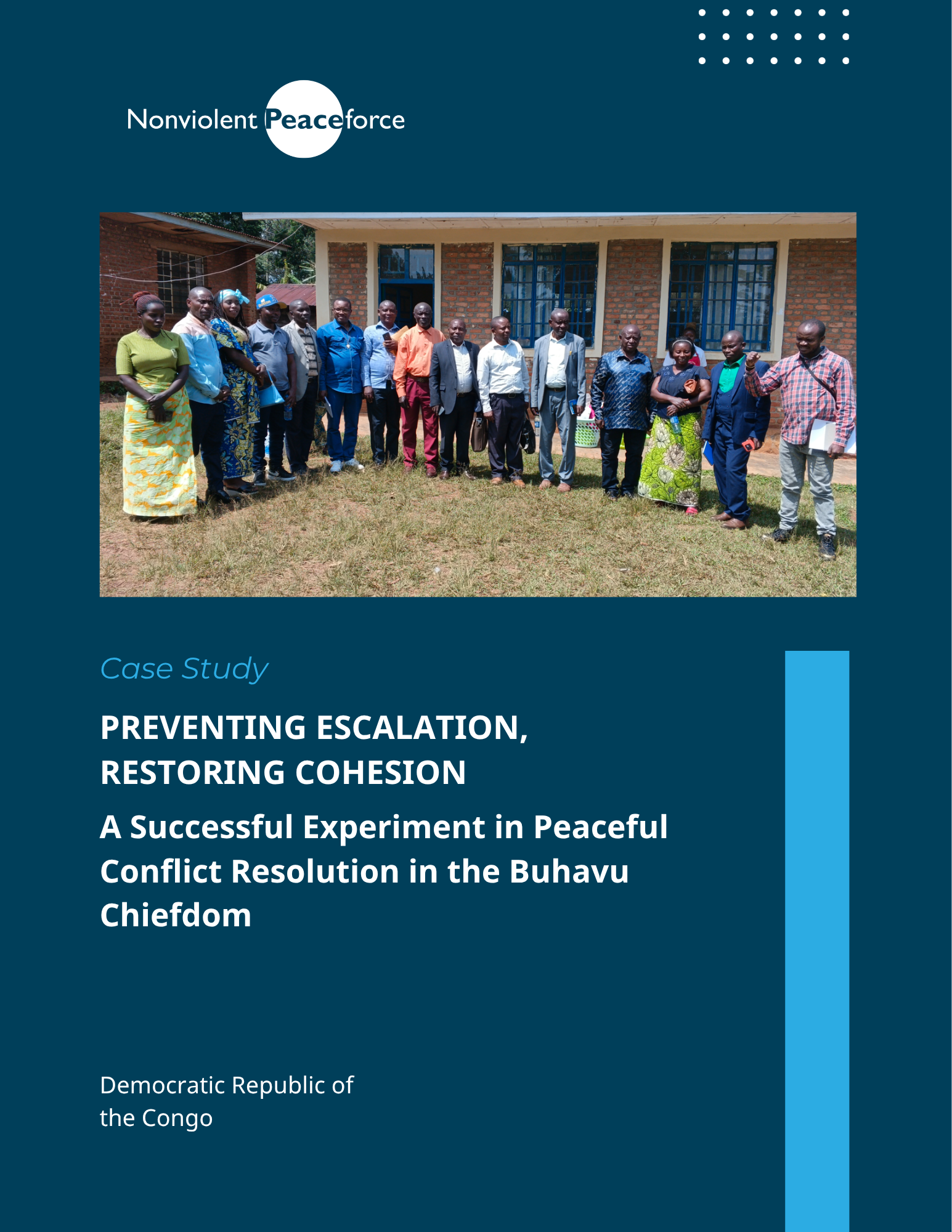
Preventing Escalation, Restoring Cohesion: A Successful Experiment in Peaceful Conflict Resolution in the Buhavu Chiefdom
Case Study
When deadly landslides struck Bushushu and Nyamukubi on 4 May 2023, nearly 794 households fled to the Katashola plantation in Muhongoza village, Kalehe territory - settling without prior planning on farmland that the host community depended on for food and income. Over two years, what began as post-disaster solidarity deteriorated into a serious intercommunal crisis: huts were burned at night, markets became unsafe, and both communities lost access to their livelihoods. This case study examines how NP's facilitation of a structured community dialogue process interrupted that cycle and what made it work.
May 2026
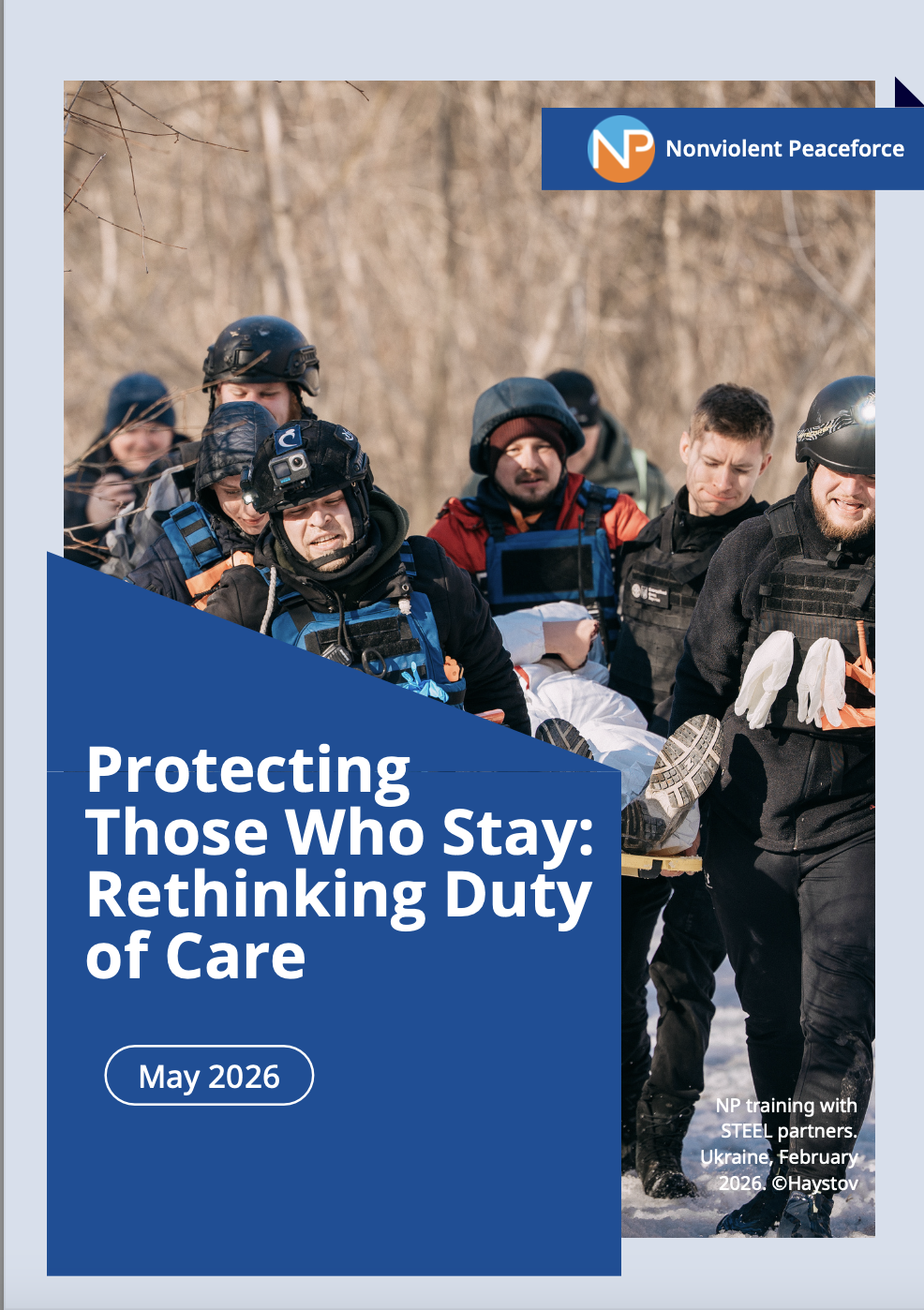
Protecting Those Who Stay: Rethinking Duty of Care
Issue Brief
At NP, a holistic Duty of Care framework embeds physical, technical, psychosocial, and operational safety measures into the design and delivery of our work. NP’s Duty of Care approach has been shaped most clearly through experience in high-intensity conflict settings such as Ukraine. Yet, we're finding that the principles underpinning the approach are transferable across diverse operational environments. Our latest briefing explores how we are adapting the Duty of Care package across varying conflict landscapes, from Ukraine, DRC, Iraq, Myanmar, to South Sudan, Sudan, Syria, and within the United States.
April 2026
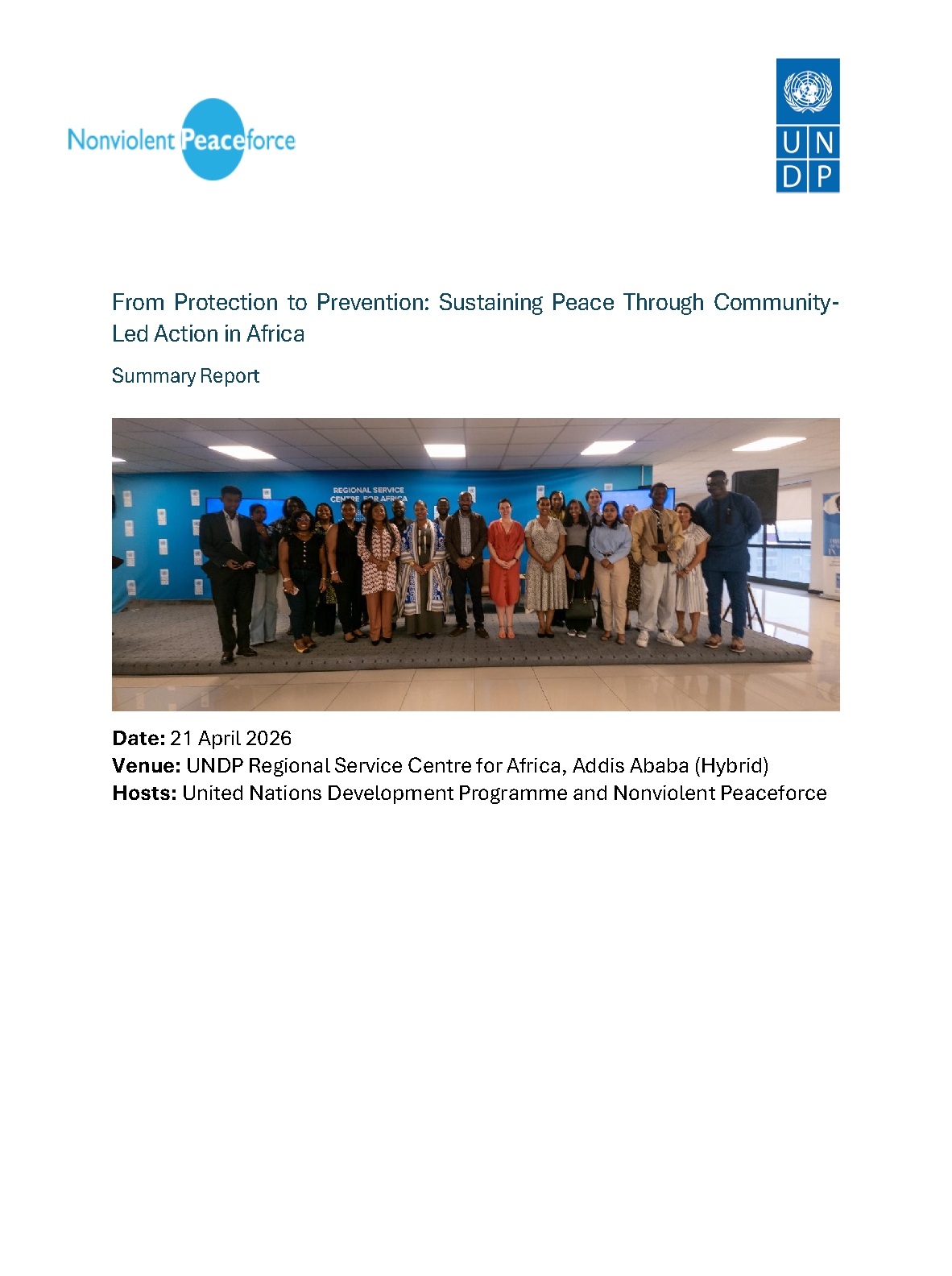
From Protection to Prevention: Sustaining Peace Through Community-Led Action in Africa
Event Documentation
Held at a time of mounting global instability, rising military expenditure, and declining investment in prevention and peacebuilding, this policy dialogue brought together practitioners, policymakers, researchers, and peacebuilding actors to examine how Africa’s peace and security agenda can move beyond reactive crisis response toward sustained, community-led prevention. Convened jointly by the UNDP Regional Service Centre for Africa (RSCA) and Nonviolent Peaceforce, the dialogue explored how community-based protection and peacebuilding mechanisms are already functioning in some of Africa’s most fragile and conflict-affected settings. Drawing on field experience from Sudan, the Democratic Republic of Congo (DRC), Cameroon, and regional policy perspectives, the event challenged traditional assumptions that peacebuilding can only begin after conflict mediation or formal political settlements.
2025
Protection Trends Report 2025
Programme Brief
New report documents how contemporary conflicts are increasingly fought in civilian spaces, exposing communities to sustained violence, dangerous and cyclical displacement, widespread hunger, climate-related insecurity, conflict-related sexual violence, misinformation, and shrinking humanitarian access. Drawing on frontline reporting and close engagement with affected communities, the report highlights both the erosion of formal protection systems and the growing sense of abandonment felt by civilians. At the same time, it underscores that, even under extreme constraint, civilians continue to act with agency to protect themselves and one another — reinforcing the urgent need for preventive, civilian-led, and nonviolent protection approaches grounded in long-term presence and trust.
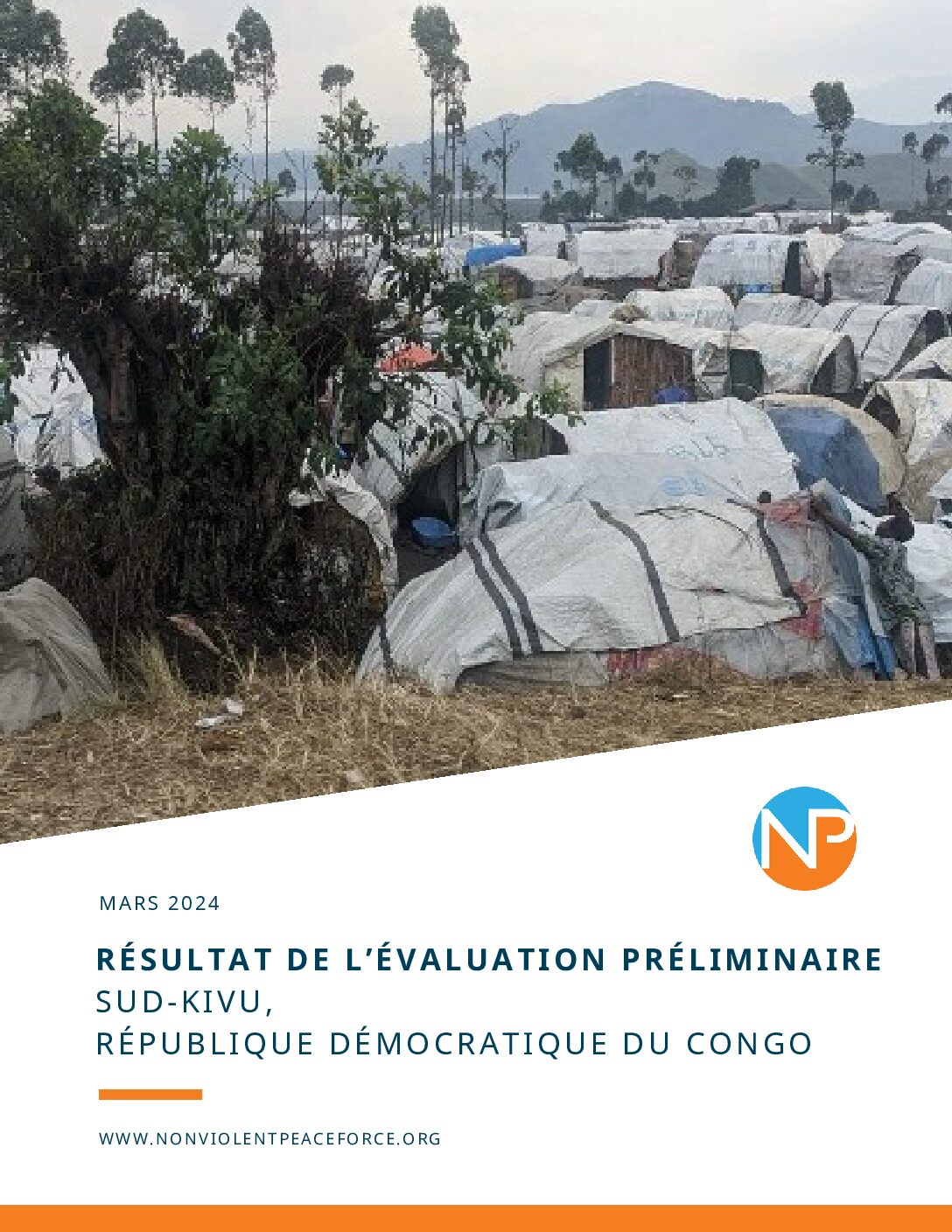
March 2024
Preliminary Assessment Findings, South Kivu
Programme Brief
As the United Nations Organization Stabilization Mission in the Democratic Republic of the Congo (MONUSCO) peacekeeping mission draws down at the request of the host state government, many questions and concerns are being raised about ongoing civilian protection needs and resources in the context of the transition. Communities, humanitarians, duty bearers, and other actors are concerned about the emerging and persistent threats that civilians face in this context, and the ways that the transition is likely to exacerbate civilian protection needs and risks.