
Realities from Mykolaiv and Kherson
“Immediate aid saves lives, but sustainable solutions will allow people to live again.”
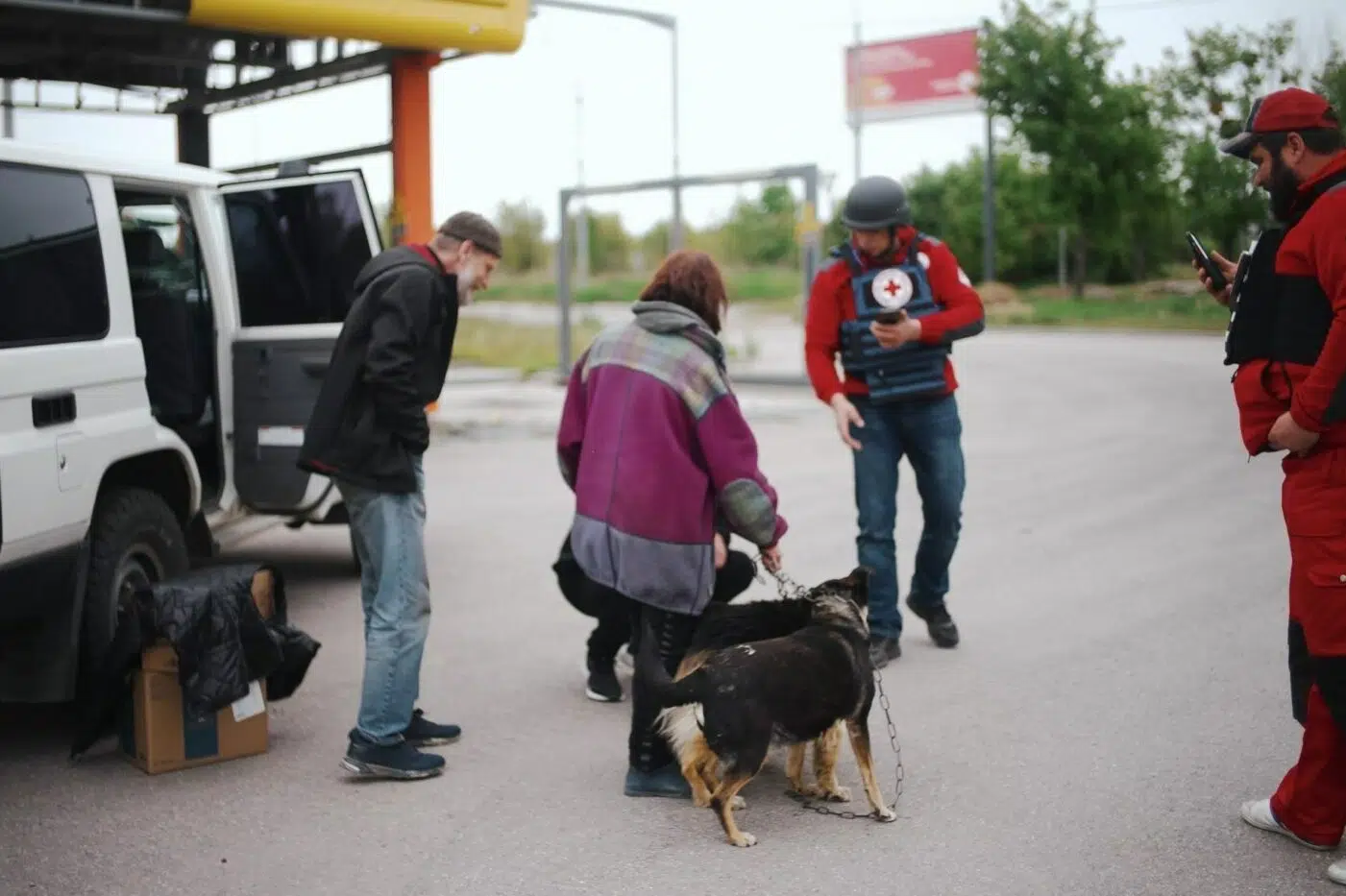
Through our facilitation of a recent dialogue in Mykolaiv, Nonviolent Peaceforce reaffirmed its role as a connector, linking local communities, civil society, authorities, and donors in pursuit of both immediate protection and lasting recovery. This provided an opportunity for local partners to share firsthand experiences of the challenges faced by people living in frontline communities of Southern Ukraine.
The human face of displacement
Iryna from “United by Love to Children” NGO shared the experience of families evacuated from Kherson, many of whom are still without safe housing. Some are forced to live in basements, where children have spent weeks without seeing daylight. “These are no conditions where people can recover and rebuild their lives,” she emphasized.
Another civil society leader, Tetyana from NGO “Perspektyva” described how improvised shelters in schools, churches, and cultural centers, which have never been designed for such use, become lifelines for communities under fire. Yet these spaces cannot meet long-term needs, especially for families with children, older people, and those with disabilities. Communities urgently require equipped underground shelters that can both save lives during attacks and preserve dignity in protracted displacement.
Structural gaps and legal barriers
Dmytro from “Legal Development Network” highlighted the challenges that go beyond humanitarian aid, including legal protections for IDPs: while Ukrainian law guarantees certain rights for internally displaced persons, many provisions remain unimplemented, leaving people without functioning support mechanisms. He also raised issues with verification processes, as bureaucratic hurdles hinder veterans and displaced people from accessing their rights, causing frustration and mistrust. Employment and livelihoods remain another major concern, as many displaced people cannot return to their homes but also struggle to find work in host communities. There is a pressing need for retraining programs to provide new skills adapted to current labor markets.
As another member of civil society noted: “We cannot rely on paper promises. People need real protection and functioning mechanisms, not just declarations.”
Humanitarian pressure intensifies
Figures presented during the dialogue indicated that settlements in Mykolaiv and Kherson regions are in urgent need of support, with nearly 1,000 families requiring immediate assistance. These households often include children, elderly people, or people with disabilities.
Security concerns exacerbate the crisis. Drone attacks and shelling have intensified in recent weeks, pushing humanitarian needs. Evacuations remain dangerous and complex, particularly for vulnerable people who cannot move without assistance.
Vlad from “Bridge of Unity” highlighted the lack of coordination between state structures’ response and local realities: “Regional administrations may announce support programs, but on the ground, communities often cannot access them. Civil society fills the gaps, but without stable funding this is unsustainable.”
Many referred to the need of armored vehicles and frequency analyzers as effective mitigation measures to active strikes of First-Person View drones along the evacuation routes, as “we need to care not only about people evacuated, but also about our volunteers.”
Connecting partners to systemic change
For NP, hosting a dialogues such as this means helps ensure that community voices are central to the conversation and heard by those who can support systemic solutions. By cultivating a safe space for frank discussion, NP supports participants to speak openly about what works, what is missing, and what needs urgent international support.
This commitment was evident during the September dialogue, where NP's local partners from Mykolaiv and Kherson shared firsthand experiences of the challenges faced by people living in frontline communities. NP hosted and facilitated the discussion, which included representatives from the Swiss Federal Council Delegate for Ukraine and representatives of the Swiss Agency for Development and Cooperation (SDC), allowing donors to hear directly from those navigating daily displacement and insecurity.
The roundtable underscored both the urgency of humanitarian needs and the gaps in systemic responses. NP’s convening role ensured that a wide spectrum of perspectives were represented, allowing SDC to hear directly from those navigating the daily reality of displacement and insecurity.
The dialogue also reflected NP’s broader mission in bridging humanitarian, protection, and recovery needs. NP’s teams in Mykolaiv and Kherson witness daily how legal barriers, inadequate shelter, and gaps in coordination combined put vulnerable people at risk. By connecting these realities with key stakeholders such as SDC, NP helps ensure that frontline experiences can inform support that is both timely and sustainable.
Looking forward
The meeting concluded with a shared understanding: while international humanitarian aid remains vital, long-term inclusive solutions are the only path toward recovery. According to Jacques Gerber, Federal Council Delegate for Ukraine, SDC plans to expand its presence and support, securing additional funds for the next four years. Communities need resilient infrastructure, effective implementation of laws, and investments that allow displaced people to rebuild their lives with dignity.
As one participant summed up: “Immediate aid saves lives, but sustainable solutions will allow people to live again.”