
Reintegration From the Frontlines to Civilian Life: Yurii & Katya’s Story
After returning from the frontlines, Yurii struggled to find his place in civilian life. The transition strained his career, his sense of identity, and his relationship with his wife, Katya. But at a six-day veterans’ retreat along the Danube—supported through community-based reintegration efforts led by Nonviolent Peaceforce—the couple found space to reconnect, reflect, and begin healing together.
By working alongside local partners to strengthen psychosocial support, prepare communities, and equip families with practical tools for reintegration, NP is helping ensure that veterans like Yurii are not left to navigate the return home alone. Addressing reintegration challenges early—before frustration, isolation, or untreated trauma escalate—also tackles the root causes of violence, reducing risks within communities.
From the frontlines to civilian life
Before being mobilized to the frontlines, Yurii worked as a lawyer. But when he returned home, stepping back into his legal career proved more difficult than expected. The profession required a level of concentration, emotional regulation, and client engagement that felt overwhelming after everything he had experienced.
It’s hard for any civilian to fully grasp the trauma of being mobilized and fighting on the frontlines. Family members, especially spouses, also share the difficulty of understanding and adapting to the emotional changes their loved ones return home with. Yurii and his wife, Katya, had long dreamed of escaping their daily routine to reconnect and spend uninterrupted time together.
Ultimately, Yurii made the decision to leave his legal career and take a job at a sports school as a maintenance worker. Working with his hands helped him get out of his head. The predictability and routine calmed his nervous system and restored a sense of stability. Unlike legal work, the monotony gave his mind space to begin processing his experiences.
Longing to support others navigating similar challenges, he founded a non-profit organization, secured two international grants, purchased equipment, and opened a woodworking workshop for veterans. There, he leads art therapy sessions using wood and tools.
Drawing, he says, did not work for him because the images and associations brought him back to combat memories. But he emphasizes that creative methods are valuable overall; they simply need adaptation to different experiences, since reactions to art therapy are highly individual. Sometimes a person needs a different tool—more physical activity, more structured therapeutic exercises, or more nature.
A retreat that brought them back together
When Yurii’s veteran support specialist informed him and his wife, Katya, that a free spot at the retreat had suddenly become available, they knew it was the opportunity they’d been looking for.
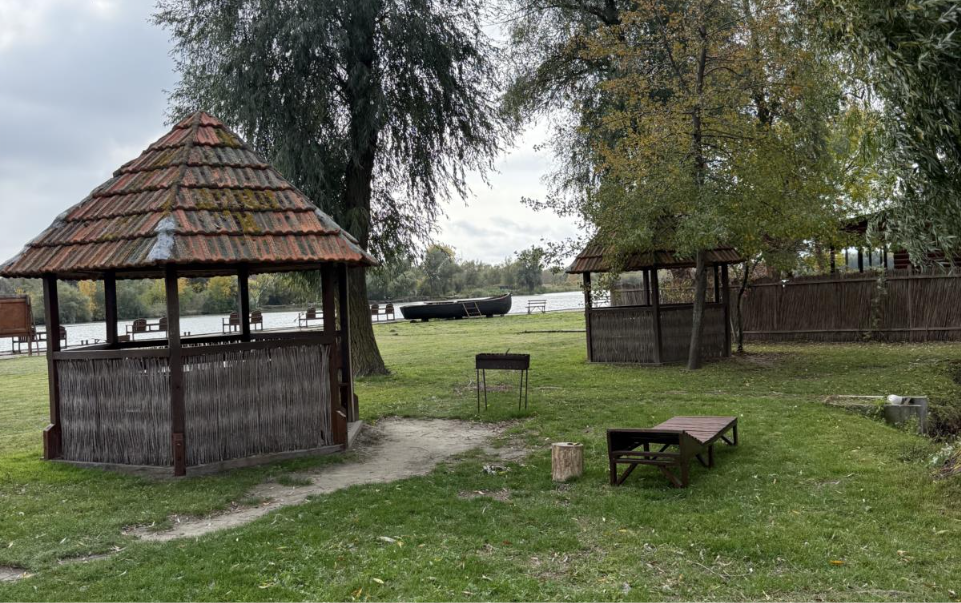
The six-day Veterans Retreat welcomed 17 participants—veterans and one family member each—to a rare space for holistic recovery amongst nature. The program combined outdoor activities, boat trips, and flexible group sessions led by experienced psychologists.
Grateful for the invitation, the couple were among the first participants to arrive at the veterans’ retreat center in Vylkove, unphased by the 750-kilometer journey from their home in Zhytomyr.
Yurii had attended similar programs alone in the past, but attending with his wife was transformative. Unlike most veteran programs, which are usually designed only for the veterans themselves, this program focused on supporting families. This component is vital, as the person who greets the veteran at home becomes the first and often the most important source of support after their return.
Reintegration begins not with the city or community, but with the family. Family therapy sessions created space for conversations they rarely had the energy to begin at home. Strengthening their connection helped them better understand each other’s needs and communicate more openly.
For Yurii, the location itself carried deep meaning. He grew up near a river and forest, spending his childhood at a small tourist base where his parents worked. “The smell of wood in the house… It is pure magic. Like returning to childhood,” he recalls.
Silence, water, and fresh air revived memories he had not felt in twenty-five years. The natural environment, free from city noise and daily pressures, made healing feel possible.“Here, I felt alive again,” shared Yurii. For Katya, it was her first experience of this kind of restorative break. Here, recovery did not feel like another task to complete. It began with something simpler: the ability to exhale.
The challenges of reintegration
Every participant at the camp has a unique story, yet conversations at the retreat reflected broader challenges faced by veteran communities across Ukraine.
Many veterans described persistent stigma around seeking psychological support and limited access to long-term rehabilitation. Others expressed frustration with the civilian job market, where salaries are often significantly lower than military pay and misunderstandings with employers are common.
Retreat participants spoke of feeling disconnected from society and uncertain about their identity outside the military. Low energy, mistrust, strained relationships, and, in some cases, dependency issues can make reintegration feel overwhelming.
They described how everyday interactions often trigger strong emotional reactions, especially when facing injustice, bureaucracy, or ignored requests. These moments can lead to internal aggression, withdrawal, or complete social isolation, which tends to reinforce a cycle of isolation that affects individuals, families, and communities alike.
Getting to the root: strengthening communities for reintegration
As veterans across Ukraine navigate the difficult transition home, the need for structured, long-term support continues to grow.
Nonviolent Peaceforce has been steadily expanding its engagement with veteran communities in Ukraine in response to the growing need for structured support during reintegration. NP works directly with local veteran groups, psychological support centers, and civil society partners to strengthen the capacities of those who accompany veterans through the most sensitive stages of transition. This includes training on de-escalation, conflict-sensitive communication, community protection approaches, and self-regulation tools that help veterans navigate everyday stressors and rebuild safe relationships at home and within their communities.
It is also key to prepare the communities that welcome veterans back from the front. NP facilitates dialogue spaces, supports the development of community safety plans, and raises awareness about early warning signs that can help reduce the risk of violence or social isolation. Through cooperation with community leaders, service providers, and veteran initiatives, NP promotes a shared approach to protection—one in which veterans are not viewed solely through the lens of trauma, but as active contributors to community resilience.
The retreat itself is part of this broader effort.
Oksana Stelmakh, Aid4Heroes Project Manager explains, “The idea to create the retreats emerged after a study conducted in March and April 2025. The research revealed a strong demand for psychosocial support, help with accepting oneself after injuries, and overall adaptation to civilian life. This is why the team chose a biosphere reserve as the retreat location. It is a quiet place without city noise, vehicles, or triggers, surrounded only by water, animals, and birds. Such an environment noticeably improves mental well-being, and the team drew inspiration for this approach from the experience of American colleagues.”
The balance of guided therapeutic work and restorative free time is intentional. Participants take part in excursions, walks, and small group conversations, while psychologists adapt daily activities based on emotional needs and group dynamics. Though many veterans arrive cautious or unsure whether they can trust a psychologist, group sessions often become transformative spaces. As participants begin speaking openly about their experiences, they explore their pain from new perspectives and gradually process it.
For Yurii and Katya, the retreat provided something simple yet powerful: rest. It gave them the stamina to continue moving forward.
But healing cannot rely on isolated programs alone.
This work must begin early—long before large-scale demobilization—to help ensure that families, neighborhoods, and local institutions are equipped to manage stress, prevent harm, and foster inclusion. By investing in preparedness today, NP and its partners are helping build the foundation for safe, dignified, and sustainable reintegration tomorrow.
* * *
These retreats are part of the Aid4Heroes project, which focuses on creating conditions for dignified reintegration into civilian life and strengthening social cohesion within communities. The project is implemented by a consortium of four nongovernmental organizations - ‘National Council on Health and Safety (NCHS)’, ‘Veteran’s Hub Odesa’, ‘Freehearted’ and ‘Rewilding Ukraine’. Flexible group sessions were led by psychologists from another NP partner ‘Alliance for Mental Health’ and NCHS.
Aid4Heroes project is implemented under the subgrant program of Nonviolent Peaceforce and is co-funded by the Swiss Agency for Development and Cooperation (SDC) and the UK’s Foreign, Commonwealth and Development Office (FCDO) within the HAVEN Consortium.