
Alawiya Abdalla Haron: include us as partners in solutions
The following remarks were delivered by Alawiya Abdalla Haron, Women Protection Team member from Sudan, during a side event at Protection of Civilians Week 2026 at the United Nations in New York. See the full event recording here. The following are prepared remarks, lightly edited for readability.
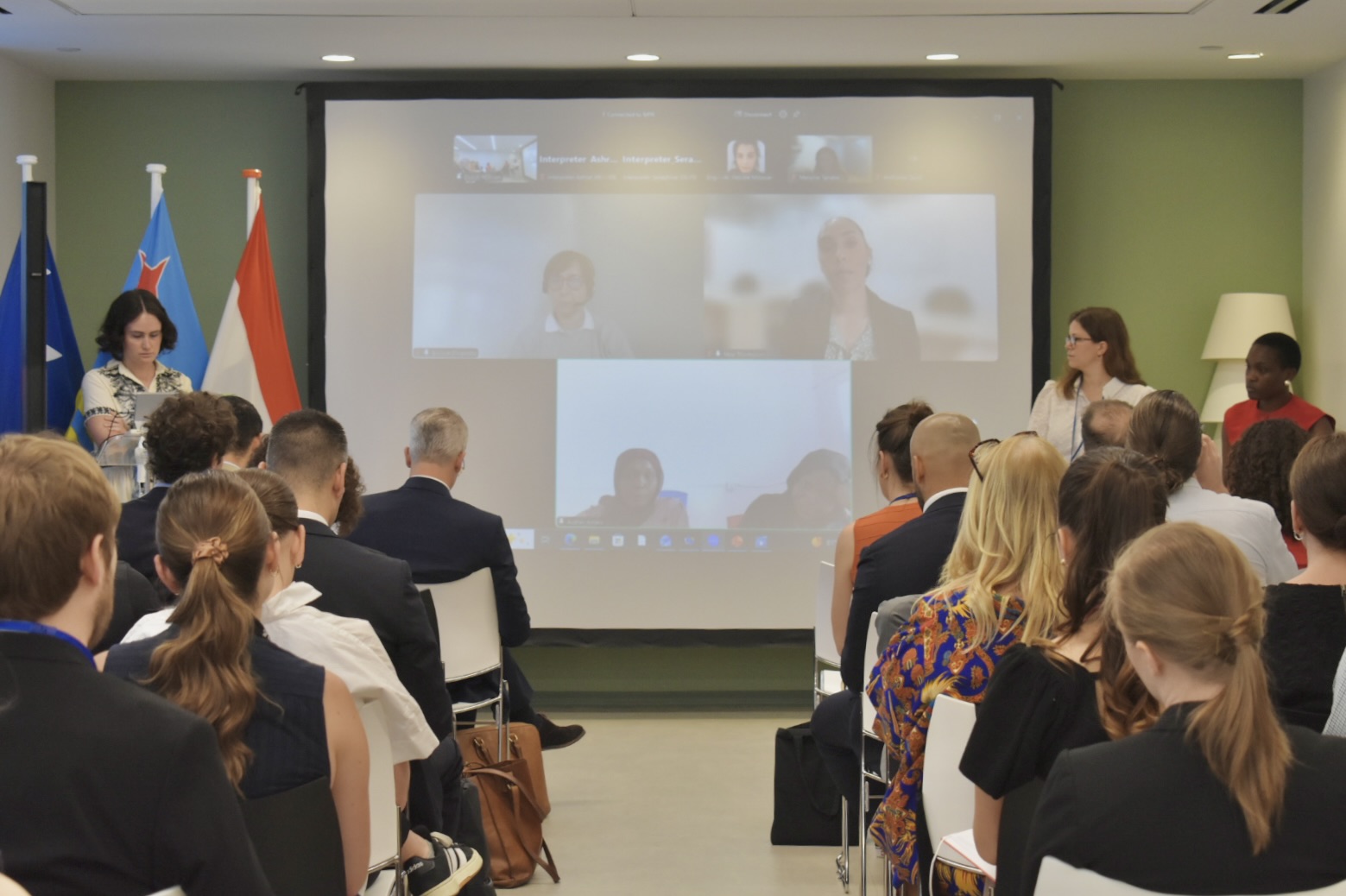
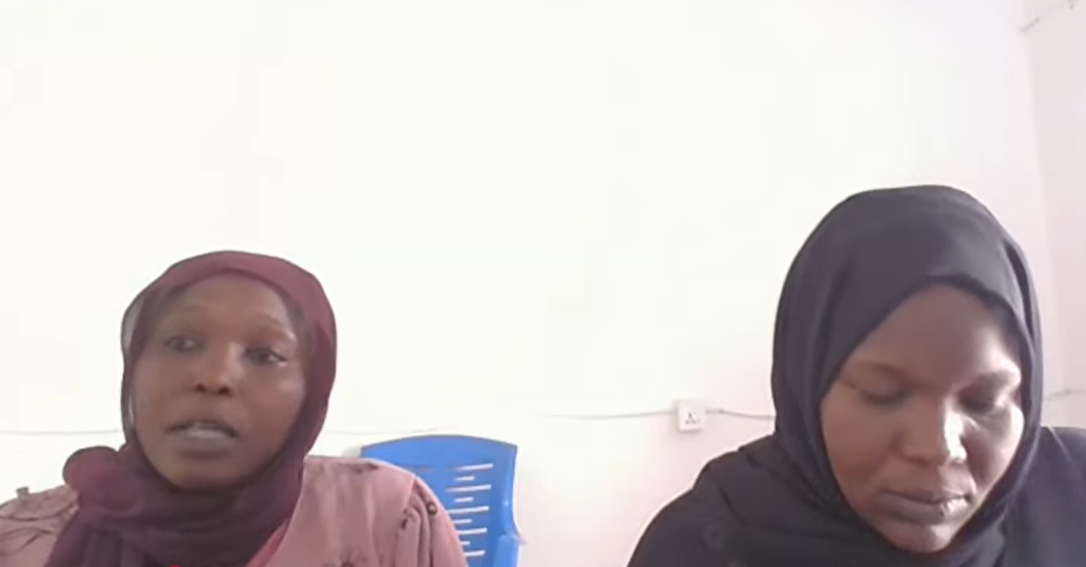
Alawiya is a member of the Women Protection Team in Tawila, Sudan. Those who are unfamiliar with Sudan, Tawila is one of the most volatile areas of Sudan, where ongoing violence and displacement have left communities with very little institutional protection. Alawiya is amongst millions of civilians who have had to flee the town of El Fasher to Tawila in April of last year. She is a member of a Women Protection Team, which are groups that Nonviolent Peaceforce supports that are voluntary-based and draw on women’s associations, youth groups, religious leaders, and other civil society to monitor threats and coordinate responses. Alawiya joined the event virtually from Tawila to tell us what her journey was like as she was fleeing from El Fasher to Tawila, the decisions she and her community had to make to stay safe en route—but also the risks the women faced during the flight, as they still do while displaced in Tawila.
---------------
Hello, my name is Alawiya.
I would like to tell you how the displacement happened from Zamzam camp and El Fasher to Tawila in April 2025, and how we managed to survive and keep ourselves safe until some of us reached safety alive in the midst of horrific violence, without any external support.
I was personally living in Zamzam camp. The shelling of the camp began so we dug ground trenches to reduce injuries and casualties. When the attack started, we did not have a lot of time, so we gathered the children and the elderly and ran on foot toward Tawila for three consecutive days. It was a very difficult and dangerous journey, without water and food.
What you must understand about who was making that journey is that most of us were already heads of households. Many of us are widows. Our families were already fragmented before we ran. So, when we moved, we were moving alone, we were responsible for children, for elderly relatives, for ourselves and with no one else to rely on.
When we arrived in Tawila, we gathered separated children and reunited them with their families. Some had lost both their parents, so we formed a group to identify these children and take care of them until they could be reunited with any remaining family members.
Due to the heavy shelling in El Fasher, some of us decided to return there to warn those who had stayed behind, help reunite them with their families (also in Tawila), and provide them with the information they needed to make the same decision of leaving.
In 2022, we received training in Unarmed Civilian Protection and completed the courses, graduating in March 2023 before the war began. That training covered rumor control, gender-based violence, child protection, community protection itself, conflict resolution, and conflict analysis. It also taught us how to link our community action with that of local authorities, actors, and service providers and how to make sure our voices were included in broader conversations, not just left to manage on our own at the community level.
All of this helped us when the moment came. We used early warning systems, dug trenches, made decisions about moving children and the elderly, accompanied them, and used our network to share information and divide roles so we could protect each other during displacement.
I want to give you one example of what community-led protection looks like in practice because it is not just about emergencies like an attack. After we arrived in Tawila, there was an epidemic of house fires. Families had no kitchen spaces, so they cooked outside with charcoal and wood. Women would leave early in the morning to reach food distribution points, and children would be left to prepare food on their own. Children playing near open fires - 900 houses burned at one time.
We just recently convened a community security forum. We brought together local authorities, international and local leaders, community members. Together we did awareness-raising, we helped families think about how to cook more safely, and then we helped families rebuild. Many women came together to help one family rebuild, and then moved to the next. There is a real culture of mutual aid here. It is what we have when we have nothing else.
As a women's protection network, we also worked on raising awareness among women and girls to reduce the risk of rape and harassment that we face while collecting water, firewood, and construction materials. We have no choice but to go because each of us has a family to support. There is little protecting us when we are on the move.
The risks follow us into the places where we are supposed to receive help. At aid distribution points, women face sexual exploitation. Leaders and gatekeepers ask for sexual favors in exchange for access to assistance. This is happening to women who are already alone, already carrying everything, already surviving the unsurvivable.
We do not have a safe space of our own, a place where women can come together, report protection concerns, support each other. This is something we need. And we need more people trained in self-protection, because training is sustainable in a way that outside help is not. Outside help can eventually leave but what we build in our own communities stays.
In Tawila now, there are some services, for example food distribution, water points, medicines which have helped sustain people's lives. Those have been crucial but there are no services for survivors of violence. No legal support. No accountability for what is being done to women and girls every day.
I know you are meeting in New York to discuss the protection of civilians worldwide this week. I hope that organisations working in protection, or supporting existing protection networks, will hear this: invest in us. Train more people on the ground who are from the communities you want to support. Give women a safe space to meet and speak. Hold those who exploit aid accountable. And include us not just as beneficiaries, but as partners in the solutions.