
“Even Hope Needs Armor”: How a Humanitarian Convoy Survived a Drone Attack
In eastern Ukraine, the war long ago stopped following any rules.
Frontlines shift, drones circle above, and even those whose only mission is to save lives have become targets.
In November, a humanitarian evacuation team from the “Breath of Hope” humanitarian group, working in collaboration with the “Proliska” organization, was driving toward frontline villages near Kostyantynivka. Their goal was to evacuate a family living on the frontlines of the war to a safer area. Such partnerships between humanitarian organizations are common practice, as joining forces allows them to combine resources, vehicles, and trained personnel to carry out life-saving evacuations more effectively.
But they never made it to their destination.
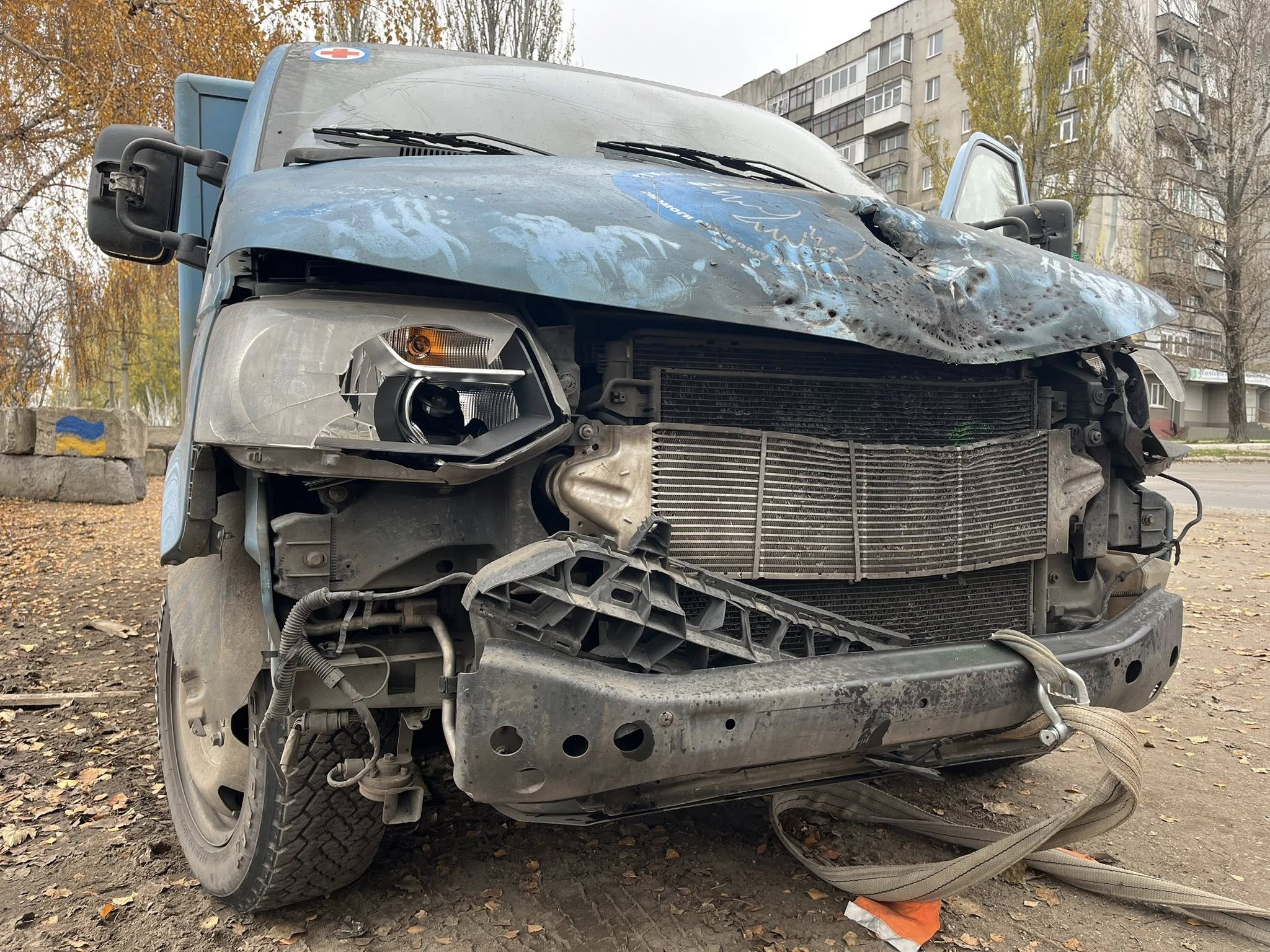
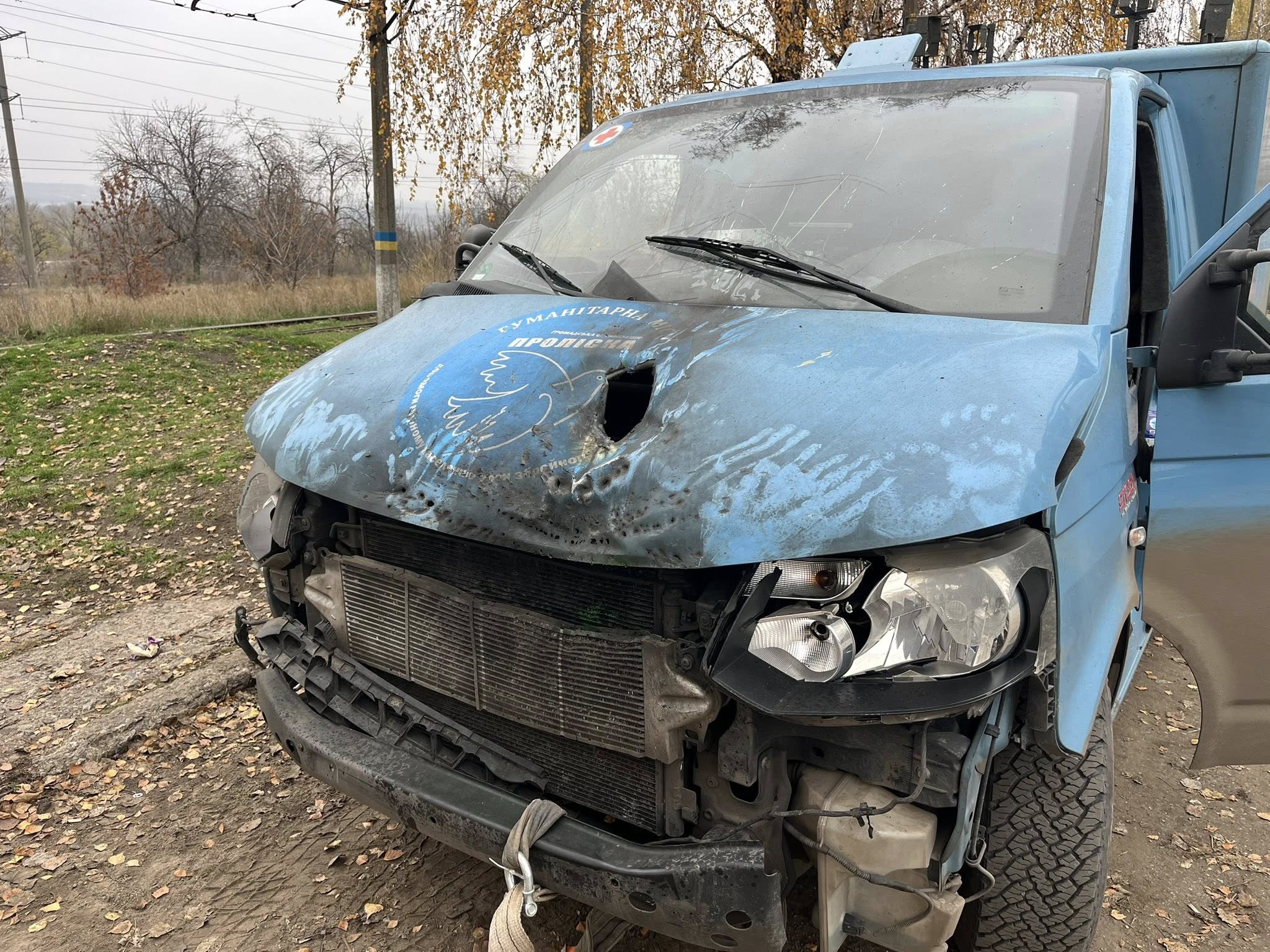
“We saw the drone just twenty meters ahead. It was flying straight at us,” recalls the Breath of Hope founder, Oleh Tkachenko. “There was no time to maneuver. We jumped out, and seconds later, it hit the hood right in the middle of our branded sticker.”
Miraculously, the explosive didn’t detonate inside. While the car was severely damaged, everyone survived.
“The war no longer distinguishes who saves and who fights.”
The team had departed that morning from Kramatorsk. Before setting off, they held a short briefing and prayed. With them were journalists from Austria and Spain, documenting the realities of frontline evacuation work.
They activated their jammers* at the start of the route. This was a precaution that, as it turned out, likely saved their lives. A jammer broadcasts radio frequencies that overwhelm the drone control signals, causing the drone to return to launch, hover in place, land immediately, or disconnect its video feed—all which prevent targeting.
“It’s not perfect, but it works,” says the driver. “Since April, when we started using [jammer], there have been dozens of attempted attacks. We’ve evacuated about 2,000 people in that time.”
The road that day led toward Novosilka, across a bridge and around a sharp 90-degree turn became a spot now seared into their memories. “It’s good that this happened on the way there,” Oleh says quietly. “If it had been on the way back, with wounded people lying inside, it would’ve been a tragedy.”
➜ Related: Oleh's Resilience: Rebuilding Hope, One Loaf at a Time
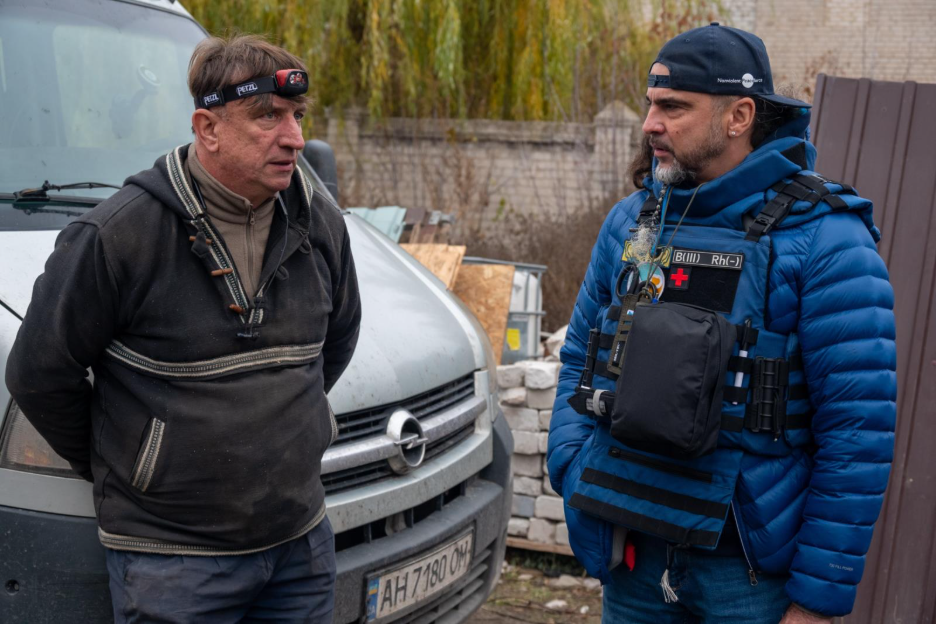
The rising threat: drones that don’t lose connection
Unlike most of the drones used so far in Ukraine, this one was fiber-optic-controlled, meaning the jammer couldn’t fully block it. “These drones don’t rely on radio signals, so traditional countermeasures don’t stop them,” he explains. “There’s still no effective defense. All we can do is train our people, increase awareness, and rely on primitive but practical methods like camouflage nets and route diversions.”
The team plans to repair another of their damaged vehicles, even as their other van remains under reconstruction after being hit months earlier in the Lyman district. That vehicle had been painted a neutral color, yet it was still targeted. The vehicle struck this time was bright blue, clearly marked with large “Proliska” stickers on all sides.
Such vehicles are easily recognizable from above, and drone operators can clearly see where they are aiming. This was not a mistake—it was a deliberate attack on a humanitarian mission. The cost of keeping such vehicles running is enormous. It is not just about fuel, but also maintenance, protective equipment, and constant technical adaptation to withstand growing threats.
“Every evacuation is expensive. But what’s the alternative—leaving people behind?”
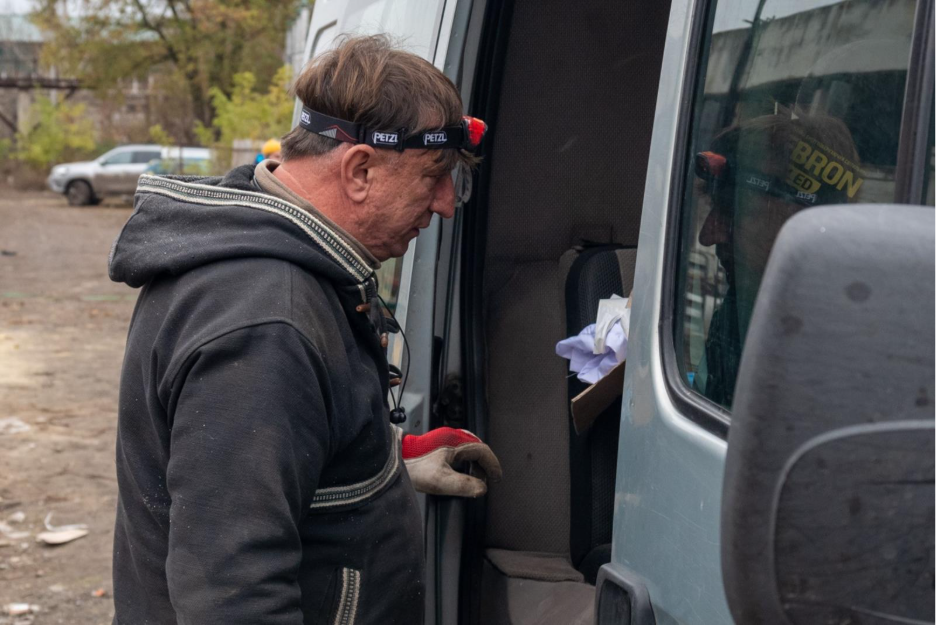
Preparing for a wider danger zone
Before, humanitarian teams considered the 5-kilometer zone from the front line to be the danger area. Now, drones reach 20–25 kilometers deep.
That means more civilians, volunteers, and rescuers are in harm’s way.
“We need systematic training for everyone—even civil defense and emergency workers,” says Oleh. “People should know how to react to drone threats, how to take cover, how to recognize signs of an incoming attack.”
After the strike, a local pastor arrived first and drove the shaken team back to Kramatorsk. Later, they returned with friends to recover the damaged van—only to face another drone flying overhead. “It’s common practice,” Oleh adds. “They often target rescue vehicles that come to pick up the damaged ones.”
For Oleh, who has already evacuated four times himself and is preparing for a fifth, the mission is deeply personal.
“You can always return,” he says, “but only if there’s still someone left to return to.”
Such attacks on humanitarian missions endanger the lives of those who risk everything to save others. Vehicles like this one represent hope and safety for people trapped in frontline areas, they are protected under International Law and must never be targeted.
The use of jammers, while helping to protect evacuation missions from drone attacks, remains controversial. Jamming the drone interferes with it and can create the perception that the humanitarian groups are not nonpartisan but rather participating in the war effort against Russia. Also, if you jam a drone, it can then end up causing unintended harm, as it can fall out of the sky on someone, wherever it lost the signal, and the person using the jammer can’t control that. In war, there are dilemmas faced every day by people working near the frontlines—how to balance safety measures with strict humanitarian neutrality.
NP stands in solidarity with all humanitarian workers who continue their life-saving missions despite the dangers. As a part of what we call our “duty of care” work, we have been providing training to our partners about drone awareness. And we provide and train them on the use of frequency analyzers—systems that notify humanitarians of the presence of drone, without interfering with it. In a war that is, horribly, charting new territory in the use of technology, we are doing all we can to ensure people have the information they need to be warned of threats and respond to them in the safest way possible.
* Jammers and frequency inhibitors / blockers are also known as electronic counter-drone systems (REW)