
Amicable Settlement: Preventing Rido Revenge Killings Through Dialogue
De-escalation can be an effective tool, especially in the midst of danger. Yet, it can also plant the seeds for lasting peace.
For 51-year-old motorcycle taxi driver Faisal Alejo, the seeds of de-escalation were planted in the form of an "amicable settlement" organized by staff at NP. Today, Faisal is rebuilding his life after being entangled in a rido—a cycle of retaliatory violence that leaves many communities in Muslim Mindanao in despair.
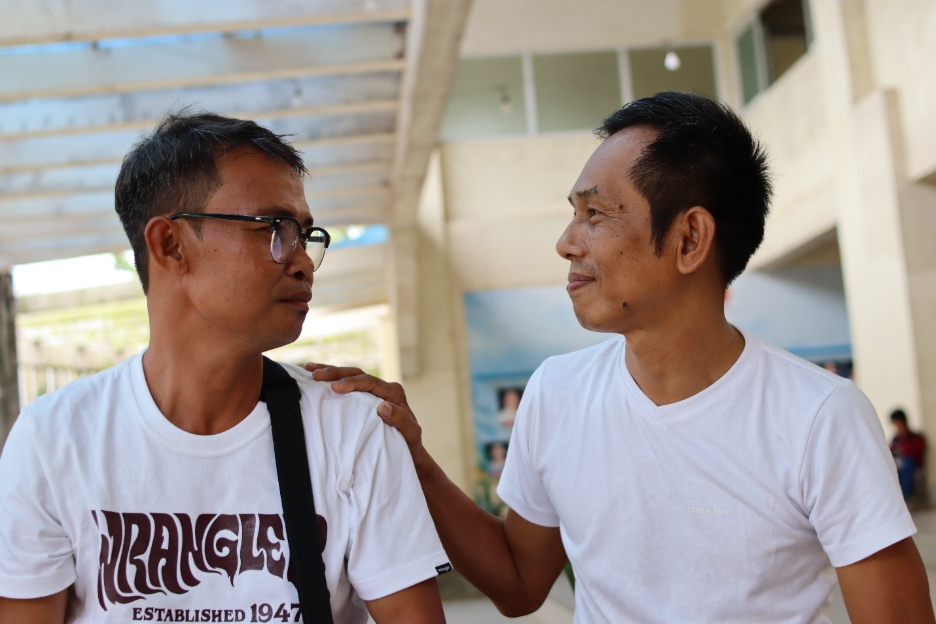
Rido refers to long-standing feuds between families or clans, often triggered by a single incident, such as an insult, a land dispute, or a killing. What begins as a personal conflict can quickly escalate into cycles of revenge, fueled by honor, perceived injustice, impunity, and the ready availability of weapons.
Faisal’s story begins when he tried to secure a permit to operate his motor tricycle.
He paid PHP 2,600 to a City Hall employee for a Motorized Tricycle Operator’s Permit sticker, which would allow him to legally run his motorcycle taxi services in Lamitan City. Somehow, the payment never made it to the right department at the city. Shortly after, Faisal’s tricycle was impounded for operating as an unregistered vehicle.
Faisal relied on the vehicle to generate income, so he had no choice but to return to City Hall to straighten the situation out. That's when the situation escalated into a public confrontation. The employee eventually explained that he had forgotten to submit the payment and asked for forgiveness. The issue was resolved.
Days later, the employee he confronted was shot dead and Faisal was accused of killing him.
Despite no clear evidence, suspicion fell on him. The victim’s family filed a case, and the next thing they knew, rumors began circulating that even Faisal’s son was involved in the attack.
Despite his innocence, his heart ached for the victim’s family. He tried to mend his relationship with the employee's family, he even sent them money. However, Faisal and his family became increasingly fearful for their safety, so they decided to flee.
“I left for a while. I went to a different city with my family. I sold my house in Lamitan."
But life remained unstable. “Because of what happened, all of my children had to stop going to school for a while.” Then, Faisal fell ill with diabetes and struggled to make ends meet.
A Different Approach: Amicable Settlement
Anxious to return home, and determined not to retaliate, Faisal turned to Nonviolent Peaceforce (NP).
“I approached Mutti Abdullah [NP staff]. He asked me if I wanted to return to Lamitan City in Basilan. It would be better because I could drive my taxi again. In Zamboanga, I was also driving a tricycle, but I didn’t have the right permit so I couldn’t operate in the city.”
NP facilitated an amicable settlement between Faisal and the victim’s family—an approach designed to both end immediate tensions, as well as prevent further violence.
“The barangay captain said it was the first time they had seen a settlement like that,” Faisal shared. “It was almost like a court process— soldiers, police, and prosecutors were present.”
But unlike formal legal proceedings, NP centered the process on dialogue, trust-building, and community ownership. Thanks to NP's broader approach to conflict, a resolution unfolded.
Behind the Scenes: How NP’s Amicable Settlement Work in the Philippines
As part of our peacebuilding work, NP uses the amicable settlement approach to address rido—including in Faisal’s case—working to end cycles of violence and prevent their escalation and perpetuation into future generations.
At its core, this work is shaped by the following principles:
- Local Ownership and Community-Led Process: NP avoids imposing solutions, and instead empowers clan elders, women leaders, religious leaders and youth to lead dialogues. Settlement agreements are framed as voluntary commitments, not imposed decrees. This reduces the risk of one clan perceiving bias or outside manipulation.
- Unarmed Third Party Presence: NP’s role is to de-escalate tension and build confidence that talks will be fair and safe.
- Layered, Inclusive Dialogue: Rido does not refer to a single violent event, but involves history, individual and family honor, and land disputes. The consultation process involves pre-dialogue process with elders, women and youth separately.
- Trust Building and De-Escalation Mechanisms: NP promotes temporary ceasefires, weapons-free zones, and community monitoring while dialogue is ongoing. Symbolic rituals (sharing meals, prayers and Quran readings) are done to reestablish trust and symbolic reconciliation (forgiveness rituals and joint public pledges) cements the settlement socially.
- Integrating Customary and Formal Structures: NP acknowledges the authority of traditional mechanisms (elders’ councils, Sharia-based norms and Moro customary law). They link local government units, MILF / BARMM peace structures and barangay justice systems. This ensures that agreements have both cultural legitimacy and legal / administrative support.
- Written and Witnessed Settlement (Amicable Settlement Agreement): The signing of the document is witnessed by outside actors (peace monitors, local government, MILF / Ministry of Public Order and Safety (MPOS) or religious leaders). This ensures that clans are socially and politically bound to comply.
- Community Monitoring and Verification: NP trains and supports local peace monitors who act as the “eyes and ears” on the ground to ensure that no retaliatory violence takes place.
- Post-Agreement Social Healing and Development Support: Follow through involves livelihood projects for former combatants; community development programs (water, health, education, among others); and, peace education and youth engagement. In hopes, this prevents relapse into feud dynamics and behavior.
Now “our hearts feel lighter”
Amicable settlements offer a faster, more predictable path to resolution, while also addressing the root causes of conflict before it turns into a cycle.
Through time, the effect on Faisal and his family turned out positive. “When the resolution was reached, our hearts felt lighter,” he said. “My wife was able to teach again.” Family feuds like rido can last generations, which is why choosing to have a conversation instead of retaliation is transformative. De-escalation may begin as a way out of danger—but Faisal’s story shows how it becomes a way forward.
***
Mr. Faisal Alejo is one of many training participants of Accompanying the transformation of conflict, transitional justice and reconciliation, actions supporting nonviolent means of political participation and initiatives sustaining the gains of normalisation in BARMM, or ATTAIN 2.0 Project. Funded by European Union in contributing to a peaceful, cohesive, just and inclusive developed Mindanao through prevention and reduction of violence, promotion of transitional justice and reconciliation, participation in democratic processes, and support to the peace process mechanisms.