
Caring for the Caretakers: Protection in San Diego
One day, Elena*, a community organizer, got a call she had been dreading—an immigration raid had happened at a nearby apartment building. A family of six had lost both main wage earners in their family, putting them at risk of losing their home.
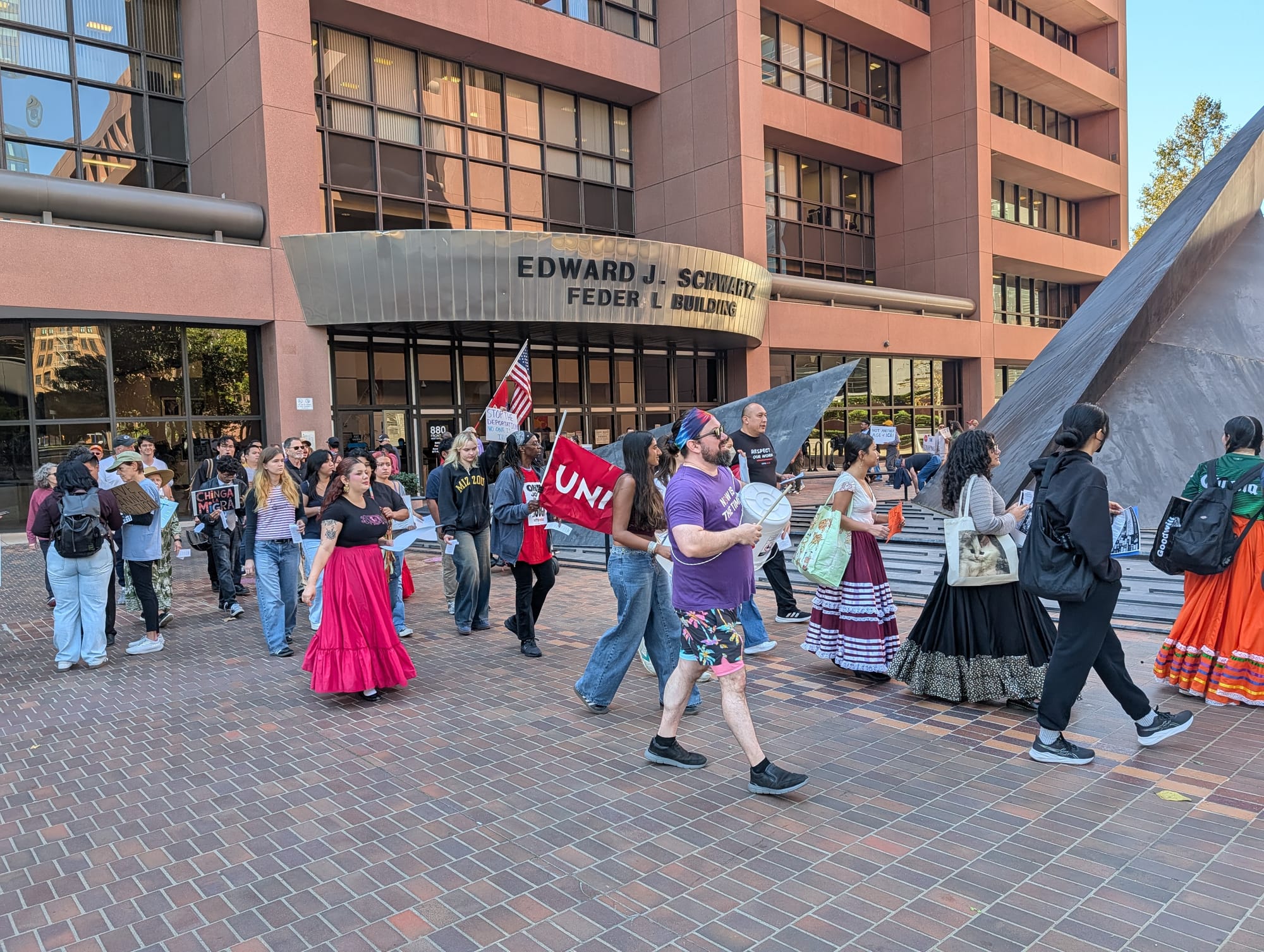
A month earlier, Elena had sat in a room with her peers and asked, “how are we going to protect our community with how bad the situation is with ICE [Immigration and Customs Enforcement]?” Amidst the planning in that meeting, Elena turned to Nonviolent Peaceforce (NP) staff member, Ethan, and asked, “You work at a global organization in war zones, what's your take?”
Drawing on the leadership from community leaders in the Global South, NP’s suggestion was to “strengthen your relationships and build a system for effective coordination.” From working in conflict-affected areas around the world, NP knows that the more people in a community are connected to one another, the more they can carefully predict risks of violence, as well as develop a holistic, proactive plan to respond to threats and keep people safe.
Taking Ethan’s advice from that gathering, Elena and a core group of organizers developed and implemented a coordinated response plan rooted in trust and centered on the needs of impacted immigrant families.
So, when Elena received that call about the raid, she immediately reached out to the rest of her core group and took action. The family was immediately connected to a lawyer, food, and safe housing. When they had to go to court, the core group made sure court accompaniers were present to keep the family safe. Regular patrols were set up outside the family’s home in case ICE returned.
Today, that first response has grown—Elena and the core group are now supporting 30 families.
The core group consists of experienced, deeply connected community organizers. They take on the dedicated labor of supporting community members harmed by ICE activity, helping meet their needs so they can reclaim their agency, autonomy, and dignity.
In support of this core group in San Diego, NP’s protection role mirrors what we’ve done in Ukraine—sustaining and caring for the frontline protectors.
In the humanitarian sector, this commitment is known as “duty of care”—an organization’s ethical and legal responsibility to safeguard the safety and wellbeing of those on the frontlines. People responding to immediate needs and supporting those harmed are sharing that they are absolutely devastated every single day. To help them continue their protection work, we draw on our two decades of experience on the ground to offer wellness practices, safety tools, and protection frameworks. Frontline responders understand the critical need for sustainability and innovation in their work, but in moments of crisis, they often need support to prioritize their own safety as much as they prioritize the safety of others.
In San Diego, this commitment takes shape in weekly core group meetings. During these gatherings, Ethan contributes crucial grounding tools, like the holistic check-in and draws on our peer welfare program to share tools that support psychosocial and emotional wellbeing. He works with organizers to design safety protocols and assess existing efforts to strengthen coordination. While frontline organizers directly support families, NP helps build the systems that sustain them.
This care manifests in practical ways. With support from NP, the core group developed a "Need-To-Know" protocol for information sharing. We walked through all the information that the group typically encounters through immigrant protection, and specifically outlined who needed to know what to execute their role. Categorizing information like that, and storing information in secure ways (password protection, encrypted platforms) is part of how we maintain trust and keep people safe. The group also established vetting protocols for bringing people into the work to prevent infiltration and ensure the resources we're tapping into are reliable and trustworthy.
Recently, Elena told Ethan, “If [NP] had never moved here, we might not have ever started this [group]. I don't know where we would be if that was the case.” When violence and risk to safety are on the rise, we know how hard it is to not break. But the antidote to this harm is to keep each other safe.
*pseudonym