
The two hands of nonviolence in Minneapolis
Press Clip Source: Waging Nonviolence | Metta Center for Nonviolence
Right now, we must stop the abduction and killing of our neighbors by ICE, but we must also show up in resistance in a way that seeds love.
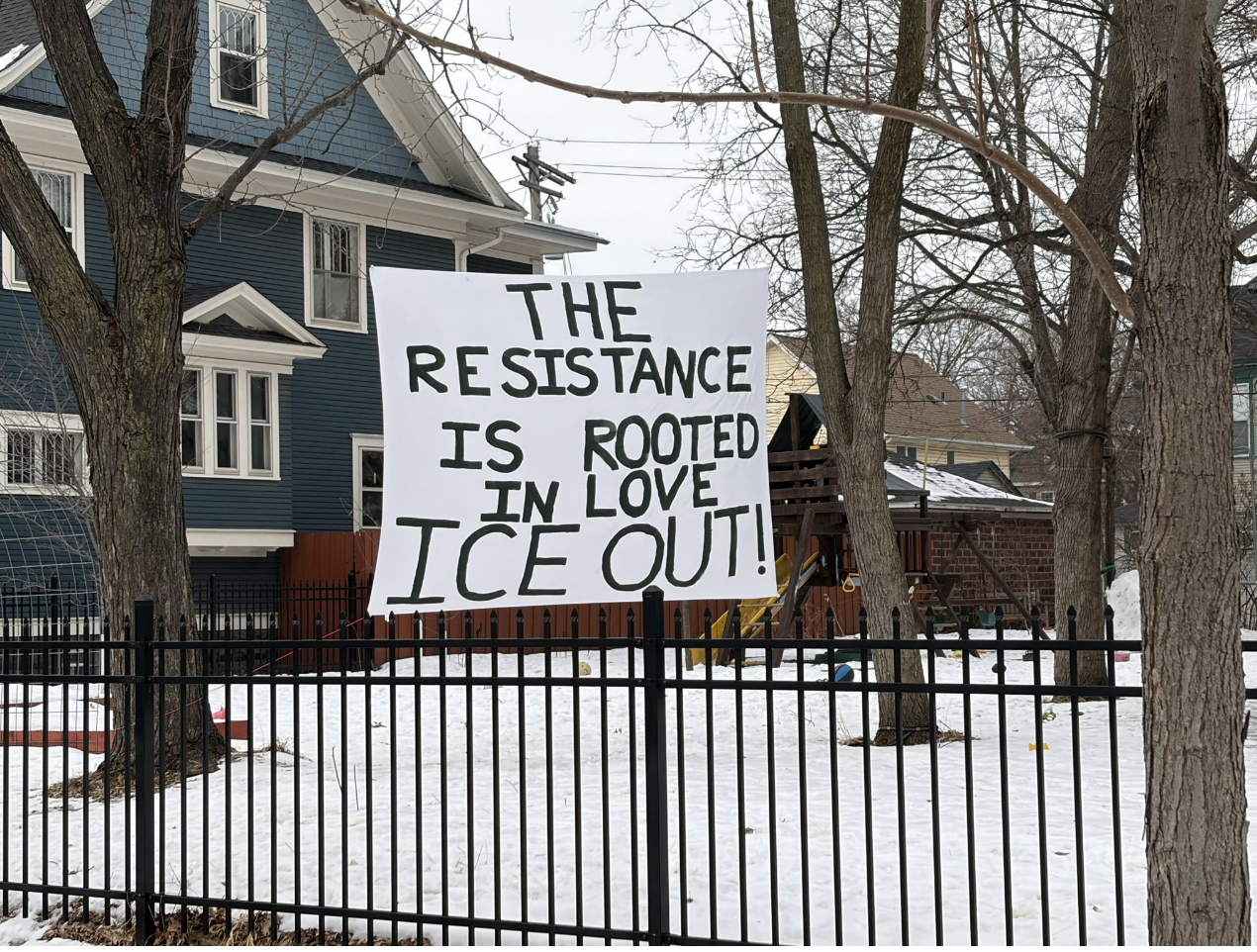
“What does AHHH-bo-LISH mean, mama?”
“Abolish? It means to end something.”
I paused for a second to understand where my child would have picked up that word, but it didn’t take me long. “Oh, I see that Abolish ICE sign. People are saying the department of ICE should stop existing.”
I drop my kids off at school after that. Sitting in the line of vans at drop off, I see the parents in their winter gear, patrolling around the school to make sure ICE doesn’t make their way on to the grounds — scaring or taking our children and educators alike. I see other parents — in our caravan of minivans — who I know have given countless rides, dropped off food and rent money, and protested in subzero temperatures, all with the hope of keeping their neighbors safe.
And I get angry when I think of the MAGA descriptions of us: “paid protesters” or at best “rioters.” I want to respond to every tweet suggesting such: “I’m just a regular person who doesn’t think it is right to hunt immigrants!” I feel the rage rise in me as I pass another black SUV with tinted out windows and drivers in tactical gear and masks.
In contrast to the conversation I had with my daughter earlier, a family member who used to work for the U.S. Army says she understands the position of the ICE agent. From her perspective, agents are being given gear, training and a mentality that puts them into a heightened state of aggression and fear. We agree that protesting or observation aren’t reasons for — nor do they justify —their use of force, but we can understand, when crowds of locals show up, they get scared and can react out of that fear.
As a practitioner of nonviolence, as hard as this moment is, it is also deeply inspiring. Building on years and decades of powerful, local organizing, it feels as if the whole city of Minneapolis is proud to resist nonviolently. My neighbors are using their whistles, their bodies and their relationships to expose and decrease the harm. As scholar of nonviolent struggle Maria Stephan explained, one way nonviolence is so effective is because it “revealed the cruelty when the disciplined protesters were faced with this form of violence.” We aren’t necessarily going to convince everyone with opposing views, but revealing the cruelty does enough to move moderates and centrists, and eventually, change policy. We see this today with the jump in disapproval of ICE. And at the end of the day while these actions are being carried out by individuals, they are the result of state overreach and violence.
Through my work at Nonviolent Peaceforce, I’ve learned from Global South communities’ effective practices for keeping people safe, like de-escalation and protective presence. These practices — ancestral technologies — emerged naturally in Minneapolis among a community rooted in care and love. For the first time in my lifetime, I’m seeing the kind of widespread cross-race, cross-class solidarity it takes to counter authoritarianism.
And we have countless historical examples to prove how effective nonviolence is at stopping harm (proven to be significantly more effective than violent efforts, in fact). For example, there’s the Orange Revolution where Ukrainians took to the streets of Kyiv in 2004, demanding that then rigged presidential election results be rectified in favor of the candidate Ukrainians had chosen, and successfully leading to a recount and a subsequent change in outcomes. And we have our own civil rights movement at home to look to.
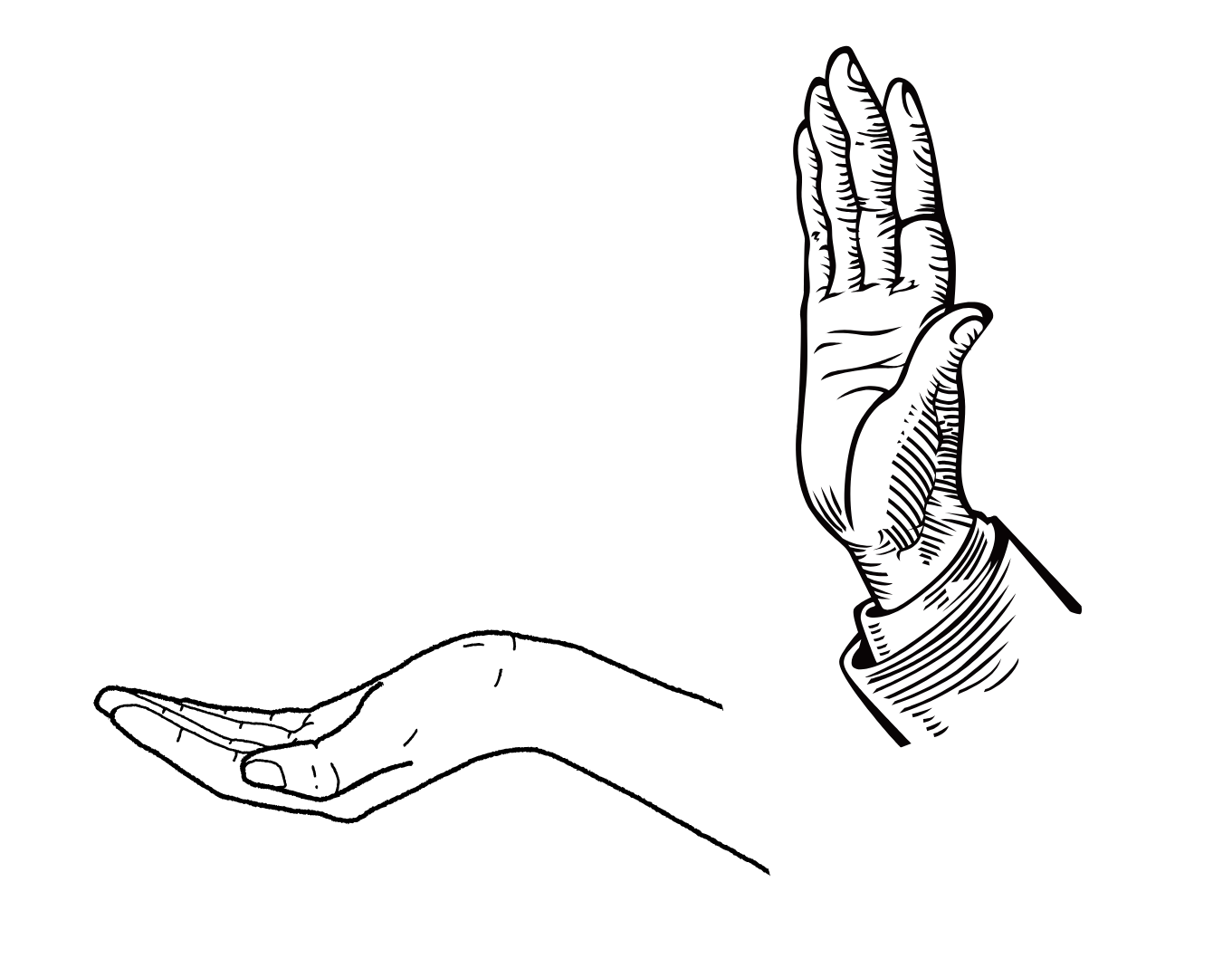
And yet there is another level with which nonviolence is effective: it honors the humanity of each person, regardless of the harm they cause. Activist Barbara Deming used the image of the “two hands of nonviolence.” As the Metta Center explains, “the image expresses a fundamental paradox at the heart of nonviolence, holding up one hand we say, ‘I will not submit to your injustice,’ while offering an open hand, we say, ‘I am open to you as a human being.’ Indeed, it is because we value that person that we want to prevent them from harming others and in the process harming themselves.”
This is the example of Daryl Davis, a Black blues musician who befriended Ku Klux Klan members. Building friendships with them led to over 200 men leaving the Klan. It’s the farmer, Farid, in West Darfur, who interrupted generations of revenge killings among farmers and nomads, through the simple act of helping a farmer unload his watermelons and starting a friendship. It’s the mother who asked the leader of a Sri Lankan militant group why he fights and learned he wished he could go to school instead.
Sometimes “nonviolence” is used to whitewash anger or resistance, and that must be avoided. For me, it is about what makes nonviolence effective. If I want those I disagree with to stop painting me and my community with a broad brush and to act differently, I know I must do the same with them. Like I tell my children: “there aren’t bad people, only bad choices.”
What would it take for me to hold these two hands up to an ICE agent? Or for a Trump supporter to hold them up to a Minneapolis legal observer? Right now, the focus is, rightly so, on the hand that stops — we must stop the abduction and killing of our neighbors, the human rights abuses at detention centers, and the policy that makes it all possible. But long-term, cultural change? Long-term healing? And building a culture of peace in our society? That takes the other hand — the invitation to be in relationship. As hard as it is right now — we must show up in resistance in a way that seeds love.
Nonviolent resistance is proving effective once again, as it has repeatedly in history. It is showing us that the harm of the oppressor is untenable. “Abolish ICE” is no longer a fringe position. We are winning hearts and minds. And we can win on a deeper level, not only short-term political gains, but long-term de-polarization. We have the power within us to both stop the harm and humanize each other.
This story was produced by Metta Center for Nonviolence